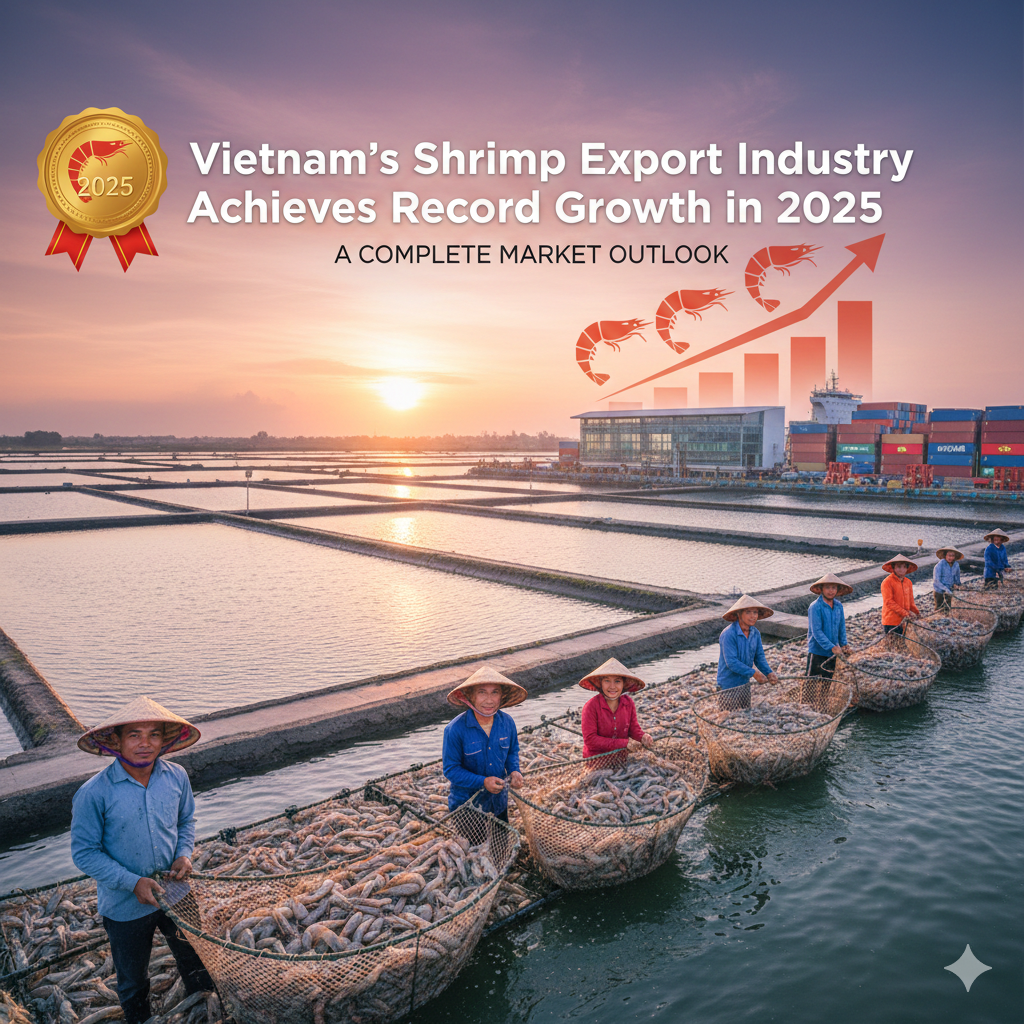
Vietnam’s shrimp industry is entering a defining new era in 2025. After several years of global market uncertainty, supply chain disruptions, and inflation-driven slowdowns, the sector has staged an extraordinary recovery—one that has captured worldwide attention. According to the latest Vietnam shrimp export data, the country recorded its strongest growth in three years, reaffirming its position among the world’s top shrimp suppliers. The surge can be traced to rising global demand, improved farming efficiency, diversified export markets, and stronger policy support.
With Vietnam shrimp export value reaching over $4.2 billion in 2025, the industry now stands as a key pillar of Vietnam’s aquaculture-based economy. This in-depth guest post breaks down the growth drivers, market dynamics, regional data, trade performance, and future outlook—offering a comprehensive overview of why Vietnam’s shrimp industry is now one of the strongest in the world.
Overview: Vietnam’s Strongest Shrimp Export Growth Since 2021
Vietnam’s shrimp sector has experienced major fluctuations over the past few years. Between 2022 and 2024, global shrimp prices softened, inventories piled up in major markets, and consumption slowed due to inflation. However, 2025 marked a dramatic turnaround.
According to Vietnam export customs data, Vietnam exported $3.4 billion worth of shrimp in the first nine months alone—representing 22% year-on-year growth, the fastest pace since 2021. Full-year Vietnam shrimp exports are projected to reach $4.2 billion, up 20–22% compared to 2024.
Several factors contributed to this growth:
-
A rebound in global consumption
-
Lower inflation in major economies
-
Improved farming efficiency and output
-
Higher demand from China, Japan, and the EU
-
Expansion of value-added shrimp processing
This marks the strongest recovery phase the industry has seen in three years.
Production Growth and Market Performance
Vietnam’s shrimp output increased significantly in 2025, supported by modernized farming practices and high-tech aquaculture.
Rising Output in Key Shrimp Varieties
Whiteleg Shrimp (Vannamei)
-
Output: ~367,000 tons
-
Growth: 7.3% YoY
-
Largest contributor to Vietnam shrimp export volumes
Black Tiger Shrimp
-
Output: ~125,000 tons
-
Growth: 3.5–4% YoY
-
Preferred in premium markets like Japan and Europe
This rise in production, combined with favorable weather conditions and improved disease control, strengthened Vietnam’s export capacity throughout 2025.
Contribution to Vietnam’s Seafood Sector
Shrimp continues to anchor Vietnam’s seafood economy, accounting for 35–40% of total seafood export revenue. With the national seafood export target for 2025 set at $11 billion, shrimp alone contributes nearly half.
This dominance underscores the importance of shrimp in Vietnam exports and the nation’s long-term agricultural strategy.
Top Export Markets: Where Vietnam Shrimp Is in Highest Demand
Using updated Vietnam shipment data, the top markets for shrimp exports in 2024–2025 include:
1. China & Hong Kong – $860.92 million (33.2%)
China remained the largest consumer of Vietnamese shrimp, driven by surging seafood demand, premium dining trends, and expanding e-commerce distribution.
2. Japan – $360.86 million (13.9%)
Japan sources high-quality, processed shrimp from Vietnam. Strong consumer confidence and stable retail demand fueled double-digit growth.
3. United States – $327.07 million (12.6%)
Although cautious due to anti-dumping risks, U.S. importers continued to rely on Vietnam due to consistent quality and strong supply chains.
4. South Korea – $199.89 million (7.7%)
South Korea’s growing seafood consumption is increasing opportunities for Vietnamese exporters.
5. Australia – $147.15 million (5.7%)
Australian consumers have embraced Vietnamese shrimp for its quality and food safety standards.
Other major buyers include the UK, Germany, Canada, Hong Kong, and Belgium—signaling strong diversification across Asia, Europe, and North America.
Historical Trends: Vietnam Shrimp Export Growth Over the Last Decade
| Year | Export Value |
|---|---|
| 2014 | $2.55 billion |
| 2015 | $1.80 billion |
| 2016 | $1.91 billion |
| 2017 | $2.45 billion |
| 2018 | $2.12 billion |
| 2019 | $2.10 billion |
| 2020 | $2.25 billion |
| 2021 | $2.43 billion |
| 2022 | $2.65 billion |
| 2023 | $2.14 billion |
| 2024 | $4.10 billion |
| 2025 (first 9 months) | $3.4 billion |
The jump from $2.14B in 2023 to $4.10B in 2024, followed by another strong climb in 2025, marks one of the biggest rebounds in the history of shrimp export from Vietnam.
Major Growth Drivers Behind the 2025 Boom
1. Strong Recovery in Global Demand
Demand grew sharply in:
-
China and Hong Kong (up 65–70%)
-
Europe, boosted by food service industries
-
Japan, due to rising consumption of processed seafood
-
United States, which recovered after inventory overstock issues
The normalization of supply chains and reduced inflation supported this demand uplift.
2. Improved Farming Technology & Higher Efficiency
Shrimp farms increasingly rely on:
-
Biosecurity and closed-loop systems
-
Digital water quality monitoring
-
Lined ponds and improved aeration
-
High-quality broodstock
These technologies helped stabilize production amid climate and disease challenges.
3. Focus on Value-Added Exports
More than 40% of Vietnam shrimp export revenue now comes from processed products, such as:
-
Cooked shrimp
-
Peeled and deveined shrimp
-
Ready-to-eat shrimp
-
Seasoned and breaded shrimp
This value-added shift is helping Vietnam compete against low-cost producers like India and Ecuador.
4. Trade Agreements & Market Diversification
Vietnam benefits from major FTAs including:
-
EVFTA
-
CPTPP
-
UKVFTA
These agreements give Vietnamese exporters reduced tariffs and faster access to high-value markets.
Shrimp Varieties Exported by Vietnam in 2024
| Shrimp Variety | Export Value | Share |
|---|---|---|
| Whiteleg Shrimp | $2.9B | 70% |
| Black Tiger Shrimp | $450M | 12–14% |
| Sea Tiger & Native Varieties | $200M | 5% |
| Processed Shrimp | $150M | 4% |
| Lobsters & Specialties | $100M | 3% |
Whiteleg shrimp remain the primary driver of Vietnam shrimp exports.
Regional Production Trends
Vietnam’s shrimp production is heavily concentrated in the Mekong Delta, especially:
-
Ca Mau – Vietnam’s shrimp capital
-
Soc Trang – major whiteleg shrimp producer
-
Bac Lieu – eco-shrimp and sustainable aquaculture hub
These regions are pushing digital aquaculture and eco-friendly farming practices to boost long-term competitiveness.
Export Prices and Profit Margins
Average export prices in 2025:
-
$8.5–$9.2 per kilogram
-
Up 1–2% YoY
Despite rising feed, energy, and labor costs, exporters have maintained profitability through:
-
Higher value-added product share
-
Stable demand from Japan and Europe
-
Improved farm productivity
Challenges Facing Vietnam’s Shrimp Sector
1. Disease Risks
Diseases such as EMS (Early Mortality Syndrome) continue to threaten shrimp ponds.
2. Rising Production Costs
Feed prices alone account for up to 60% of total costs.
3. Competition from India, Ecuador, and Indonesia
These countries have lower production costs and larger farming areas.
4. Stricter Global Regulations
Traceability, sustainability, and food safety standards in the EU and U.S. can strain small-scale exporters.
Outlook for 2025–2030
Short-Term Outlook (2025–2026)
Vietnam is expected to reach $4.5 billion in shrimp export value by 2026 if demand remains strong. China will continue to dominate, but markets like the U.S., Japan, and the EU will drive premium value.
Long-Term Outlook (2027–2030)
Vietnam aims to achieve $5 billion in shrimp export revenue by 2030, with a focus on:
-
Sustainable aquaculture
-
Certification-based exports
-
Digital transformation in farming
-
High-value processed shrimp products
If executed well, Vietnam could cement its place as the global leader in sustainable shrimp production.
Conclusion
The year 2025 will be remembered as a turning point for Vietnam shrimp export performance. With double-digit growth in value and volume, improved farming efficiency, and rising global demand, Vietnam has re-established itself as a top global shrimp supplier. The latest Vietnam export customs data confirms that exports surged 22% in the first nine months of the year—the strongest rebound since 2021.
While challenges such as climate risks, global competition, and rising costs remain, Vietnam’s strategic focus on technology-driven farming, processing innovation, and sustainable growth positions the industry for a bright future.
For deeper insights, live Vietnam shrimp export data, and customized market research reports, businesses can explore platforms like VietnamExportData and TradeImeX for detailed, verified trade intelligence.