
Introduction
Have you ever looked at your plant’s water system and thought, “Why does this feel harder than it should?”
You’re not alone.
From rising water costs to strict discharge regulations, managing industrial water has become a daily pressure point for many facilities. And here’s the thing — most problems don’t start huge. They grow slowly… then suddenly become expensive, disruptive, and stressful.
This is where Industrial Water Treatment Solutions step in — not as a luxury, but as a smart, scalable way to future-proof your operations.
In this blog, we’ll break down five practical and scalable approaches to handle complex water challenges without overwhelming your budget, your team, or your peace of mind. No heavy jargon. Just clear, helpful ideas you can actually use.
Why Industrial Water Challenges Are Getting More Complex
Let’s take a step back for a second.
Industries today are facing multiple pressures at once:
-
Water sources are becoming less reliable.
-
Regulations are getting tighter.
-
Production demands are increasing.
-
Sustainability expectations are higher than ever.
As a result, old, one-size-fits-all systems just don’t cut it anymore. What worked five years ago may now be inefficient, wasteful, or even non-compliant.
You need solutions that can grow with your business — not ones you’ll outgrow in two years.
1. Modular Treatment System Design
One of the smartest ways to handle complex water challenges is to think modular.
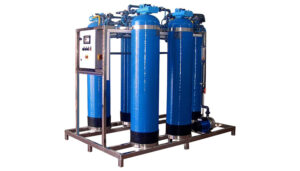
Instead of installing one massive system all at once, you build your setup in smaller, connected units that can expand over time.
Why modular systems work
-
You can scale up as production grows.
-
You avoid high upfront investments.
-
You reduce downtime during upgrades.
-
Maintenance becomes easier and faster.
For example, instead of investing heavily in a giant filtration plant, you might start with a sequence of compact treatment modules and add more as demand increases.
It’s like adding rooms to your house when your family grows — practical, efficient, and much less stressful.
2. Advanced Filtration and Membrane Technologies
Here’s a simple truth:
Better filtration equals better control.
Modern membrane technologies like reverse osmosis (RO), ultrafiltration (UF), and nanofiltration (NF) have changed the game for industrial water treatment.
What makes them scalable?
They’re flexible. You can start small and expand as needed.
These systems are great for:
-
Removing dissolved salts
-
Eliminating heavy metals
-
Reducing microbial contamination
-
Improving water for reuse applications
And believe it or not, newer membranes are more energy-efficient than ever. So not only are you treating water better, you’re doing it with lower long-term operating costs.
It’s a win-win.
3. Smart Automation and Real-Time Monitoring
Let’s be honest — manual monitoring is tiring. And prone to errors.
This is where automation becomes your best friend.
By integrating sensors and smart control systems, you can monitor:
-
pH levels
-
Flow rates
-
Chemical dosing
-
System pressure
-
Contamination levels
All in real-time.
The real benefit?
You don’t just react to problems.
You prevent them.
For example, if a sensor detects abnormal turbidity levels, your system can automatically adjust before things get worse. That means fewer breakdowns, less wastage, and more stable operations.
In the long run, automation doesn’t just save water — it saves sanity too.
4. Sustainable Reuse and Recycling Strategies
Water reuse isn’t just a sustainability trend anymore. It’s becoming a necessity.
Many industries now treat and recycle their process water for:
-
Cooling systems
-
Boiler feed
-
Cleaning operations
-
Landscaping
-
Secondary industrial processes
Why reuse is scalable
You can start with partial reuse.
For example, treat 30% of your wastewater today and gradually increase it over time.
As water becomes more expensive, your future self (and your finance team) will thank you.
And let’s not forget the environmental bonus.
Less freshwater intake.
Less wastewater discharge.
More sustainability points for your brand.
Sounds like a good deal, right?
5. Partnering with Experts for Specialized Industrial Water Treatment Solutions
Let’s talk about something people often underestimate — expertise.
Complex problems need experienced hands.
Working with professionals who design, install, and maintain Industrial Water Treatment Solutions gives you access to:
-
Custom system design based on your industry
-
Regular system audits and optimization
-
Ongoing technical support
-
Compliance assurance with local regulations
Instead of guessing or experimenting, you get proven methods tailored to your plant’s exact needs.
Think of it as having a water management partner, not just a supplier.
How These Solutions Save You More Than Just Water
Here’s the thing — these aren’t just technical upgrades. They impact your whole business.
Smart water strategies help you:
-
Cut operational costs
-
Reduce downtime
-
Meet environmental standards
-
Improve equipment lifespan
-
Strengthen your company’s sustainability image
And yes, they also help you sleep better at night knowing your water systems aren’t one breakdown away from chaos.
Real-Life Example: A Mid-Sized Manufacturing Plant
Let’s make this real for a moment.
A mid-sized textile factory was struggling with frequent water shortages and rising treatment costs. Instead of replacing their entire system, they:
-
Upgraded to modular filtration units
-
Added real-time monitoring
-
Started reusing treated wastewater for internal cleaning
Within 12 months, they cut freshwater consumption by 35% and reduced breakdowns by nearly half.
Not magic. Just smart scaling.
Common Mistakes Industries Should Avoid
Before you rush into implementation, here are a few pitfalls to stay away from:
-
Choosing the cheapest system instead of the most suitable one
-
Ignoring local water quality variations
-
Skipping maintenance schedules
-
Avoiding automation due to initial cost fears
-
Underestimating future production growth
Shortcuts today often become regrets tomorrow.
FAQs on Industrial Water Management
1. How do I know which solution suits my plant?
It depends on your water source, industry type, contamination level, and operational scale. A professional assessment is the best starting point.
2. Are these solutions suitable for small industries as well?
Yes, especially modular and scalable systems. They can be adjusted for both small and large operations.
3. How long does it take to see results after implementation?
Typically, improvements in performance and efficiency can be seen within the first few months, depending on system size.
4. Is water reuse safe for industrial operations?
With proper treatment and quality control, recycled water is perfectly safe for many industrial applications.
5. Do I need special staff for managing advanced systems?
Not necessarily. Most modern systems come with user-friendly interfaces and basic training is usually sufficient.
Don’t forget to check out: Portable Extinguishers vs Fire Fighting System for Small Offices
Final Thoughts
Industrial water challenges aren’t going away anytime soon.
If anything, they’re becoming more complex, more regulated, and more expensive.
But here’s the good news — with the right strategy and scalable thinking, they’re completely manageable.
By choosing smart Industrial Water Treatment Solutions, you’re not just fixing today’s problems.
You’re building a future-ready system that grows with your operations, saves resources, and protects your bottom line.
And if you ever feel overwhelmed, just remember — every big transformation starts with one smart step.
Why not take yours today?



One Response