Consistent and verifiable fluid handling is a non negotiable requirement for numerous heavy industries worldwide. From chemical manufacturing and municipal water purification to oil and gas exploration, the ability to introduce precise amounts of liquid reagents into a stream or vessel determines product quality, safety compliance, and operational efficiency. When scaling up operations from laboratory testing to continuous, large volume production, simple pumping mechanisms quickly prove insufficient. These complex industrial settings demand specialized equipment engineered specifically for high fidelity volumetric control, ensuring that every drop added contributes exactly as intended to the final process outcome.
Decoding Positive Displacement Dynamics
The fundamental principle governing these specialized dosing devices is positive displacement, a mechanism inherently superior to dynamic pumps when accuracy is paramount. A dosing pump draws in a mathematically defined volume of fluid during its suction phase and ejects that identical volume during the discharge phase. The driving force originates from an electric motor, which translates constant rotational energy into a precise, measured, reciprocating action. This controlled movement drives either a piston or a diaphragm. Crucially, because the pump’s output is governed by a mechanical stroke volume and cycle frequency, the flow rate remains remarkably stable and highly immune to pressure fluctuations occurring downstream in the process line, maintaining consistency regardless of external variables.
Designing the Liquid End for Chemistry
The contact surface between the pump and the process fluid, known as the liquid end, must be selected with rigorous attention to the chemical and physical properties of the substance being transferred. For non corrosive liquids that must be handled under extreme pressures, plunger style heads are often chosen. They provide excellent accuracy and mechanical robustness, capable of withstanding significant force during the discharge stroke. However, when dealing with hazardous, highly corrosive, or slurry like fluids, the diaphragm design is indispensable. This arrangement uses a flexible, inert membrane as a seal, completely isolating the fluid from the pump’s mechanical transmission components. Selecting the appropriate wetted materials, from specialized plastics like PVC and PVDF to high grade stainless steel or advanced alloys, ensures long term compatibility and prevents costly failure and cross contamination.
Precision Solutions for Heavy Industry
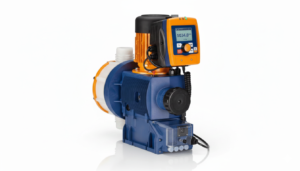
In challenging environments where operational continuity is directly linked to the consistent and accurate delivery of critical chemical additives, choosing the right machinery is a fundamental engineering decision. High capacity, robustly constructed Industrial Motorized Metering Pumps provide the necessary assurance of exact dosing rates in demanding applications. These systems are purposefully over engineered for prolonged, continuous operation under adverse conditions, often featuring sealed drive assemblies immersed in oil for optimal heat dissipation and minimal wear. Such equipment is essential for tasks like pH control in waste stream processing or the precise injection of corrosion inhibitors into pipelines. The investment ensures not only flawless execution of the metering task but also minimizes lifecycle maintenance and maximizes system uptime.
Leveraging the Power of High Capacity Piston Pumps
Piston metering pumps represent the pinnacle of high pressure and high volume dosing technology. Their simple, solid mechanics allow them to generate and withstand discharge pressures far exceeding those handled by standard diaphragm types, making them ideal for injecting chemicals into pipelines already pressurized by a primary system. The drawback of direct contact between the piston and the fluid is mitigated by employing advanced sealing technologies and flush ports to manage wear when handling mildly abrasive substances. A key feature of these models is the very high degree of flow resolution achievable, often down to fractions of a percent, providing engineers with minute control over the chemical ratio, which is vital in complex multi component reactions or highly sensitive process controls common in the petrochemical sector.
Enhanced Safety Through Diaphragm Integration
While piston pumps dominate high pressure applications, the hydraulic diaphragm metering pump offers the highest level of safety and containment. In these designs, an intermediate hydraulic fluid transmits the force of the motor driven piston to the flexible diaphragm. The use of this hydraulic fluid ensures the diaphragm is stressed uniformly across its surface area, dramatically increasing its service life and accuracy compared to mechanically actuated designs. Crucially, these systems often incorporate built in rupture detection features that instantly halt the pump and alert operators should the barrier diaphragm fail. This safety feature is non negotiable when handling extremely toxic or valuable reagents, providing environmental protection and safeguarding personnel, positioning the hydraulic barrier as the superior choice for critical chemical isolation.
The Role of Advanced Electronic Control
Achieving dynamic flow control requires merging the pump’s mechanical precision with sophisticated electronic management. Today’s robust dosing systems seamlessly integrate with plant wide control architectures via PLC and SCADA interfaces. By utilizing Variable Frequency Drives to modulate the motor speed, and often including electronic actuator heads for highly accurate stroke length adjustments, flow rates can be dynamically varied based on a remote signal, such as a changing water flow reading or an instantaneous concentration measurement. This level of automation allows for true proportional feed, where the pump adjusts its output in real time to perfectly match the process demand, preventing overdosing, reducing chemical consumption, and optimizing the cost efficiency of the entire operation.
A Focus on Long Term Operational Excellence
The true measure of a metering pump is its reliability over decades, not months. A trusted equipment provider understands that long term operational success depends on supplying not just high quality hardware, but also specialized support. This includes providing detailed engineering consultation during the initial selection phase, ensuring the correct material and drive mechanism are specified for the application’s precise needs. Furthermore, establishing a local network of certified technicians and maintaining a ready stock of genuine replacement parts is paramount. This commitment to continuous service and maintenance minimizes unexpected downtime, guaranteeing that the highly sensitive and costly processes depending on the dosing system remain operational and accurate.
Conclusion
Precision dosing technology is the backbone of process control in modern industry. By combining the inherent stability of positive displacement mechanics with robust construction, advanced material science, and intelligent electronic controls, these motorized systems deliver the consistent, verifiable performance essential for safety, compliance, and production quality. Partnering with a reliable expert capable of delivering custom engineered solutions and dedicated lifecycle support ensures that this critical investment continues to perform flawlessly under the most demanding conditions.