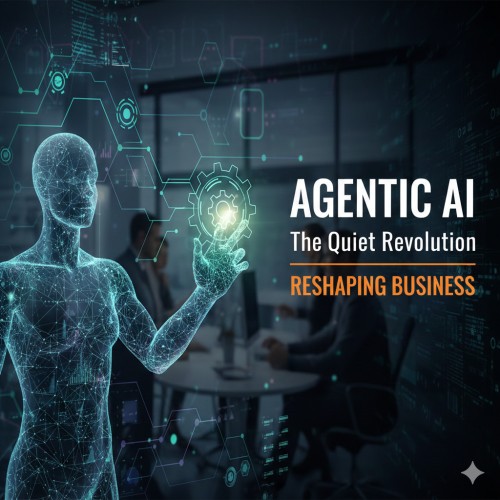
In the bustling landscape of modern commerce, where decisions once hinged on human intuition and endless meetings, a subtle shift is underway. Agentic AI—autonomous systems that don’t just analyse data but act on it with purpose—is emerging as the unsung architect of smarter, faster business operations. This isn’t about flashy chatbots or predictive dashboards; it’s about AI that anticipates needs, negotiates complexities, and executes with the foresight of a seasoned strategist. As we navigate the uncertainties of late 2025, from supply chain ripples to consumer whims, agentic AI stands as a beacon for leaders seeking to outpace disruption.
Understanding Agentic AI Beyond the Hype
Agentic AI represents a leap from reactive tools to proactive partners. Imagine software that doesn’t wait for prompts but identifies opportunities—like spotting a supplier delay and rerouting inventory before it impacts sales. Rooted in advanced machine learning and natural language processing, these agents operate within defined boundaries, learning from outcomes to refine their autonomy over time.
What sets this apart is its human-like agency: the ability to reason, adapt, and even collaborate across systems. In boardrooms and back offices alike, it’s transforming how teams approach everything from market entry to crisis response. Yet, adoption remains cautious, with many organisations dipping toes rather than diving in, wary of over-reliance or ethical pitfalls.
The Strategic Edge in Everyday Operations
At its core, agentic AI excels in streamlining the mundane while elevating the strategic. Consider procurement: traditional processes involve layers of approvals and manual checks, often delaying responses to market shifts. An agentic system, however, could monitor global trends in real time, flag risks, and propose alternatives—complete with cost-benefit analyses—freeing human experts for high-stakes judgment calls.
This integration fosters a hybrid intelligence model, where AI handles the volume and velocity of data, allowing professionals to focus on creativity and context. In creative industries, for instance, agents might draft initial campaign outlines based on audience sentiment, handing off polished ideas to teams for final touches. The result? A workflow that’s not just efficient but intuitively aligned with business rhythm.
Navigating Integration Challenges with Foresight
Bringing agentic AI into the fold isn’t without hurdles. Legacy systems, data silos, and skill gaps can turn promising pilots into protracted battles. Organisations often start small—perhaps automating routine compliance checks—before scaling to more ambitious applications like dynamic pricing in e-commerce.
A key to success lies in governance from the outset. Establishing clear protocols for AI decision-making ensures accountability, preventing scenarios where unchecked autonomy leads to unintended biases. Collaborative frameworks, blending IT, ethics, and operations, prove invaluable here. By viewing integration as an iterative journey rather than a one-off project, businesses can build resilience, turning potential friction into a competitive moat.
Real-World Applications Driving Tangible Shifts
Across sectors, agentic AI is quietly rewriting playbooks. In logistics, agents orchestrate fleet routes by factoring in weather, traffic, and demand forecasts, smoothing out bottlenecks that once plagued delivery timelines. Healthcare providers use them to personalise patient pathways, cross-referencing records with emerging research to suggest tailored interventions.
Even in finance, where precision is paramount, these systems monitor transactions for anomalies while simulating economic scenarios to guide investment strategies. The beauty lies in their adaptability: what begins as a tool for one function evolves into an ecosystem enabler, connecting dots across departments in ways humans alone might overlook.
Ethical Considerations in an Agentic Era
As AI gains more agency, so do the conversations around responsibility. Questions of transparency—who decides what the agent prioritises?—and equity—does it amplify existing divides?—demand upfront attention. Forward-thinking leaders embed ethical audits into deployment, using diverse datasets to mitigate biases and regular human oversight to maintain trust.
This isn’t mere compliance; it’s a strategic imperative. Organisations that prioritise ethical AI not only safeguard their reputation but also attract talent and partners who value principled innovation. In a world increasingly scrutinised for authenticity, agentic AI becomes a canvas for demonstrating commitment to fair, inclusive progress.
The Human-AI Symbiosis: Redefining Roles
Far from displacing jobs, agentic AI amplifies human potential. Routine tasks fade into the background, surfacing space for deeper analysis and innovation. Teams report a renewed sense of purpose, unburdened by administrative drudgery, as they tackle problems that truly require empathy and ingenuity.
Training becomes pivotal: upskilling programmes that teach not just technical interfaces but interpretive skills—how to question AI outputs and iterate on them. This symbiosis extends to leadership, where executives leverage agents for scenario planning, gaining hours back for vision-setting and team inspiration. The shift is profound: from managing people and processes to orchestrating intelligence.
Future Horizons: What Lies Ahead for Agentic AI
Looking toward the horizon, agentic AI’s trajectory points toward deeper interoperability. Multimodal agents—handling text, voice, and visuals seamlessly—will redefine customer interactions, from virtual advisors that evolve with user preferences to collaborative bots in virtual reality meetings.
Regulatory landscapes will evolve too, with frameworks emphasising explainability and robustness. Businesses that invest now in modular architectures will adapt effortlessly, positioning themselves as agile frontrunners. The promise? A future where AI doesn’t just support decisions but co-creates them, fostering ecosystems of continuous, intelligent evolution.
Building Momentum: Steps for Getting Started
Embarking on this path requires intention over impulse. Begin with a landscape assessment: map current pain points where agency could add immediate value, like forecasting or vendor management. Pilot with low-risk applications, gathering feedback to refine guardrails.
Partnering with specialists in strategy implementation can accelerate this, ensuring AI aligns with broader organisational goals. For those in dynamic sectors like retail, consulting for retail expertise helps tailor agents to omnichannel realities, blending digital insights with physical store dynamics.
Ultimately, success hinges on culture: fostering curiosity and collaboration so teams embrace AI as an ally. Measure progress not in lines of code but in liberated time and sharper insights—hallmarks of a truly agentic organisation.
In weaving agentic AI into the fabric of business, we’re not just adopting technology; we’re reimagining agency itself. This quiet revolution invites leaders to step forward, blending human wisdom with machine precision to craft tomorrows that are not only viable but visionary.