
Global Jewelry Market – Forecast & Growth
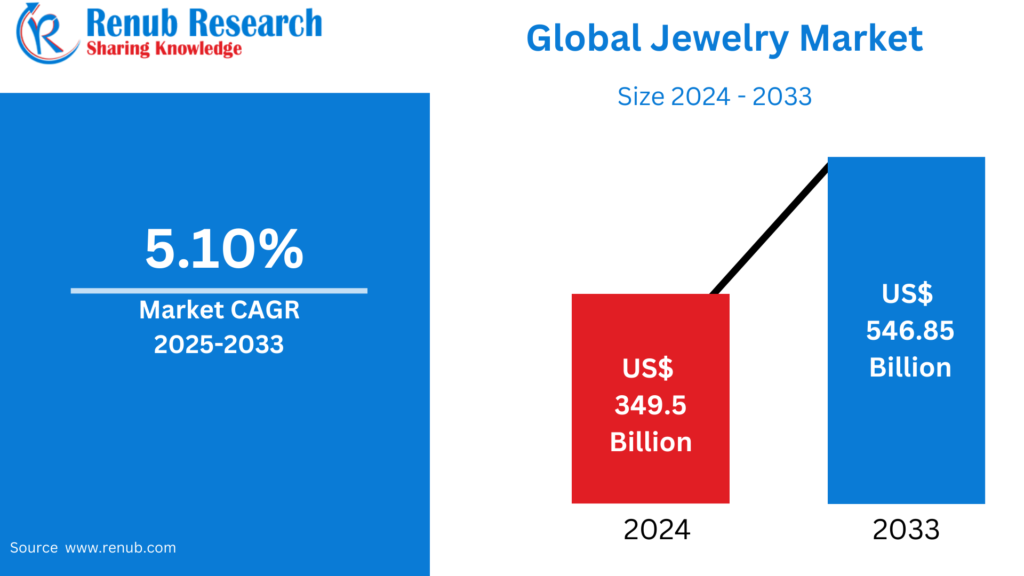
According to Renub Research global jewelry market is one of the most enduring and emotionally driven segments within the global luxury and consumer goods industry. Valued at US$ 349.5 billion in 2024, the market is projected to reach US$ 546.85 billion by 2033, expanding at a compound annual growth rate (CAGR) of 5.10% during the forecast period from 2025 to 2033. This sustained growth reflects rising disposable incomes, evolving fashion preferences, increasing demand for personalized designs, and expanding penetration of branded and online jewelry retail across both developed and emerging economies.
Jewelry continues to hold a unique position at the intersection of luxury, culture, emotion, and investment. While historically rooted in tradition and symbolism, the modern jewelry market is increasingly shaped by innovation, digitalization, sustainability, and changing consumer demographics.
Global Jewelry Market Outlook
Jewelry refers to decorative accessories worn for personal adornment, including rings, necklaces, earrings, bracelets, pendants, and brooches. These products are manufactured using a wide range of materials such as gold, silver, platinum, diamonds, gemstones, pearls, beads, and synthetic materials. Across civilizations, jewelry has represented wealth, social status, love, power, spirituality, and personal identity.
In today’s global market, jewelry demand is driven not only by luxury consumption but also by emotional and cultural factors. Jewelry remains a preferred gift for weddings, engagements, anniversaries, festivals, and milestones, making it resilient even during periods of economic uncertainty. Social media exposure, celebrity endorsements, and global fashion trends have further increased jewelry’s appeal, especially among millennials and Gen Z consumers.
At the same time, technological advancements—such as computer-aided design (CAD), 3D printing, and AI-driven customization tools—are transforming product development, enabling mass customization and faster turnaround times. The convergence of traditional craftsmanship with modern innovation continues to strengthen the long-term outlook of the global jewelry market.
Request a free sample copy of the report:https://www.renub.com/request-sample-page.php?gturl=jewelry-market-market-p.php
Key Growth Drivers in the Global Jewelry Market
Increasing Disposable Income and Urbanization
Rising disposable income remains a primary driver of jewelry consumption worldwide. Rapid economic development in emerging economies such as China, India, Indonesia, and Vietnam has resulted in a growing middle class with higher purchasing power and aspirational lifestyles. Jewelry is increasingly viewed not only as an ornament but also as a symbol of success and financial security.
Urbanization further amplifies demand by exposing consumers to global fashion trends and branded retail formats. As urban populations expand, particularly in Asia-Pacific, demand for modern, lightweight, and branded jewelry is accelerating. The growing participation of women in the workforce also contributes to higher spending on self-purchased jewelry rather than gift-only consumption.
Expansion of E-Commerce and Digital Transformation
Digital transformation has fundamentally reshaped the jewelry retail landscape. Online platforms now allow consumers to browse collections, compare prices, customize designs, and complete purchases remotely. Technologies such as augmented reality (AR) virtual try-ons, video consultations, and online certification have significantly improved consumer confidence in online jewelry purchases.
Social media platforms and influencer marketing play a crucial role in shaping buying decisions, particularly among younger demographics. E-commerce has also enabled brands to reach international customers without heavy investments in physical stores, thereby expanding market access and driving overall growth.
Cultural and Ceremonial Significance
In regions such as South Asia, the Middle East, and parts of Africa, jewelry holds deep cultural and religious significance. Gold jewelry, in particular, is an integral part of weddings, festivals, and family traditions. In countries like India, gold is viewed as both an adornment and a store of value, ensuring consistent baseline demand regardless of economic cycles.
Global migration and diaspora populations have extended these cultural traditions beyond domestic borders, driving demand for ethnic and traditional jewelry styles in international markets. This cultural resilience makes jewelry a relatively stable consumer category over the long term.
Challenges Facing the Global Jewelry Market
Volatility in Precious Metal and Gemstone Prices
The jewelry industry is highly sensitive to fluctuations in the prices of gold, silver, platinum, and diamonds. Sharp increases in raw material prices directly affect production costs and retail pricing, often leading to reduced consumer demand or shifts toward lighter or alternative materials.
Price volatility complicates inventory planning, margin management, and long-term pricing strategies for manufacturers and retailers. Smaller players are particularly vulnerable, as they lack the scale to hedge against commodity price fluctuations effectively.
Ethical Sourcing and Sustainability Concerns
Modern consumers are increasingly concerned about ethical sourcing, environmental impact, and labor practices within the jewelry supply chain. Issues related to conflict diamonds, unsafe mining conditions, and environmental degradation have placed pressure on brands to improve transparency and accountability.
As a result, demand is growing for lab-grown diamonds, recycled metals, and certified sourcing standards. While these initiatives enhance brand trust, they also require significant investment in supply chain restructuring, compliance, and certification.
Emerging Trends Shaping the Jewelry Market
Growth of Personalized and Customized Jewelry
Personalized jewelry has emerged as one of the fastest-growing segments in the market. Products such as engraved rings, name necklaces, birthstone pendants, and custom wedding bands resonate strongly with consumers seeking emotional connection and individuality.
Advancements in digital design tools and on-demand manufacturing allow brands to offer customization at scale while maintaining cost efficiency. This trend is especially popular among millennials and Gen Z consumers, who prioritize meaningful purchases over traditional luxury.
Expansion of Branded Jewelry
Consumers are increasingly gravitating toward established jewelry brands that offer quality assurance, certified materials, contemporary designs, and strong after-sales support. Global brands such as Tiffany & Co, Pandora, and Cartier continue to expand their footprint in emerging markets.
Branded jewelry commands premium pricing and higher margins, supported by influencer marketing, celebrity endorsements, and omnichannel retail strategies. Trust and brand recognition play a critical role in purchase decisions, particularly for high-value items.
Rising Demand for Men’s Jewelry
Men’s jewelry is no longer a niche category. Changing fashion norms and increased acceptance of jewelry among men have driven strong growth in bracelets, rings, chains, and watches. Luxury brands and streetwear labels alike are launching dedicated men’s and gender-neutral collections, positioning this segment as a high-growth opportunity over the forecast period.
Regional Market Insights
United States Jewelry Market
The United States represents one of the largest and most mature jewelry markets globally. High disposable income, strong gifting culture, and advanced retail infrastructure support steady demand for both fine and fashion jewelry. E-commerce penetration is high, and trends such as lab-grown diamonds and sustainable sourcing are gaining traction among environmentally conscious consumers.
Seasonal occasions like Valentine’s Day, Mother’s Day, and Christmas continue to drive significant sales volumes, reinforcing the market’s resilience.
France Jewelry Market
France occupies a central position in the global luxury jewelry landscape, supported by centuries of craftsmanship and design heritage. The market emphasizes exclusivity, artistry, and premium materials. While traditional retail remains dominant, online sales and sustainable luxury concepts are gradually influencing consumer behavior.
India Jewelry Market
India is one of the world’s largest consumers of gold jewelry, driven by weddings, festivals, and cultural traditions. The market is undergoing structural transformation as organized, branded retailers gain share over unorganized local players. Government initiatives such as hallmarking regulations and digital payment adoption are improving transparency and consumer trust, supporting long-term growth.
Saudi Arabia Jewelry Market
Saudi Arabia’s jewelry market is evolving rapidly under Vision 2030, which emphasizes economic diversification, retail expansion, and tourism development. While traditional gold jewelry remains popular, younger consumers are increasingly adopting lightweight, contemporary designs and international brands. Rising female workforce participation and e-commerce growth are further supporting market expansion.
Jewelry Market Segmentation
By Product
- Rings
- Earrings
- Bracelets
- Necklaces
- Others
By Material
- Gold
- Diamond
- Platinum
- Others
By Distribution Channel
- Offline
- Online
By End User
- Men
- Women
- Children
By Region
- North America
- Europe
- Asia Pacific
- Latin America
- Middle East & Africa
Competitive Landscape
The global jewelry market is highly competitive, featuring a mix of multinational luxury brands and regional players. Key companies compete on design innovation, brand equity, sourcing transparency, and omnichannel reach. Leading players include Richemont, Chow Tai Fook, Signet Jewelers Limited, and GRAFF.
Conclusion
The global jewelry market is set for steady and resilient growth through 2033, driven by rising incomes, cultural traditions, digital innovation, and expanding consumer preferences. While challenges such as price volatility and sustainability pressures persist, evolving trends like personalization, men’s jewelry, and branded retail continue to unlock new growth avenues. As consumer expectations shift toward ethical sourcing and digital convenience, companies that successfully blend tradition with innovation will remain best positioned to lead the market in the years ahead.