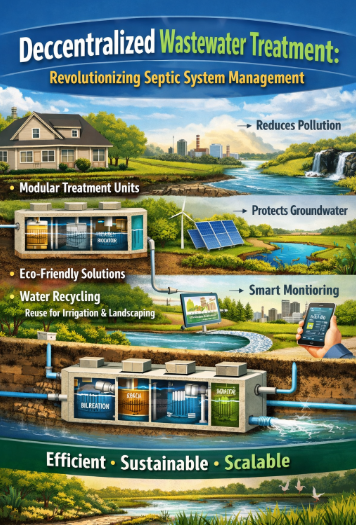
The landscape of septic system management is evolving rapidly, driven by the growing adoption of decentralized wastewater treatment solutions. Homeowners and service professionals alike are seeking more efficient, sustainable ways to manage septic systems, and decentralized treatment is leading this transformation. This guide explores what decentralized wastewater treatment is, its key benefits, and how modern technologies like remote monitoring enhance septic system performance.
What Is Decentralized Wastewater Treatment?
Decentralized wastewater treatment refers to treating wastewater at or near its point of generation rather than transporting it to a centralized facility. This approach is especially beneficial in rural areas, new developments, and locations where extending traditional sewer infrastructure is impractical or cost-prohibitive. By managing wastewater locally, systems can be tailored to specific site conditions and usage needs.
Benefits of Decentralized Wastewater Treatment
Decentralized systems offer several advantages that make them an increasingly popular choice for septic system management.
Key Advantages
-
Flexibility and Scalability
These systems can be customized to suit individual homes, businesses, or small communities, making them effective in both urban and rural environments. -
Cost-Effectiveness
Decentralized wastewater treatment often requires lower upfront investment and reduced infrastructure costs compared to centralized systems, with long-term savings in operation and maintenance. -
Environmental Sustainability
On-site treatment minimizes the environmental impact of wastewater transport and promotes water reuse, supporting conservation and sustainability initiatives. -
Reduced Risk of Large-Scale Failures
Unlike centralized systems, decentralized systems limit potential failures to smaller areas, making issues easier to isolate and resolve.
Integrating Remote Monitoring Technology
Advancements in technology have introduced remote monitoring as a powerful tool in modern septic system management. Devices such as advanced monitoring units enable homeowners and technicians to track system performance in real time through mobile or web-based platforms. This integration allows for early detection of potential problems and ensures consistent system efficiency.
How Remote Monitoring Enhances Septic System Maintenance
Remote monitoring transforms traditional septic maintenance by enabling proactive, data-driven management.
Key Benefits of Remote Monitoring
-
Real-Time Alerts
Immediate notifications help identify issues like leaks, overflows, or mechanical failures before they escalate. -
Data-Driven Insights
Continuous data collection provides valuable insights into system usage and health, supporting informed maintenance and upgrade decisions. -
Improved Customer Confidence
Homeowners benefit from peace of mind knowing their system is being monitored around the clock, increasing satisfaction and trust in septic service providers.
Operational Efficiency in Septic Management
Combining decentralized wastewater treatment with remote monitoring technology significantly improves operational efficiency.
Efficiency Improvements
-
Proactive Maintenance
Predictive insights allow maintenance to be scheduled before failures occur, reducing emergency repairs. -
Optimized Resource Usage
Monitoring helps manage energy and water use more efficiently, lowering operational costs and environmental impact. -
Streamlined Service Operations
Technicians can diagnose issues remotely, reducing unnecessary site visits and improving response times.
The Future of Septic System Management
As sustainability and efficiency become top priorities, decentralized wastewater treatment paired with remote monitoring is poised to become the standard in septic system management. These innovations support resilient infrastructure, reduced environmental impact, and improved long-term performance for homeowners and communities alike.
Conclusion
Decentralized wastewater treatment is reshaping the future of septic system management by offering flexible, cost-effective, and environmentally responsible solutions. When combined with remote monitoring technology, these systems deliver higher operational efficiency, proactive maintenance, and greater peace of mind. By embracing these advancements, homeowners and service professionals can move toward smarter, more sustainable wastewater management practices that benefit both people and the planet.