Nylon Fiber Market Size and Forecast 2025–2033
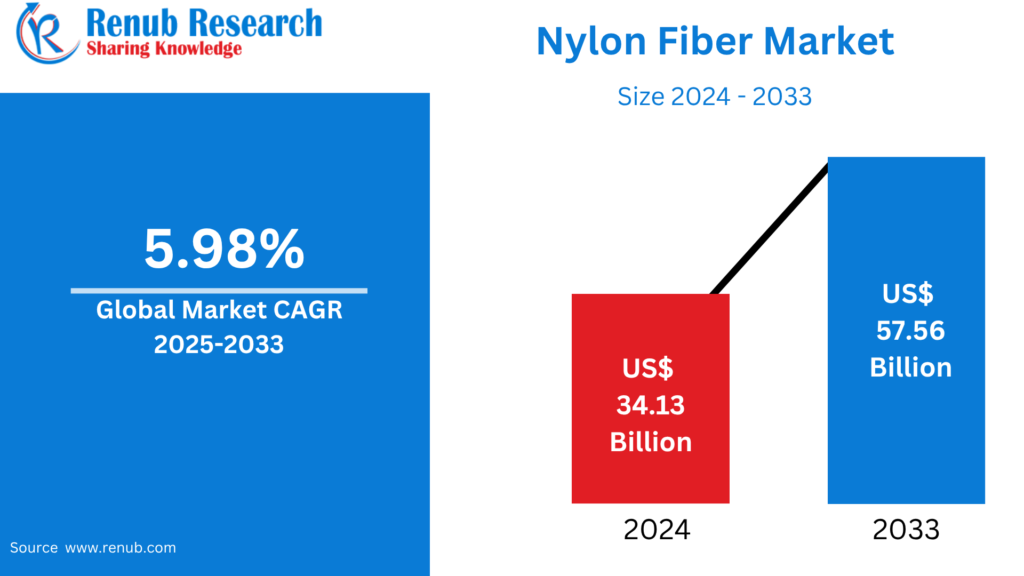
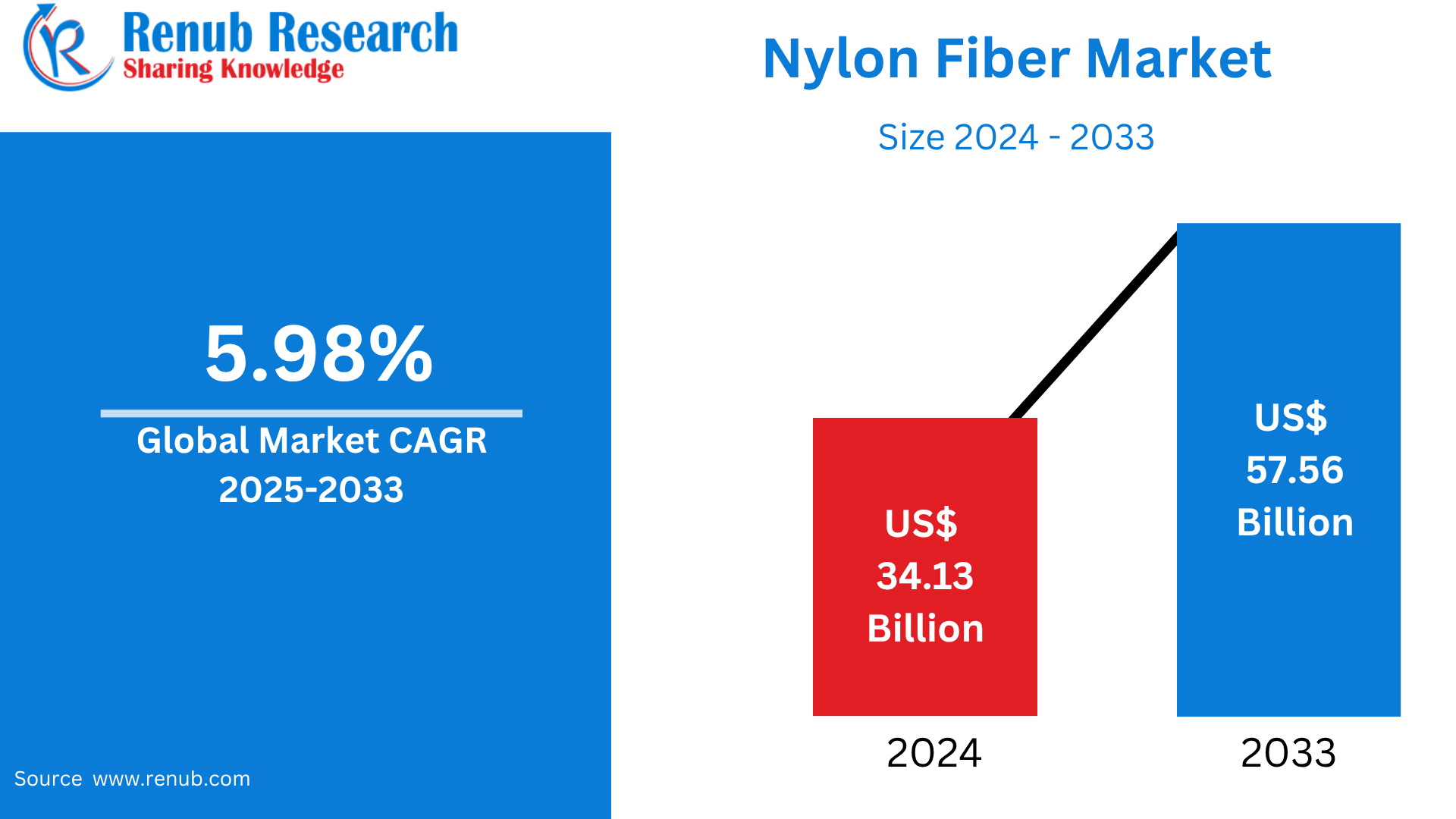
According to Renub Research Global Nylon Fiber Market is forecast to experience steady and sustained growth over the coming years, expanding from US$ 34.13 billion in 2024 to US$ 57.56 billion by 2033, at a CAGR of 5.98% between 2025 and 2033. Rising industrial applications, technological advancements in fiber manufacturing, increasing demand for high-performance materials, and a growing shift towards sustainable nylon production are key elements driving this upward trajectory. Nylon fiber continues to remain one of the most versatile synthetic fibers, widely utilized across apparel, automotive, industrial textiles, consumer goods, and technical applications, enabling manufacturers to cater to evolving performance and durability requirements across multiple industries.
Overview of the Global Nylon Fiber Industry
The nylon fiber industry represents a vital segment of the broader synthetic fiber market owing to its exceptional strength, elasticity, abrasion resistance, and chemical resilience. These properties enhance its adaptability across a wide range of applications including sportswear, hosiery, carpets, tire cords, industrial conveyor belts, fishing nets, engineering plastics, and technical textiles. Increasing demand for lightweight materials coupled with superior mechanical performance is enhancing nylon fiber usage across industrial manufacturing and transportation sectors. The market is also benefiting from increased investment in polymerization technology, advanced spinning techniques, and energy-efficient production practices aimed at improving fiber quality and performance.
The textile sector remains the single largest consumer of nylon fiber, supported by expanding demand for durable fashion fabrics, premium sportswear, and functional apparel. Meanwhile, the automotive industry is accelerating nylon adoption due to the need for weight reduction, improved fuel efficiency, and enhanced structural resilience. Nylon fiber’s excellent thermal resistance and toughness enable its use in seat belts, airbags, upholstery reinforcements, under-the-hood components, and engineering applications, further strengthening market demand.
However, the nylon industry also faces challenges including dependence on petrochemical raw materials, fluctuating feedstock prices, and environmental concerns regarding plastic waste and emissions. As a result, manufacturers are increasingly transitioning toward bio-based nylon, recycled nylon solutions, and circular economy production models, supporting both environmental sustainability and long-term industrial competitiveness.
Download Free Sample Report:https://www.renub.com/request-sample-page.php?gturl=nylon-fiber-market-p.php
Key Market Drivers Supporting Nylon Fiber Demand Growth
Expanding Applications Across the Textile and Apparel Industry
The textile and apparel industry remains a core growth engine of the nylon fiber market owing to its exceptional performance characteristics. Nylon fibers deliver high elasticity, durability, moisture resistance, and comfort, making them an ideal choice for sportswear, outdoor clothing, swimwear, hosiery, lingerie, leisurewear, and home furnishings. Growing consumer inclinations toward premium fabrics, fashion diversification, and active lifestyle trends continue to boost nylon adoption in functional clothing categories.
The increasing popularity of performance fabrics in sports apparel has elevated the need for materials capable of offering stretch, resilience, and long life without compromising comfort. Advancements in fiber spinning processes, dyeing technology, and fabric finishing are also contributing to improved aesthetics, color vibrancy, and wearability. As fashion brands emphasize performance innovation and product differentiation, nylon fiber demand within textiles remains consistently strong throughout the forecast period.
Rising Demand from Automotive and Industrial Manufacturing Sectors
The automotive sector represents a rapidly growing consumer of nylon fibers as manufacturers focus on lightweighting initiatives to improve fuel efficiency, safety, and emission performance. Nylon fibers are widely used in airbags, seat belts, carpets, insulation, and reinforcement materials. Their tensile strength, heat resistance, and shock absorbance make them ideal replacements for heavier materials such as metals and rubber in various applications.
Industrial usage also continues to expand significantly. Applications in tire cords, conveyor belts, ropes, filtration fabrics, and geotextiles benefit from nylon’s excellent endurance against wear, pressure, and environmental stress. Rapid industrialization across emerging economies, infrastructure development, manufacturing expansion, and investment in heavy mechanical industries are collectively strengthening nylon demand across global regions.
Advancements in Production Technology and Sustainability Initiatives
Increasing technological innovation in nylon production is transforming product development and market growth. Modern polymerization advancements, fiber extrusion enhancements, and digital manufacturing integration are enabling improved fiber performance, durability, and application efficiency. Manufacturers are investing heavily in upgrading production facilities, enhancing output capacity, and adopting automated processes to deliver superior quality materials.
The market is also experiencing a significant shift toward eco-friendly nylon solutions, driven by global sustainability trends and regulatory pressure. The introduction of bio-based nylon, recycled nylon fibers, and closed-loop manufacturing processes addresses environmental impact concerns by reducing dependence on petroleum-derived raw materials and lowering carbon footprints. Initiatives in circular economy models and waste recovery solutions are becoming increasingly critical to long-term industry development strategies.
Challenges Facing the Nylon Fiber Market
Price Volatility of Raw Materials
The nylon fiber market relies heavily on petrochemical feedstocks such as caprolactam and adipic acid, which are vulnerable to crude oil price fluctuations. Market instability, geopolitical uncertainties, and supply chain disruptions significantly influence production costs, adversely affecting the profit margins of manufacturers. Smaller producers especially face challenges in absorbing cost volatility while maintaining competitive pricing. As a result, companies are moving toward sourcing diversification, long-term procurement contracts, and enhanced manufacturing efficiency to manage financial exposure.
Environmental Sustainability Concerns
Although nylon fiber offers excellent performance characteristics, its production process remains energy-intensive and associated with environmental emissions and waste concerns. Increasing environmental regulations, public awareness about plastic pollution, and restrictions on petroleum resources are compelling nylon manufacturers to adopt greener alternatives. While bio-based and recycled nylon solutions offer promising sustainability benefits, they also require substantial investment and large-scale infrastructure, which may limit short-term adoption rates. Balancing economic feasibility with environmental responsibility remains a key challenge for the industry.
Regional Outlook of the Global Nylon Fiber Market
United States Nylon Fiber Market
The United States represents one of the largest and most technologically advanced markets for nylon fiber, supported by strong industrial manufacturing, automotive production, and textile innovation. High demand for performance materials, sustainability-driven initiatives, recycling efforts, and advanced R&D capabilities sustain the U.S. market outlook. The presence of major global manufacturers, strong export demand, and robust supply chain infrastructure enhance competitiveness, although raw material volatility remains a key concern.
Germany Nylon Fiber Market
Germany serves as a major European hub for nylon fiber due to its advanced engineering, automotive prowess, and technical textile leadership. German industries emphasize premium quality, precision engineering, and sustainable manufacturing solutions, leading to expanding utilization of bio-based nylon and recycled materials. Strong industrial collaboration, innovation-focused strategies, and strategic alignment with European environmental policies ensure continued growth momentum for the German nylon fiber sector.
India Nylon Fiber Market
India’s nylon fiber market is witnessing rapid expansion due to strong growth in textile production, increasing fashion consumption, and ongoing industrial development. Rising disposable incomes, expanding urbanization, and evolving lifestyle preferences are driving higher demand for synthetic apparel fabrics. Additionally, India’s automotive and construction sectors are contributing significantly to nylon consumption. Government support initiatives for manufacturing and textile modernization are expected to further stimulate market growth, although raw material cost dependence remains a challenge.
United Arab Emirates Nylon Fiber Market
The UAE nylon fiber market is evolving gradually, supported by growing industrial diversification, construction expansion, and investment in non-oil industries. Demand is prominent in automotive interiors, technical textiles, industrial fabrics, and infrastructure materials. Strategic import capability, advanced trade networks, and commitment toward sustainable industrial growth contribute to market resilience, even though dependency on raw material imports and climatic constraints pose limitations.
Recent Industry Developments Strengthening Market Prospects
Notable developments shaping the nylon fiber industry include increased investments in recycled and sustainable nylon. Companies such as Toray, Universal Fibers, and INVISTA are expanding production capacity and introducing eco-friendly nylon products to support circular economy initiatives. Industry participation in innovation, advanced polymerization technology, and green manufacturing continues to play a pivotal role in strengthening global competitiveness.
Market Segmentation and Key Industry Participants
The market is segmented by type, including Nylon 6 and Nylon 6,6; by application, including textiles, automotive, consumer goods, electronics, and industrial uses; and by regional distribution across North America, Europe, Asia-Pacific, Latin America, and the Middle East & Africa. Leading market participants include DuPont, Solvay, INVISTA, Asahi Kasei, Radici Group, Shenma Industrial, EMS-CHEMIE, Shakespeare Company, and Ascend Performance Materials, all of which are investing in innovation, sustainability, and global supply expansion.
Future Outlook of the Global Nylon Fiber Market
The future of the nylon fiber market is strongly aligned with sustainability transformation, technological advancements, diversified industrial demand, and expansion into high-performance applications. As industries seek lightweight, durable, environmentally responsible materials, nylon fiber is expected to maintain strong global relevance. With evolving consumer preferences, industrial modernization, and increased focus on bio-based innovation, the nylon fiber market is positioned for sustained and dynamic growth through 2033.