Global Ice Cream Market Size and Forecast 2025–2033
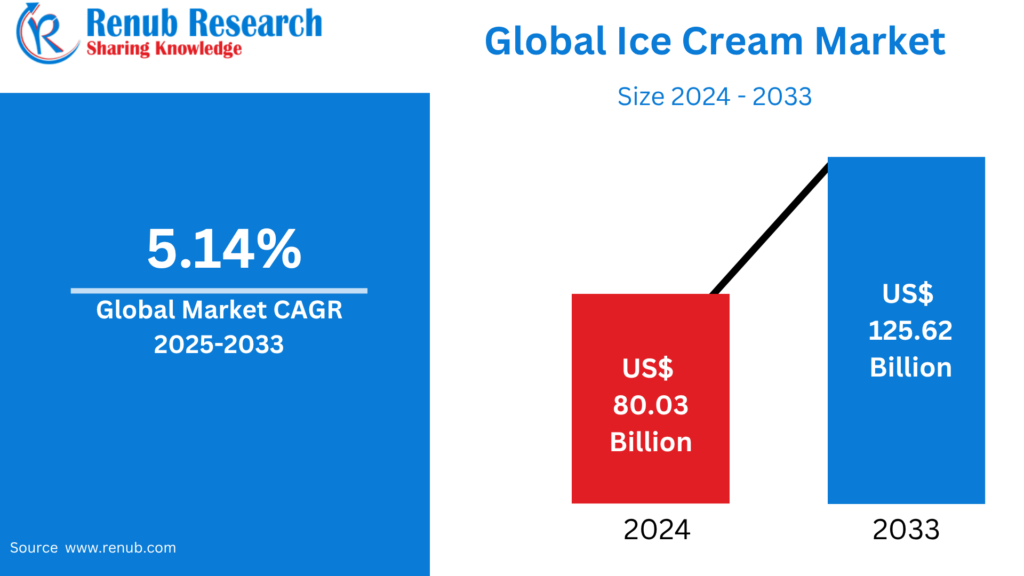
According to Renub Research global ice cream market is poised for healthy growth over the coming years, projected to rise from US$ 80.03 billion in 2024 to US$ 125.62 billion by 2033, registering a CAGR of 5.14% from 2025 to 2033. This growth is fueled by evolving consumer preferences, expansion into emerging markets, demand for premium and innovative flavors, and increasing focus on sustainability and ethical sourcing. Seasonal and limited-edition launches, premiumization trends, healthier formulations, and the rise of artisanal brands further enhance the market’s momentum. As lifestyles modernize and disposable incomes increase globally, the ice cream industry continues to innovate, diversify, and strengthen its worldwide footprint.
Ice Cream Industry Overview
Ice cream remains one of the most popular frozen desserts globally, cherished for its indulgent taste, versatility, and evolving product offerings. Traditionally sweetened using natural sugars or artificial sweeteners, ice cream today is available in a range of categories such as low-fat, soft serve, light, artisanal, and hard ice cream. Summer continues to be the dominant consumption season, yet year-round demand has grown thanks to improved cold-chain infrastructure, retail availability, and product innovations.
A key factor driving the market is the increasing availability of diverse and exotic flavors, which encourages consumers to explore new taste experiences. Additionally, rising consumer expenditure on convenience and fast food, along with continuous R&D investments by manufacturers to introduce healthier, premium, and functional ice cream variants, supports sustained industry expansion.
In response to growing health awareness, manufacturers are increasingly incorporating functional ingredients such as probiotics, prebiotics, natural antioxidants, and low-sugar substitutes, reinforcing the appeal of ice cream as both enjoyable and nutritionally enhanced. Premiumization continues to reshape the industry with high-quality ingredients, unique textures, and creative formulations that appeal particularly to millennials and urban consumers. Meanwhile, the rise in artisanal ice cream shops and value-added formats such as frozen yogurts, sherbets, and low-fat alternatives highlights growing consumer willingness to pay for quality, authenticity, and innovation.
Download Free Sample Report:https://www.renub.com/request-sample-page.php?gturl=ice-cream-market-p.php
Growth Drivers for the Global Ice Cream Market
Novel Tastes and Product Innovation
Consumers today seek experiential flavors, pushing brands to consistently innovate. The market has evolved beyond traditional chocolate and vanilla to include fusion flavors, international inspirations, fruit swirls, textured inclusions, and even savory undertones. Limited editions, seasonal flavors, and experimental blends retain consumer interest and deepen brand loyalty. By delivering excitement and emotional appeal, flavor innovation remains one of the most powerful drivers of market expansion.
Global Market Expansion and Emerging Economies
The ice cream market is rapidly expanding beyond mature markets into Asia-Pacific, Latin America, and Middle Eastern regions, where rising incomes, Westernization of diets, urbanization, and enhanced retail networks are transforming consumption trends. Countries such as India, China, Brazil, and UAE offer strong growth potential as consumers increasingly embrace indulgence-based food choices and premium frozen desserts. Global players continue to strengthen distribution, invest in localization, and launch region-specific flavors to capture wider audiences.
Ethical, Sustainable, and Transparent Practices
Sustainability has become a key purchasing influence, with consumers seeking brands committed to eco-friendly packaging, ethical sourcing, fair trade ingredients, and reduced environmental footprint. Companies adopting recyclable packaging, responsibly sourced dairy, and transparent production practices gain competitive advantage and credibility among environmentally conscious buyers. As sustainability aligns with global regulatory expectations and consumer values, it is set to shape long-term industry evolution.
Seasonal and Limited-Time Offerings
Limited-edition and seasonal ice cream launches significantly boost market performance. Brands capitalize on festive occasions, climatic seasons, and cultural events to introduce themed flavors and promotional campaigns. Summer-inspired refreshing fruit blends, winter indulgent flavors, and holiday-exclusive collections fuel excitement, create anticipation, and encourage repetitive purchasing patterns, ensuring continuous consumer engagement throughout the year.
Key Challenges Facing the Ice Cream Market
Seasonality and Shelf-Life Concerns
Despite year-round consumption improvements, seasonality continues to heavily influence market demand, with sales peaking during summer and declining in colder months. Ice cream also requires strict cold-chain logistics, and improper storage can lead to product spoilage, quality deterioration, and contamination risks. High storage and transportation costs, alongside shorter shelf life compared to many packaged foods, pose ongoing challenges for manufacturers and distributors. Additionally, competition from substitutes such as frozen yogurt and healthier dessert alternatives can restrain demand in health-conscious segments.
Rising Raw Material and Production Costs
Fluctuating prices of essential raw materials such as milk, cream, sugar, and flavoring agents significantly impact production economics. Premium, natural, and organic ingredients—widely preferred by consumers—often command higher costs, putting pressure on manufacturers to balance pricing and profitability. If costs are transferred to consumers, price-sensitive markets may experience slowed demand. Thus, companies continually seek efficiency improvements, supply resilience strategies, and innovation in cost management to remain competitive.
Dominant Segments Shaping Market Structure
Tubs and Packaged Formats Lead the Market
Tubs and bricks remain the most preferred packaging formats due to their convenience, value for money, family-sized servings, and storage ease. They enable multiple flavor combinations, support strong branding, and encourage repeat household purchases, making them a dominant category worldwide.
Dairy-Based Ice Cream Maintains Largest Market Share
Despite rising demand for plant-based alternatives, dairy-based ice cream continues to hold the largest market share given its creamy texture, taste familiarity, and emotional connection with consumers. Its versatility in flavor adaptation and premium positioning further strengthens dominance.
Impulse Ice Cream Segment Demonstrates Strong Appeal
Impulse ice cream—including bars, cones, sticks, and novelty treats—commands major market traction due to convenience, affordability, and on-the-go consumption relevance. Strategic placement in retail, convenience outlets, and recreational venues further stimulates spontaneous purchases.
Vanilla Continues as a Universal Favorite
Vanilla remains one of the most widely consumed flavors globally due to its versatility, subtle sweetness, and compatibility with countless toppings and desserts. Its universal acceptance across demographics ensures sustained demand.
Specialty Ice Cream Stores Strengthen Market Value
Specialty shops provide premium, immersive, and artisanal experiences. These outlets emphasize handcrafted products, premium ingredients, experiential dining atmospheres, and unique flavor storytelling, thereby driving strong consumer loyalty and premium spending patterns.
Regional Overview of the Global Ice Cream Market
Major countries contributing to the global ice cream market include the United States, Canada, major European nations, China, India, Japan, South Korea, Southeast Asian countries, Australia, New Zealand, Brazil, Mexico, Argentina, Saudi Arabia, UAE, and South Africa.
The United States remains one of the largest and most dynamic markets globally, benefiting from strong consumer appetite for premium products, healthier alternatives, artisanal innovations, and seasonal indulgence. The rising adoption of vegan, lactose-free, and plant-based ice creams highlights rapid market evolution.
The United Kingdom market is experiencing steady growth supported by premiumization, sustainability awareness, healthier formulations, and rising popularity of dairy-free variants. Seasonal demand continues to be influential alongside increasing year-round consumption trends.
The Indian ice cream market is growing remarkably due to rising incomes, expanding urban lifestyles, and enhanced retail access. Premiumization, innovative flavors, regional tastes, and growing demand for health-oriented ice cream varieties are key driving forces.
The UAE market benefits from high disposable incomes, multicultural tastes, strong demand for indulgence-focused desserts, and rising acceptance of premium and artisanal ice creams, supported by robust retail infrastructure and tourism-driven consumption.
Market Segmentation and Product Categories
The market is segmented by products into sticks/bars, cones & cups, tubs & bricks, and others. By category, it includes dairy-based and non-dairy-based products. Type segmentation includes impulse, take-home, and artisanal ice cream, while flavors span chocolate, vanilla, fruit varieties, and other specialty options. Distribution channels comprise supermarkets and hypermarkets, convenience stores, specialty stores, and online platforms, reflecting strong omnichannel retail growth.
Competitive Landscape and Key Companies
The industry is competitive and innovation-driven, with key players including Meiji Co. Ltd., General Mills Inc., Yili Group, Unilever Group, Mondelez International, Nestlé S.A., Bright Dairy & Food Co. Ltd., and Danone S.A. Companies focus on new product launches, sustainability initiatives, global expansion, premium offerings, and revenue enhancement strategies to maintain leadership.
Future Outlook of the Global Ice Cream Market 2025–2033
The global ice cream market is expected to witness sustained expansion driven by innovation, premiumization, health-conscious product development, and geographic expansion. Growing urbanization, lifestyle evolution, and increasing consumer willingness to spend on indulgence ensure strong future demand. Digitalization, sustainable production, and personalization trends will further redefine consumer engagement and competitive dynamics. With robust opportunities in emerging and developed markets alike, the ice cream industry is set to remain one of the most vibrant and evolving segments in the global food and beverage landscape.