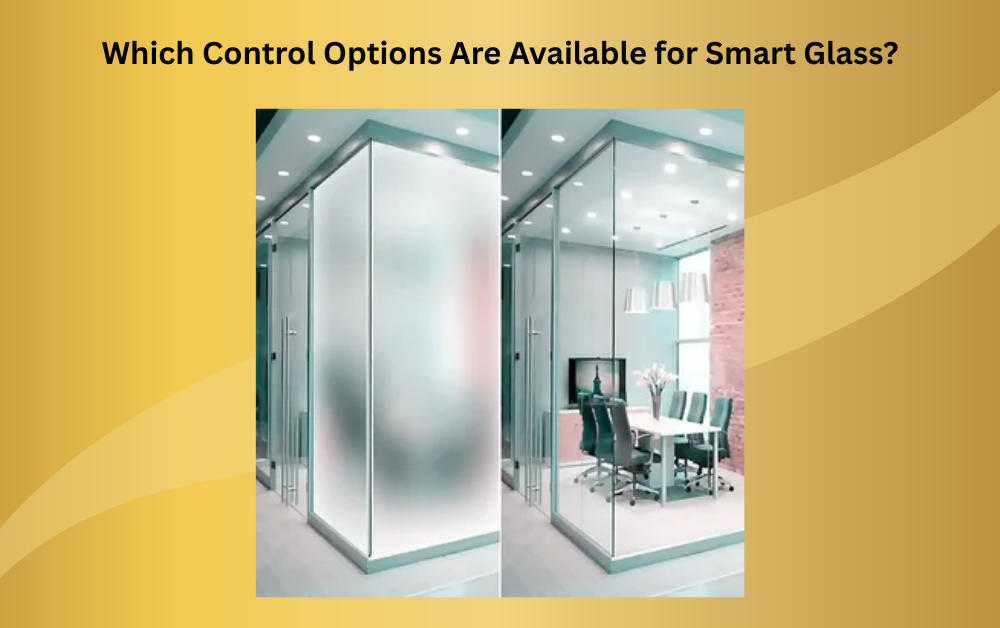
Smart glass is a modern solution that is changing the way we use windows and glass partitions. Unlike traditional glass, smart glass can switch between clear and frosted modes, giving privacy, reducing glare, and controlling light. But one of the most important aspects of smart glass is how it can be controlled. There are multiple ways to operate smart glass, making it convenient and suitable for homes, offices, and commercial spaces. In this blog, we will explain the different control options available for smart glass in simple, easy-to-understand words.
Note: Smart Glass in UAE is a modern glass solution that can switch from clear to frosted at the touch of a button, providing privacy, controlling light, and adding a sleek, stylish look to homes, offices, and commercial spaces across the UAE.
Understanding Smart Glass
What Is Smart Glass?
Smart glass is a type of glass that can change its transparency when electricity is applied. In its clear mode, you can see through it just like normal glass. In frosted or opaque mode, it provides privacy without blocking natural light completely.
Smart glass is widely used in:
-
Offices
-
Homes
-
Hospitals
-
Hotels
-
Showrooms
How Does Smart Glass Work?
Smart glass contains a special layer of liquid crystal or suspended particles between glass sheets. When electricity passes through, the particles align, making the glass clear. When the power is off, the particles scatter, turning the glass frosted or opaque.
This simple technology allows smart glass to change modes instantly and silently.
Manual Switch Controls
Wall-Mounted Switches
The most common way to control smart glass is through wall-mounted switches. These work just like regular light switches. You can turn the glass from clear to frosted with a single press.
Wall-mounted switches are simple, reliable, and easy to use. They are perfect for homes, offices, and small commercial spaces.
Touch Panels
Some smart glass systems come with touch panels installed on walls or desks. You can swipe or tap to change the glass mode.
Touch panels provide a modern and sleek interface, making them a stylish addition to any room.
Remote Control Options
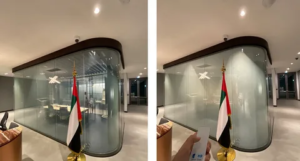
Wireless Remote Controls
Smart glass can also be operated with wireless remotes. This allows users to control one or multiple glass panels from a distance.
Remote controls are ideal for:
-
Large office spaces
-
Meeting rooms
-
Showrooms
You don’t need to be near the glass to operate it.
Smartphone Apps
Modern smart glass systems can be controlled using mobile apps. You can switch the glass, adjust settings, and even set timers directly from your smartphone.
Mobile control adds convenience and flexibility, especially in offices or smart homes.
Integration With Smart Home Systems
Voice Control Options
Smart glass can be connected to voice assistants like:
-
Amazon Alexa
-
Google Home
-
Apple Siri
This allows hands-free control. You can say commands like “turn the glass frosted” or “make the glass clear,” making it highly convenient.
Automation and Scheduling
Smart glass can also be automated using smart home systems. You can set schedules for the glass to switch at specific times. For example:
-
Clear during daytime
-
Frosted during evening or meetings
Automation ensures privacy and energy savings without manual effort.
Sensor-Based Controls
Light Sensors
Some smart glass systems include light sensors. The glass automatically adjusts its transparency based on sunlight intensity. This reduces glare and improves comfort indoors.
Light sensor control is especially useful in office buildings and sun-facing rooms.
Motion Sensors
Motion sensors can make smart glass change mode when someone approaches. This is helpful in spaces like:
-
Conference rooms
-
Hospitals
-
Showrooms
It provides privacy instantly without requiring manual operation.
Centralized Control Systems
Control for Multiple Panels
In large buildings or commercial spaces, smart glass can be connected to centralized control systems. This allows managing multiple panels from one place.
You can control all glass partitions in an office or hotel from a single panel or app, saving time and effort.
Integration With Building Management Systems
Smart glass can also be part of building management systems (BMS). This allows integration with lighting, heating, and air conditioning systems. The glass can adjust automatically to optimize light, temperature, and energy efficiency.
Benefits of Different Control Options
Convenience
Multiple control options provide flexibility for different spaces. You can use switches, remotes, apps, voice commands, or sensors depending on your preference.
Flexibility
Smart glass can adapt to different situations—instant privacy, light control, or automated schedules—making it ideal for homes and offices.
Energy Efficiency
Sensor-based and automated systems help reduce energy consumption by controlling sunlight and heat, which can lower cooling costs.
Choosing the Right Control Option
Consider Your Space
For homes, wall switches or mobile apps are often enough.
For offices or commercial spaces, centralized systems and sensor-based controls are more suitable.
Consider Convenience
Voice control and mobile apps are best for modern smart homes where convenience is a priority.
Consider Budget
Manual switches are cost-effective. Automation, sensors, and centralized systems may cost more but offer advanced functionality.
Final Thoughts
Smart glass is more than just a stylish solution—it’s a flexible and intelligent way to control privacy and light. With multiple control options, including wall switches, remote controls, smartphone apps, voice commands, sensors, and centralized systems, you can choose the method that fits your space and lifestyle.
Whether you want simple manual control for your home or advanced automated systems for your office or commercial building, smart glass can adapt to your needs, making life easier, more comfortable, and modern.
For more insightful articles related to this topic, feel free to visit: newsglo.com