Australia Meat Snacks Market Size and Forecast 2025–2033
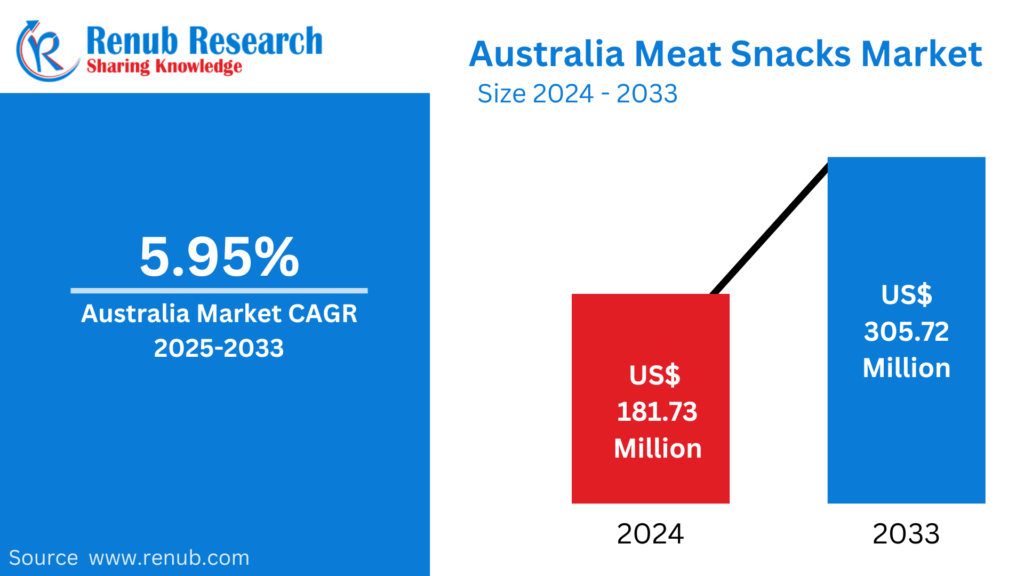
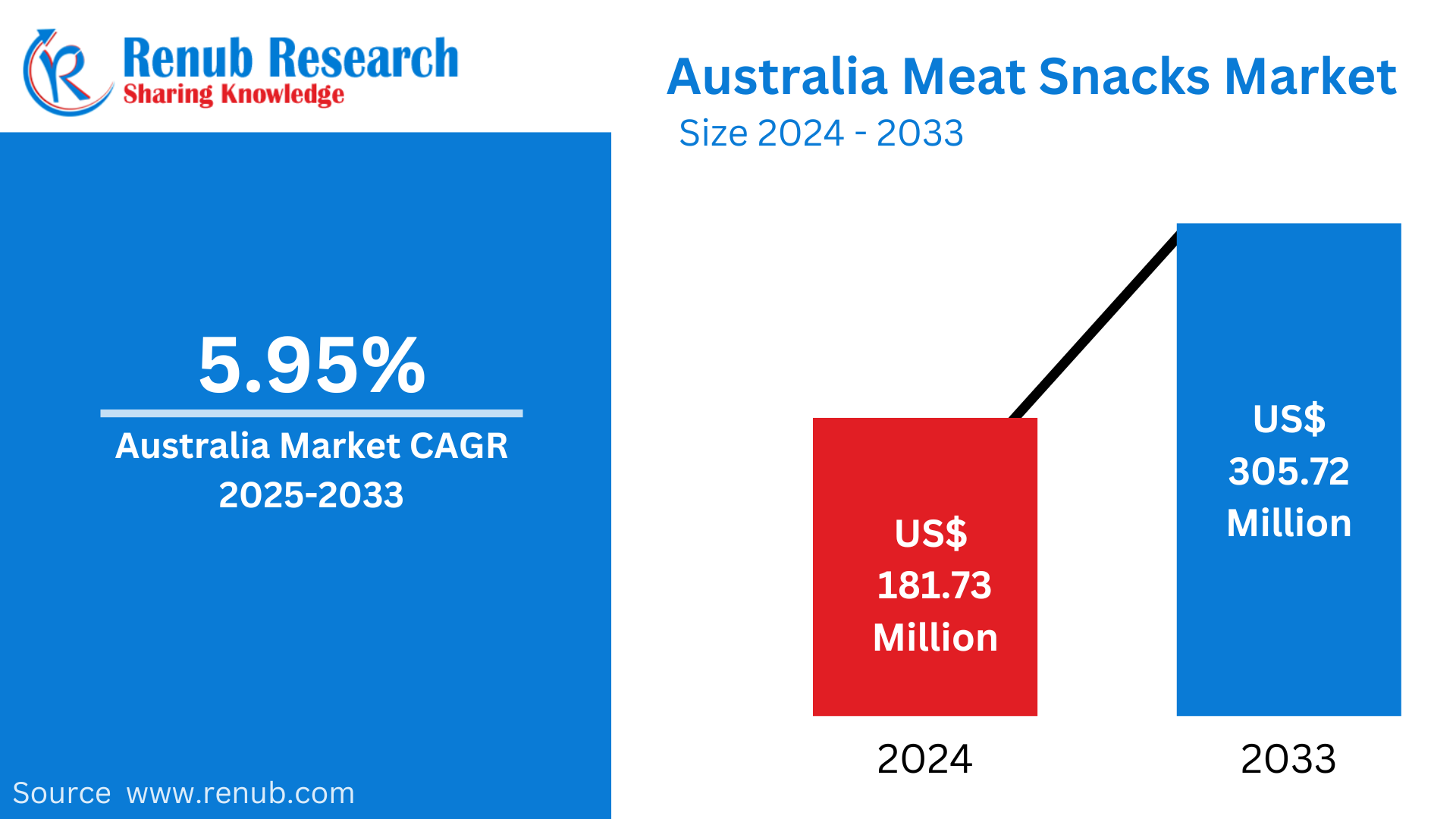
According to Renub Research Australia Meat Snacks Market is poised for steady growth driven by rising demand for protein-rich, convenient, and ready-to-eat snacks. Valued at US$ 181.73 million in 2024, the market is projected to grow significantly and reach approximately US$ 305.72 million by 2033, expanding at a CAGR of 5.95% between 2025 and 2033. Increasing health consciousness, preference for high-protein diets, lifestyle changes, premium product offerings, and the availability of innovative flavors are key elements fueling market expansion across Australia.
Australia Meat Snacks Market Overview
Meat snacks refer to portable, protein-dense snack products made primarily through curing, drying, marinating, and seasoning processes. Popular categories include jerky, biltong, sticks, sausages, and specialty dried meat snacks, which appeal to consumers seeking quick, nutritious food options. In Australia, demand has increased significantly due to the country’s active outdoor culture, high engagement in sports, and fast-paced urban lifestyles.
Consumers increasingly seek snacks that combine taste, nutrition, convenience, and sustained energy, making meat snacks a preferred alternative to traditional carbohydrate-heavy snacks. Australian brands are also focusing on premium ingredients, sustainable sourcing, unique flavors, and health-oriented formulations, which has amplified market visibility and consumer trust. Additionally, flavor innovation incorporating native Australian spices and herbs has enhanced product appeal.
Download Free Sample Report:https://www.renub.com/request-sample-page.php?gturl=australia-snacks-market-p.php
Growing Popularity of Protein-Focused Snacks in Australia
Protein has become a central focus in modern diets, and the shift toward high-protein, low-carb, keto, and paleo lifestyles significantly benefits the meat snacks market. Health-conscious adults, athletes, gym-goers, and busy professionals prefer snacks that support muscle maintenance, weight management, and energy stability. Meat snacks provide an ideal solution due to their natural protein content, satiety benefits, portability, and convenience.
Packaging innovation, including single-serve packs, family packs, resealable pouches, and travel-friendly formats, makes consumption easier across outdoor trips, workplaces, travel, and sports activities. Broader retail visibility and educational campaigns highlighting protein benefits are also strengthening market penetration among different demographic segments.
Increasing Demand for Premium and Innovative Meat Snack Products
Premiumization is one of the most influential trends shaping the Australia Meat Snacks Market. Consumers are increasingly prepared to invest in high-quality, ethically sourced, and gourmet-standard meat snacks, driving brands to diversify product offerings. The market now features expanded options, including beef, chicken, lamb, turkey, and exotic game meat varieties, alongside innovative marinated, smoked, and signature-spiced selections.
Premium consumers prefer grass-fed, organic, free-range, hormone-free, preservative-free, and natural ingredient-based meat snacks. Brands are also launching functional benefit products such as low-sodium, reduced-fat, gluten-free, and clean-label options, appealing to fitness-conscious and wellness-driven consumers. Attractive packaging designs with resealable, sustainable, and portion-controlled formats enhance convenience and product shelf life while supporting on-the-go consumption.
Expansion of Retail, E-Commerce, and Distribution Networks
The expansion of modern retail infrastructure and digital commerce significantly contributes to the market’s growth. Meat snacks are now widely available through supermarkets, hypermarkets, convenience stores, specialty retailers, petrol stations, and online platforms. Urban and regional availability continues to improve, allowing broader consumer access.
Online retail is especially influential, offering greater product variety, exclusive premium ranges, subscription snack boxes, and doorstep delivery, appealing to busy and remote consumers alike. Digital marketing and influencer engagement enhance brand awareness, while improved cold-chain logistics and packaging technologies ensure quality and safety maintenance throughout the distribution chain.
Key Challenges in the Australia Meat Snacks Market
Despite impressive growth, the market faces several challenges. High production costs remain a major barrier, particularly due to premium meat sourcing, specialized processing methods, and sophisticated packaging. Price-sensitive consumers may hesitate to purchase premium products frequently, impacting mass adoption. Smaller producers also face difficulty competing with larger manufacturers benefiting from economies of scale.
Additionally, fluctuating meat prices, environmental disruptions, and supply-chain uncertainties increase operational costs and create pricing instability. Another significant challenge involves strict regulatory standards, hygiene compliance, labeling requirements, and food safety controls. Meat snacks being perishable require meticulous storage and transportation monitoring. Failure to meet regulations can lead to penalties, recalls, and loss of consumer trust, making investments in compliance and quality control mandatory for sustained growth.
Australia Jerky Meat Snacks Market Outlook
Jerky represents one of the largest and fastest-growing categories within the Australian meat snacks market. Favored for its high protein density, portability, long shelf life, and flavor diversity, jerky appeals to hikers, athletes, military personnel, office workers, and everyday consumers. While beef jerky dominates, interest in chicken, lamb, kangaroo, and game jerky is rising.
Consumer demand is shifting toward clean-label jerky, featuring natural marinades, minimal preservatives, and authentic flavors such as smoked variants, barbecue, teriyaki, chili, pepper, and herb-infused recipes. Subscription services, premium gift bundles, and online-exclusive jerky packages are expanding consumer engagement, making jerky a key contributor to overall market revenue.
Australia Sausages and Sticks Meat Snacks Market Performance
Sausage-based snacks and meat sticks hold strong relevance due to taste versatility, convenience, affordability, and wide acceptance. Mini sausages, dried sausage sticks, and cocktail snack variants are popular among both adults and children. These snacks are widely consumed during social gatherings, outdoor activities, picnics, office breaks, and household snacking occasions.
Manufacturers are enhancing offerings through better seasoning blends, reduced artificial additives, improved nutritional composition, and multipack formats. Their integration into meal kits, party snacks, and retail promotions ensures stable consumer interest and contributes solidly to category resilience.
Rising Demand for Organic Meat Snacks in Australia
Organic meat snacks are gaining momentum as Australian consumers increasingly prioritize sustainability, ethical production, animal welfare, and natural nutrition. Organic products attract premium buyers and eco-conscious consumers who prefer grass-fed, hormone-free, antibiotic-free, and minimally processed meat snacks.
Retailers emphasize certification labeling, provenance transparency, and sustainability credentials, supporting informed purchasing decisions. Although pricing remains higher than conventional alternatives, increasing awareness and growing health consciousness are expected to expand organic meat snacks adoption in the coming years.
Importance of Traditional Meat Snacks Segment
Traditional meat snacks continue to hold substantial market share due to affordability, familiarity, and widespread availability. These products appeal strongly to mass-market consumers, providing an economical entry point into the meat snacks category. Traditional jerky, sausages, and snack sticks are typically found across supermarkets, convenience stores, and retail chains, supporting consistent high-volume sales.
Brands continue to invest in mild innovation, improved packaging, and flavor enhancements to ensure continued competitiveness. Although premium categories are growing rapidly, traditional meat snacks remain essential to maintaining overall industry stability.
Role of Convenience Stores in Australia Meat Snacks Market
Convenience stores play a crucial role as impulse purchase points, particularly favored by urban shoppers, travelers, students, and commuters. Ready-to-grab formats, snack-sized portions, and attractive shelf displays support frequent purchases. Resealable packaging also aligns well with busy consumer lifestyles. As urbanization deepens and on-the-go consumption rises, convenience stores will remain a critical retail driver for meat snack expansion.
Growth of Online Retail in the Australia Meat Snacks Market
Online retail is emerging as a powerful distribution platform, driven by digital shopping preferences, national delivery coverage, and broad product availability. E-commerce platforms, specialty snack sites, and brand-owned online stores allow access to exclusive flavors, premium imports, organic selections, and bulk purchase options.
Subscription snack services and curated protein snack boxes have gained popularity, appealing to consumers seeking novelty and variety. Online marketing strategies, influencer collaborations, and social media promotions further enhance visibility and adoption.
Australia Meat Snacks Market Segmentation Summary
The market is segmented by product type, nature, and distribution channel. Major product categories include jerky, sticks, sausages, and other specialty meat snacks. Based on nature, the market comprises conventional and organic offerings. Key distribution channels include supermarkets/hypermarkets, convenience stores, online retail, and other retail outlets, each playing distinct strategic roles in market expansion.
Competitive Landscape and Leading Companies
The competitive environment of the Australia Meat Snacks Market is characterized by global giants and regional manufacturers focusing on innovation, premiumization, branding strategies, mergers, partnerships, and expanded product lines. Key players include Nestlé S.A., Hormel Foods, Conagra Brands, Bridgford Foods, Hershey, Associated British Foods, Tyson Foods, Danish Crown, and Kerry Group. These companies emphasize quality enhancement, sustainability initiatives, premium production standards, and diversified distribution strategies to reinforce their market presence.
Conclusion and Future Outlook for the Australia Meat Snacks Market
The Australia Meat Snacks Market is positioned for steady and promising growth through 2033, driven by evolving consumer preferences toward healthy, protein-rich, convenient, and innovative snacking solutions. While regulatory demands and production costs pose challenges, opportunities lie in premium offerings, organic expansion, online retail growth, and continued product innovation. The future landscape suggests a dynamic market, supported by strong consumer interest, advanced retail evolution, and increasing nutritional awareness across Australia.