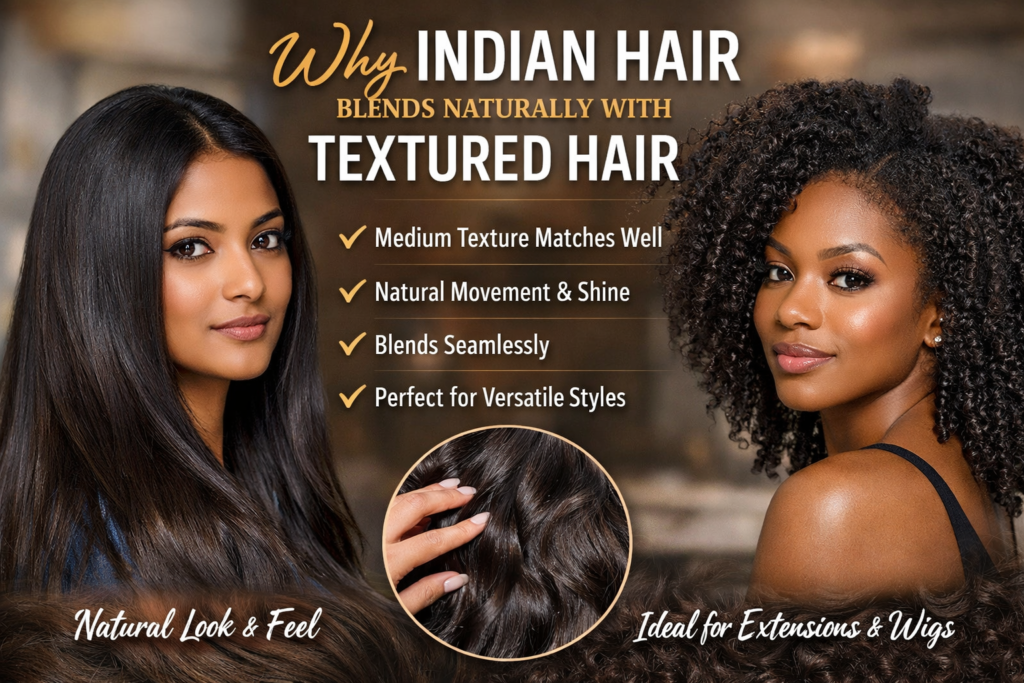
When it comes to hair extensions, wigs, and protective styles, one question consistently comes up among textured-hair wearers in the United States: Why does Indian hair look so natural compared to other hair types? Whether you’re wearing relaxers, silk presses, natural curls, or protective styles, Indian hair has earned a reputation for blending seamlessly with textured hair.
The answer isn’t marketing hype. It’s rooted in biology, texture compatibility, cuticle structure, and long-standing hairstyling practices. After two decades of working closely with hair brands, stylists, and textured-hair consumers, one thing is clear—Indian hair consistently delivers a natural, undetectable finish when blended with textured hair.
Let’s break down exactly why.
1. Indian Hair Has a Naturally Medium Texture
One of the biggest reasons Indian hair blends so effortlessly with textured hair is its natural medium strand thickness. It’s not overly fine like some European hair, and it’s not extremely coarse either. This middle-ground texture mirrors the density of many textured hair types commonly found among African American, Afro-Latina, and mixed-texture hair wearers in the U.S.
This balanced thickness allows Indian hair to:
-
Blend smoothly with blown-out natural hair
-
Match relaxed or silk-pressed textures
-
Mimic natural density without looking stringy or bulky
Because the strands aren’t too thin, Indian hair holds styles well. And because it’s not overly coarse, it doesn’t appear stiff or unnatural when installed.
2. The Natural Movement Matches Textured Hair Behavior
Textured hair is dynamic—it moves, bends, and responds to humidity, heat, and styling. Indian hair behaves in a very similar way. When you run your fingers through it, it flows naturally instead of sitting stiff or lifeless.
This movement matters more than most people realize. Hair that doesn’t move like your own instantly gives away the fact that it’s an extension or wig.
Indian hair:
-
Reacts naturally to humidity
-
Holds curls without looking artificial
-
Falls realistically when styled or layered
This is why Indian hair looks just as good on a busy weekday as it does after a full glam session.
3. Cuticle Alignment Creates a Seamless Blend
Indian hair is typically collected with the cuticles intact and aligned in one direction. This is crucial for blending with textured hair.
Aligned cuticles mean:
-
Less tangling
-
A smoother finish
-
Natural shine (not plastic-looking gloss)
Textured hair naturally has layers and depth. Indian hair complements this by reflecting light softly, rather than appearing overly shiny like synthetic or heavily processed hair. The result is a finish that looks grown, not installed.
4. Indian Hair Mimics the Density of Natural Textured Hair
Density is often overlooked, but it plays a major role in blending. Many hair extensions look unnatural because the ends are too thin or the volume drops suddenly.
Indian hair maintains consistent density from root to tip, similar to healthy textured hair that has been trimmed and cared for properly.
For U.S. consumers who want fullness without bulk, this is a major advantage. You get:
-
Natural-looking ends
-
No see-through or wispy finish
-
A fuller silhouette that matches textured hair patterns
This is especially important for sew-ins, quick weaves, and lace wigs.
5. Versatility Across Textured Styles
Indian hair doesn’t lock you into one look. It blends beautifully across a wide range of textured hairstyles popular in the U.S., including:
-
Silk presses
-
Blowouts
-
Wand curls
-
Body wave installs
-
Natural-looking lace front wigs
-
Protective styles with leave-out
Whether you prefer bone-straight styles or soft waves with volume, Indian hair adapts without losing its natural appearance.
6. Heat and Color Compatibility with Textured Hair
Textured hair wearers often style with heat or color their extensions to match their natural hair. Indian hair handles both extremely well.
Because it’s naturally strong and elastic, Indian hair can be:
-
Flat-ironed without excessive shedding
-
Curled repeatedly without losing texture
-
Colored to match natural hair tones common in the U.S.
When properly cared for, it maintains its integrity even after multiple styling sessions, making it ideal for long-term wear.
7. Cultural Hair Practices Preserve Hair Quality
Another lesser-discussed reason Indian hair blends so well is how it’s traditionally cared for before collection. Indian hair is often grown long, kept moisturized, and protected from excessive chemical processing.
This results in hair that is:
-
Strong from root to tip
-
Naturally conditioned
-
Less prone to breakage
That strength translates directly into better blending and longer-lasting installs for U.S. consumers.
8. Indian Hair Ages Like Natural Textured Hair
Over time, hair extensions reveal their true quality. Indian hair doesn’t suddenly look worn out after a few weeks. Instead, it softens and settles—much like natural textured hair does over time.
With proper maintenance, it continues to:
-
Hold shape
-
Retain volume
-
Look realistic even after multiple installs
This makes it a favorite for women who value longevity and authenticity over short-term trends.
9. Ideal for Lace Fronts and Closures
For lace wigs and closures, realism is everything. Indian hair blends seamlessly at the hairline because it mimics the density and flow of textured hair near the scalp.
When customized properly, it offers:
-
Natural-looking baby hairs
-
A realistic scalp effect
-
Seamless transitions from lace to natural hair
This is why Indian hair wigs remain one of the most trusted options in the U.S. market.
Final Thoughts: Natural, Reliable, and Timeless
Indian hair doesn’t just blend with textured hair—it belongs with it. Its medium texture, realistic movement, consistent density, and natural shine make it one of the most versatile hair types available today.
For textured-hair wearers in the United States who want extensions or wigs that look effortless, authentic, and long-lasting, Indian hair continues to stand the test of time. It doesn’t chase trends—it delivers reliability, beauty, and natural blending that feels like your own hair.