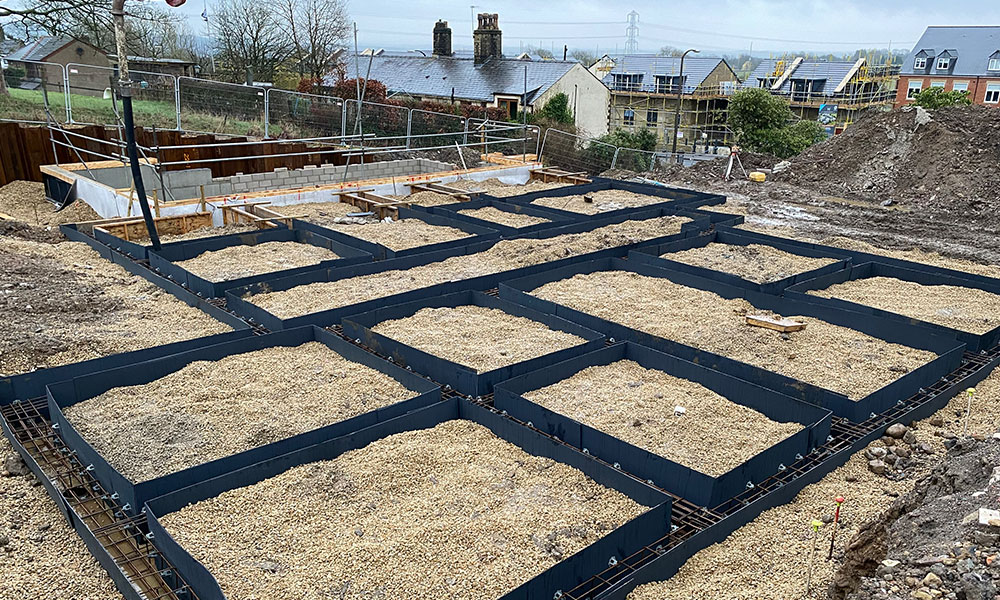
Pile foundation is a deep foundation made of long steel, timber, and reinforced concrete. A foundation is described as piled when its depth is three times its width. A strong base on which the construction project can take place depends on the materials that are used. It can support very heavy structures like bridges, skyscrapers, and industrial plants by transferring loads to deep, strong strata. However, it is more expensive due to specialised equipment, materials, and skilled labour needed.
What Are the Types of Piled Foundation
Pile foundations are classified by function and construction material, serving to transfer structural loads to deeper, stronger soil layers using materials like concrete, steel, or timber, installed through driving, boring, or screwing into the ground.
1. Driven Pile
Driven pile is a classic and old pile foundation technique used across the world. Driven piles are foundation supports hammered into the ground, made from materials like concrete, steel, or timber. The main benefits of this pile are to punch through soft and unstable soil to anchor a structure in strong and deeper soil.
2. Bored Pile
It is also known as a replacement pile that is formed by drilling a hole into the ground and then filling it with concrete. It is best for supporting massive vertical loads from tall buildings, bridges, and industrial complexes. Restricted Access Piling helps bored piling by enabling installation in tight, sensitive, or difficult-to-reach locations using compact rigs that solve logistical challenges and protect sensitive areas.
3. Composite Pile
This pile combines two or more piling materials, like concrete and steel, to get the benefits from each to strengthen the base. It lasts for generations, often exceeding the life of traditional materials, and offers high dimensional stability across temperatures.
4. Floating Pile
It is also called a friction pile, which depends on the friction between the pile surface and the surrounding soil. They are ideal for use in areas where a hard or stable soil layer is not available at a reasonable or economical depth.
Which material is used in a pile foundation?
Pile foundations primarily use reinforced concrete, steel, and timber, sometimes combined as a composite, to create strong, slender columns that transfer building loads deep into stable soil, with the choice depending on soil conditions, load, and cost.
1. Timber Pile
They are cost-effective, easy to handle over water, absorb impact well, and are the perfect option for light to moderate load structures, temporary work, and budget-conscious projects.
2. Concrete Pile
Concrete pile is perfect for supporting heavy structures like skyscrapers, bridges, and marine constructions, especially on weak or unstable soils by transferring loads to deeper, solid layers.
3. Steel Pile
It is super strong and is perfect for projects that require heavy load-bearing capacity, deep foundation and robust performance in challenging soil or waterlogged conditions.
4. Composite Pile
A composite pile combines different materials to maximise efficiency for various soil conditions and structural requirements.
What are the Advantages of a pile foundation?
Pile foundations are beneficial for transferring heavy building loads to deep, stable soil, giving high load capacity, minimal settlement, and excellent stability against lateral forces. Here are some main advantages of pile foundation:
1. High Load-Bearing Capacity
The reason that piles are anchored deeply in dense soil or solid rock is that they can support heavy loads. It can bear very heavy loads of bridges, high-rise buildings, towers, chimneys, and industrial complexes.
2. Minimal Settlement
Piled Foundations provide minimal settlement by transferring structural loads from weak, compressible surface soil layers to deeper, stronger, and less compressible soil or rock strata. This process bypasses the problematic soil that would otherwise compress excessively under the building’s weight.
3. Resistance To the Uplift and Lateral Force
This resists uplift and lateral forces primarily through skin friction and end boring, plus the pile’s weight. It is used for extreme uplift, engaging larger soil masses for greater pull-out resistance against force wind and seismic activity.
4. Eco-friendly option
Pile foundation, especially screw piling, is eco-friendly by drastically cutting excavation, reducing the need for concrete and steel, lowering machinery use, and allowing for reuse. This minimises site disruption to soil, plants, and wildlife compared to traditional methods, aligning with green building goals.
Conclusion
Pile foundation is the most important foundation system that is specially designed to carry heavy loads and transform them safely to deeper and stronger soil. It makes it possible to construct tall buildings, bridges, towers, and marine structures even in weak or waterlogged soils. Proper planning and execution of piling work in construction will lead to successful and enduring projects, supported by the right foundation system.