Long Island’s unique climate presents specific challenges for business owners and property managers when selecting wayfinding signage. With humid summers, cold winters, coastal salt air, and occasional severe weather events, choosing the right signs for your facility requires careful consideration of both environmental factors and functional needs.
Understanding Long Island’s Weather Challenges
Long Island experiences a humid subtropical climate with four distinct seasons. Summer temperatures regularly reach the high 80s with significant humidity, while winter can bring freezing temperatures, snow, and ice. The proximity to the Atlantic Ocean means coastal properties face additional challenges from salt spray and wind. These conditions demand different approaches for indoor versus outdoor wayfinding solutions.
The coastal environment accelerates material degradation, particularly for metal components that can rust or corrode. UV exposure during long summer days can fade colors and weaken certain plastics. Winter freeze-thaw cycles can cause expansion and contraction that loosens mounting hardware or cracks inferior materials. Understanding these environmental stressors is the first step in making informed signage decisions.
Outdoor Wayfinding Signs: Built to Withstand the Elements
When it comes to exterior wayfinding signage on Long Island, durability is paramount. Your outdoor signs serve as the first point of contact for visitors navigating parking lots, campuses, healthcare facilities, educational institutions, and commercial complexes. They must remain legible and attractive year-round despite whatever weather conditions arise.
Material Selection for Longevity
The most successful outdoor wayfinding signs in Long Island utilize weather-resistant materials specifically engineered for harsh conditions. Aluminum is an excellent choice because it naturally resists corrosion while remaining lightweight and easy to install. When properly treated with powder coating or anodizing, aluminum signs can last decades without significant degradation.
High-density urethane (HDU) has become increasingly popular for dimensional outdoor signage. This material won’t rot, crack, or absorb moisture like traditional wood, and it can be carved to create elegant dimensional effects. For budget-conscious projects, high-grade exterior plastics like PVC or acrylic offer good durability when manufactured with UV inhibitors.
Avoid materials prone to water damage, warping, or rapid fading. Standard painted wood, untreated metals, and economy-grade plastics may seem cost-effective initially but will require frequent replacement in Long Island’s challenging climate.
Design Considerations for Visibility
Long Island’s weather isn’t just about material durability. Heavy rain, snow, and fog can significantly reduce visibility, making design choices critical. High-contrast color schemes ensure your wayfinding signs remain readable during adverse weather conditions. Dark text on light backgrounds or vice versa performs better than low-contrast combinations.
Reflective elements or illumination becomes essential for signs that need to function during evening hours or poor weather. Solar-powered LED lighting has emerged as an environmentally friendly option that eliminates electrical installation costs while providing consistent visibility.
The physical positioning of outdoor signs must account for snow accumulation and landscape maintenance. Signs mounted too low may become buried during significant snowfall or obscured by summer vegetation growth. Strategic placement at appropriate heights ensures year-round functionality.
Indoor Wayfinding Signs: Flexibility and Aesthetics
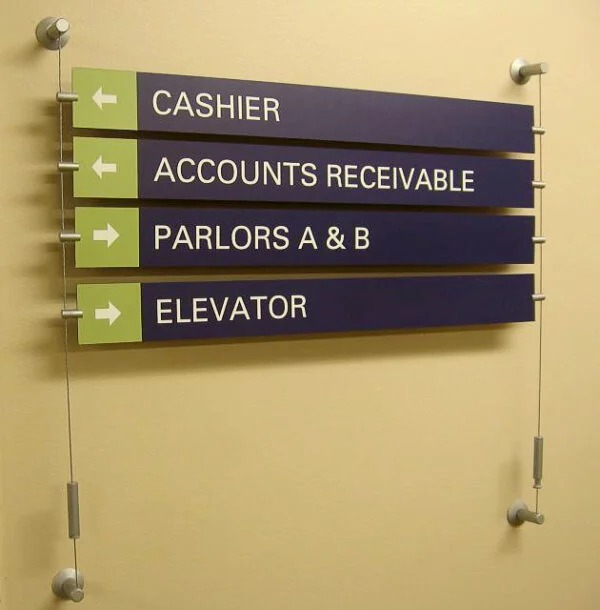
Indoor wayfinding signage operates in a controlled environment, which opens opportunities for more diverse materials and design approaches. Without exposure to rain, snow, and UV radiation, indoor signs can prioritize aesthetics and brand integration while maintaining long-term durability.
Material Versatility
Interior environments allow for materials that would quickly deteriorate outdoors. Vinyl graphics applied to walls create sleek, modern wayfinding solutions perfect for corporate offices and retail environments. Brushed metals like brass or stainless steel add sophistication to lobbies and executive areas without the corrosion concerns of exterior applications.
Wood can be beautifully incorporated into indoor wayfinding when it complements your facility’s design aesthetic. From rustic reclaimed barn wood to polished hardwoods, these organic materials add warmth impossible to achieve with exterior-grade options.
Acrylic signs with dimensional lettering, frosted glass panels with etched graphics, and fabric-based systems all perform well indoors. The absence of weather exposure means you can select materials based primarily on design intent and budget rather than environmental resilience.
Climate Control Considerations
While indoor signs avoid harsh weather, they still face environmental factors. Long Island’s humidity can affect certain materials, particularly during summer months when air conditioning may not run continuously in all facilities. Paper-based signs or those with adhesive components may curl or separate in high humidity areas.
Temperature fluctuations in warehouses, parking garages, or facilities with frequent door openings require materials that won’t expand, contract, or become brittle. Even indoors, material selection should account for the specific microclimate of each location within your facility.
The Transition Zone: Covered Outdoor Areas
Many Long Island properties feature covered entryways, parking structures, or partially enclosed spaces that blur the line between indoor and outdoor environments. These transition zones require special consideration in your wayfinding strategy.
Covered areas still experience temperature extremes, humidity, and potentially some precipitation from wind-driven rain or snow. However, they’re protected from direct UV exposure and the worst weather conditions. This allows for a middle-ground approach using materials like high-quality painted aluminum, protected vinyl graphics, or sealed wood products.
Parking garages present particular challenges with vehicle exhaust, limited natural light, and concrete dust accumulation. Signs in these spaces need regular cleaning access and materials that resist grime buildup while remaining clearly visible under artificial lighting.
Making the Right Choice for Your Long Island Property
Selecting appropriate wayfinding signage requires analyzing your specific needs, budget, and property characteristics. Start by conducting a thorough assessment of where signs will be located and what environmental conditions they’ll face.
For comprehensive campus or facility-wide wayfinding systems, consistency in design language across indoor and outdoor signs creates a cohesive user experience. While materials may differ, color schemes, typography, and iconography should remain uniform to avoid confusing visitors.
Budget considerations should factor in lifecycle costs rather than just initial installation expenses. Premium weather-resistant materials may cost more upfront but eliminate frequent replacement costs. Calculate the total cost of ownership over five to ten years for a more accurate comparison.
Working with Professional Sign Companies
Long Island businesses benefit from partnering with local sign companies familiar with regional weather challenges and municipal regulations. Experienced professionals can recommend proven material combinations, suggest optimal mounting methods for different substrate conditions, and ensure compliance with ADA requirements and local codes.
Professional installation is particularly important for outdoor signs that must withstand high winds and severe weather. Proper anchoring, sealed edges, and appropriate mounting hardware prevent premature failure and potential safety hazards.
Conclusion
The choice between indoor and outdoor wayfinding signs on Long Island ultimately depends on environmental exposure, aesthetic goals, budget constraints, and functional requirements. Outdoor signs demand weather-resistant materials like aluminum, HDU, or marine-grade plastics that can endure humidity, salt air, temperature extremes, and UV exposure. Indoor signs offer greater material flexibility, allowing for design-focused solutions using vinyl, wood, acrylic, and specialty materials.
By understanding Long Island’s unique climate challenges and selecting appropriate materials for each application, you can create a wayfinding system that remains effective, attractive, and cost-efficient for years to come. Whether directing visitors through a corporate campus, helping patients navigate a healthcare facility, or guiding shoppers through a retail complex, the right signage investment pays dividends in improved user experience and reduced maintenance costs.