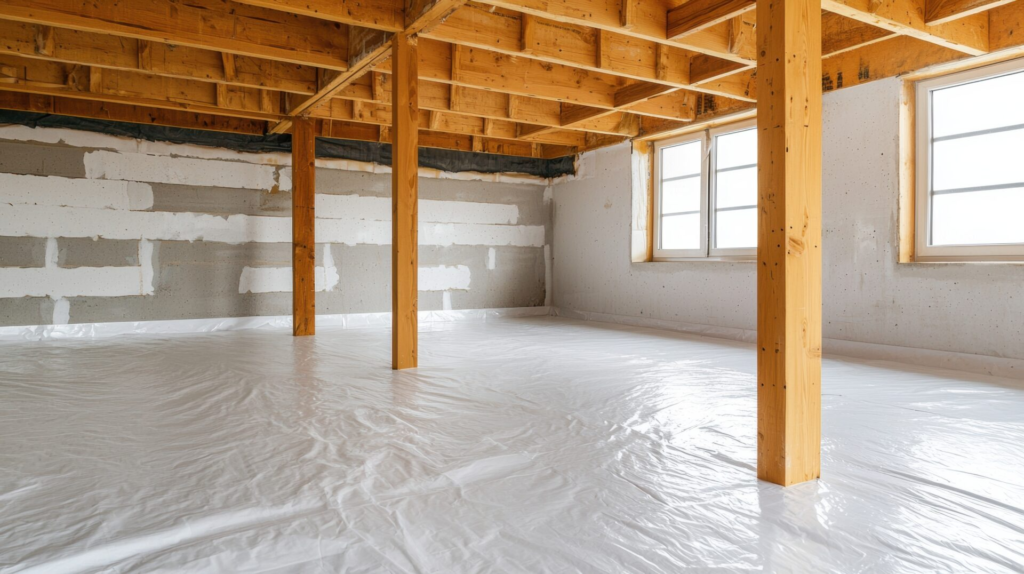
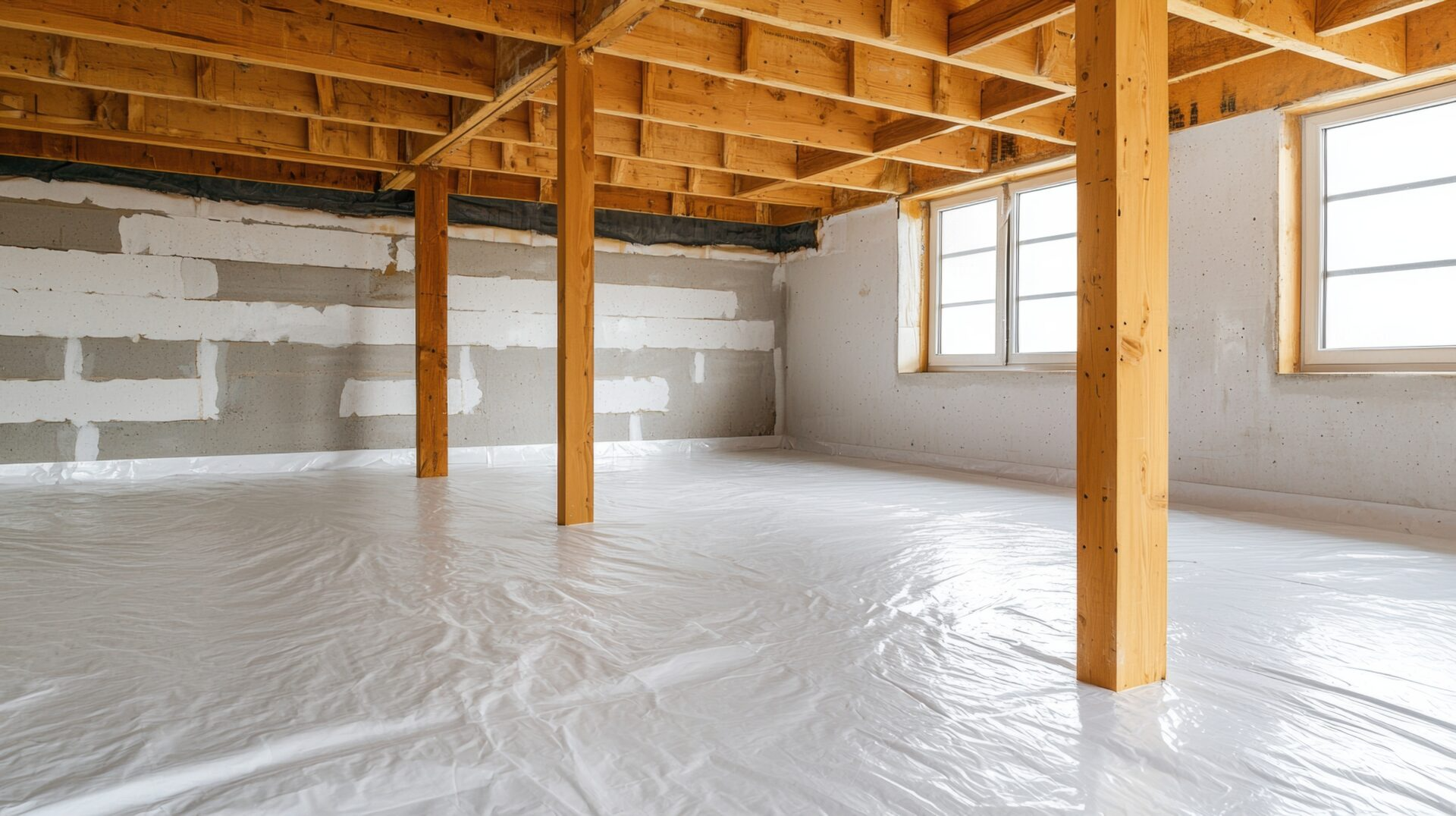
A damp basement can sneak up on you. One day, it smells musty. Next week, the corner by the stairs has a wet spot after a hard rain. You don’t need to panic; you need a clear plan.
Here’s the first thing to know: waterproofing basement walls isn’t a single magic paint, foam, or patch. It’s a set of fixes that control where water goes. Once you understand that, it’s much easier to compare bids and choose well.
What “waterproofing basement walls” really means
Most leaks start outside. Rain and melting snow soak the soil. That wet soil presses on your foundation. Water looks for weak points like:
- tiny cracks
- mortar joints in block walls
- basement windows and window wells
- the seam where the wall meets the floor
That’s why waterproofing basement walls can mean three different kinds of work:
1) Keep water away from the foundation
This is the “start outside” stuff: fix grading, clean gutters, and extend downspouts so roof water drains away from the house. Some homes also need exterior drains or an exterior membrane, which can require digging.
2) Collect water that gets in and send it out
Many long-term solutions focus on drainage. An interior drain at the basement edge can catch seepage and route it to a sump pump, which discharges water away from the home.
3) Seal obvious entry points
Crack sealing, pipe-penetration sealing, and window well fixes can help, but they work best when the outside water load is also addressed.
A real-life example: Marcus stores camping gear in his basement. After big storms, one wall gets damp halfway down. A contractor offers to “seal the wall from the inside.” Another points out a short downspout that dumps water right at that corner. Fixing the downspout and slope reduces water pressure first, so any wall repair is more likely to last.
Why the lowest quote can lose you money
When you search for basement waterproofing companies near me, you’ll see prices all over the map. That’s usually because the quotes cover different scopes, not because one person is “honest” and the other is “greedy.”
The risk is choosing a cheap, narrow fix that treats only what you can see. Water is persistent. If the real issue is drainage outside or water pressure under the floor, a small patch may fail, and the leak will show up a few feet away.
How to compare quotes like a pro
Ask each contractor to break their quote into the same four buckets:
- Outside water control (grading, gutters, downspouts, window wells)
- Wall repairs (cracks, joints, wall protection)
- Drainage and pumping (interior drain, sump pump, discharge line)
- Moisture control (humidity, ventilation, dehumidifier plan)
If one quote covers buckets 1–4 and another only covers bucket 2, they are not comparable, even if both say “waterproofing basement walls.”
Questions to ask before you sign
Use these to separate solid pros from smooth talkers:
- “What’s the path the water is taking to get in?”
- “What will you do outside to reduce water near the foundation?”
- “If you collect water inside, where does it discharge to, and how far from the house?”
- “Are you licensed and insured, and will you include that in the contract?”
- “Can you show me the full scope in writing: materials, locations, and payment schedule?”
- “Who does the work: your crew or subcontractors?”
- “What warranty is included, and what would void it?”
Also, ask for two or three recent references. A quick phone call can tell you a lot about communication, cleanup, and whether the fix held up after the next big storm.
Red flags worth listening to
Slow down if you see any of these:
- No written contract.
- A large deposit request up front.
- Pressure to sign “today only.”
- A warranty that sounds great but is unclear in writing.
- No plan for where collected water goes after the job.
Pick the plan that controls water, not just the wall
When you search for basement waterproofing companies near me, look for someone who explains the cause in plain language, shows you options, and puts the full scope in writing. If the plan manages water both inside and outside, your basement is far more likely to stay dry for the long haul.