Europe Creatine Supplements Market Overview
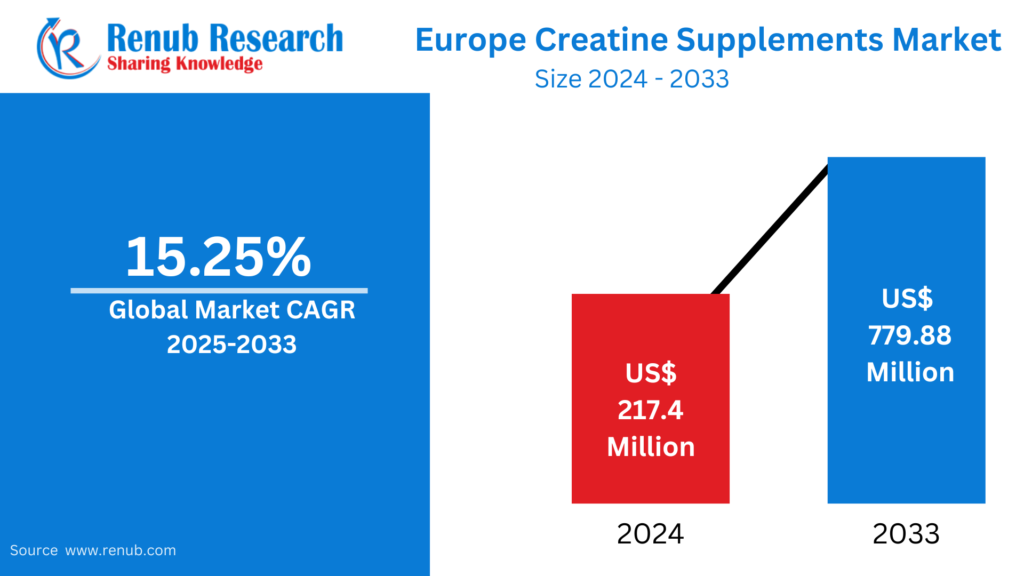
According To Renub Research Europe creatine supplements market is witnessing rapid expansion as health, fitness, and performance nutrition gain mainstream acceptance across the region. The market was valued at approximately US$ 217.4 million in 2024 and is projected to reach around US$ 779.88 million by 2033, registering a strong compound annual growth rate of 15.25% from 2025 to 2033. This remarkable growth is supported by rising awareness of physical fitness, increasing participation in sports and gym-based activities, growing urbanization, and higher disposable incomes. Creatine supplements have transitioned from being niche products used mainly by professional athletes to widely accepted nutritional aids for recreational gym-goers, students, and working professionals seeking strength, endurance, and overall wellness.
Europe Creatine Supplements Market Outlook
Creatine supplements are dietary products designed to increase the body’s natural creatine stores, primarily within skeletal muscles. Creatine plays a critical role in the production of adenosine triphosphate, which supplies energy during short bursts of high-intensity physical activity such as sprinting, weightlifting, and resistance training. By enhancing ATP availability, creatine supplementation helps improve muscle strength, power output, training volume, and post-workout recovery.
In Europe, creatine supplements are commonly available in forms such as powders, capsules, tablets, and ready-to-mix formulations. Creatine monohydrate remains the most widely consumed variant due to its proven effectiveness, affordability, and safety profile. The European market outlook remains highly positive as creatine gains broader acceptance not only for muscle development but also for potential benefits related to cognitive performance, aging, and metabolic health. Increasing consumer trust, product innovation, and expanding distribution channels continue to support long-term market growth.
Download Free Sample Report:https://www.renub.com/request-sample-page.php?gturl=europe-creatine-supplements-market-p.php
Key Growth Drivers in the Europe Creatine Supplements Market
Rising Health and Fitness Awareness
Growing health consciousness is one of the most influential drivers of the Europe creatine supplements market. Across the region, individuals are becoming more proactive about maintaining physical fitness, preventing lifestyle-related diseases, and improving overall quality of life. This shift has resulted in higher participation in structured exercise programs, strength training, and recreational sports.
Young adults, particularly those between the ages of 16 and 24, represent a key consumer group. This demographic shows strong interest in muscle building, athletic performance, and body aesthetics. Increased exposure to fitness education, social media fitness content, and influencer-driven health messaging has normalized the use of supplements such as creatine as part of everyday fitness routines. As fitness awareness spreads across different age groups, the consumer base for creatine supplements continues to widen.
Increasing Gym Memberships and Sports Participation
The steady rise in gym memberships across Europe is directly contributing to higher demand for creatine supplements. Fitness centers, health clubs, and training studios have expanded rapidly, particularly in urban areas, making structured exercise more accessible. As individuals commit to regular training programs, they increasingly seek supplements that can enhance performance, accelerate muscle growth, and reduce recovery time.
Creatine is widely recommended by fitness professionals for strength training and high-intensity workouts, making it one of the first supplements adopted by new gym members. Increased participation in organized sports, amateur competitions, and endurance training has further boosted demand. As fitness culture becomes deeply embedded in European lifestyles, creatine supplementation is increasingly viewed as a standard component of training regimens.
Expansion of E-commerce and Digital Retail Channels
The rapid growth of e-commerce has significantly reshaped the European creatine supplements market. Online platforms allow consumers to access a wide variety of creatine products, compare formulations, read reviews, and make informed purchasing decisions from the comfort of their homes. This convenience has proven especially appealing to younger, tech-savvy consumers and those living in regions with limited access to specialty nutrition stores.
E-commerce also enables brands to engage directly with consumers through targeted marketing, subscription models, and influencer collaborations. Digital retail channels provide detailed product descriptions, dosage guidance, and educational content, which helps build consumer trust and awareness. As online shopping continues to expand across Europe, e-commerce is expected to remain a key growth engine for the creatine supplements market.
Influence of Fitness Influencers and Social Media
Social media platforms and fitness influencers play a critical role in shaping consumer perceptions of creatine supplements. Influencers, personal trainers, and athletes regularly promote creatine as a scientifically backed and effective supplement for improving strength and performance. Their endorsements help demystify creatine use and address misconceptions related to safety and side effects.
Video demonstrations, transformation stories, and educational posts have increased consumer confidence and driven trial among first-time users. This influencer-driven marketing approach is particularly effective among younger demographics, accelerating adoption and contributing to rapid market expansion.
Product Innovation and Clean-Label Trends
Continuous product innovation is another major driver of growth in the Europe creatine supplements market. Manufacturers are introducing new formulations that improve taste, solubility, and convenience. Innovations include flavored creatine powders, creatine gummies, plant-based creatine alternatives, and blends combined with electrolytes or amino acids.
European consumers are increasingly drawn to clean-label products that emphasize transparency, minimal ingredients, and ethical sourcing. As a result, brands are focusing on purity, quality certifications, and sustainable packaging. These innovations not only attract new users but also encourage repeat purchases among existing consumers.
Challenges in the Europe Creatine Supplements Market
Regulatory Restrictions and Compliance Requirements
Regulatory complexity poses a significant challenge to the Europe creatine supplements market. Dietary supplements in Europe are governed by stringent regulations that vary by country, particularly regarding health claims, labeling, and ingredient approval. Manufacturers must comply with European Union food safety standards as well as national regulations, which can increase costs and delay product launches.
Restrictions on marketing claims limit how brands can communicate the benefits of creatine, potentially reducing consumer awareness. Smaller companies may struggle to meet regulatory requirements, which can restrict market entry and reduce competitive diversity. Navigating these regulations remains a key challenge for market participants.
Competition from Alternative Supplements
The European creatine supplements market faces strong competition from alternative performance and wellness supplements. Products such as protein powders, branched-chain amino acids, beta-alanine, pre-workout blends, and plant-based performance supplements appeal to consumers seeking different or multifunctional benefits.
Some consumers prefer all-in-one formulations that combine multiple ingredients, reducing the demand for standalone creatine products. Additionally, individuals focused on endurance, weight loss, or general wellness may choose alternatives over creatine. This competitive landscape compels creatine manufacturers to continuously innovate, differentiate their products, and communicate unique benefits.
Europe Creatine Supplements Market by Product Type
Creatine Monohydrate and Specialty Variants
Creatine monohydrate dominates the European market due to its extensive scientific validation, affordability, and effectiveness. It remains the preferred choice for both beginners and experienced users. Specialty variants such as creatine ethyl ester and buffered creatine are also available, catering to consumers seeking alternatives with perceived advantages in absorption or digestive comfort.
Although specialty variants account for a smaller market share, they contribute to product diversification and premium pricing strategies. As consumer awareness grows, demand for these differentiated products is expected to increase gradually.
Europe Creatine Supplements Market by Form
Powders, Capsules, and Innovative Formats
Powdered creatine remains the most popular form due to its versatility, cost efficiency, and ease of dosage customization. Capsules and tablets are gaining popularity among consumers who prioritize convenience and portability. Liquid and gummy formats represent emerging segments, appealing to users who prefer flavored or ready-to-consume options.
The expansion of alternative formats reflects changing consumer preferences and supports broader adoption across different age groups and lifestyles.
Europe Creatine Supplements Market by Distribution Channel
Online and Offline Retail Channels
Online channels account for a rapidly growing share of the European creatine supplements market, driven by convenience and product variety. However, traditional distribution channels such as pharmacies, drug stores, hypermarkets, and specialty nutrition stores remain important, particularly for first-time buyers who value professional guidance.
The coexistence of online and offline channels enhances market accessibility and supports sustained growth across diverse consumer segments.
France Creatine Supplements Market
The creatine supplements market in France is expanding steadily as fitness awareness and active lifestyles become more prevalent. Powdered creatine remains the dominant format, although capsules and tablets are gaining traction. Younger consumers and fitness enthusiasts are the primary drivers of demand, while e-commerce platforms continue to improve accessibility. The French market benefits from increasing acceptance of supplements as part of everyday wellness routines.
Germany Creatine Supplements Market
Germany represents one of the largest and most mature creatine supplements markets in Europe. A strong fitness culture, high consumer awareness, and emphasis on product quality characterize the market. German consumers value scientific validation and transparency, prompting brands to focus on purity and compliance. Online retail growth and product innovation continue to drive market expansion.
United Kingdom Creatine Supplements Market
The United Kingdom creatine supplements market is experiencing rapid growth, fueled by rising gym participation and strong influencer marketing. Consumers have access to a wide range of products, from traditional powders to innovative gummies and blends. Growing interest in clean-label and sustainably sourced supplements further supports market development.
Spain Creatine Supplements Market
Spain’s creatine supplements market is gaining momentum as health awareness and fitness participation increase. Strength training and functional fitness trends are driving demand, supported by expanding e-commerce platforms. Spanish consumers show growing interest in transparency, ethical sourcing, and innovative supplement formats.
Competitive Landscape of the Europe Creatine Supplements Market
The Europe creatine supplements market is competitive, with both global and regional players focusing on branding, innovation, and digital engagement. Leading companies include The Hut Group, Glanbia, Ajinomoto, and GNC. These players emphasize product quality, marketing partnerships, and broad distribution networks to strengthen their market positions.
Future Outlook of the Europe Creatine Supplements Market
The future of the Europe creatine supplements market appears highly promising, supported by sustained growth in fitness culture, digital retail expansion, and continuous product innovation. As consumers increasingly integrate supplements into holistic health and wellness routines, creatine is expected to remain a core product in sports nutrition portfolios. Regulatory clarity, clean-label innovation, and education-driven marketing will play crucial roles in shaping the market through 2033, positioning Europe as a key growth region for creatine supplements worldwide.