Europe Home Infusion Therapy Market Size and Forecast 2025–2033
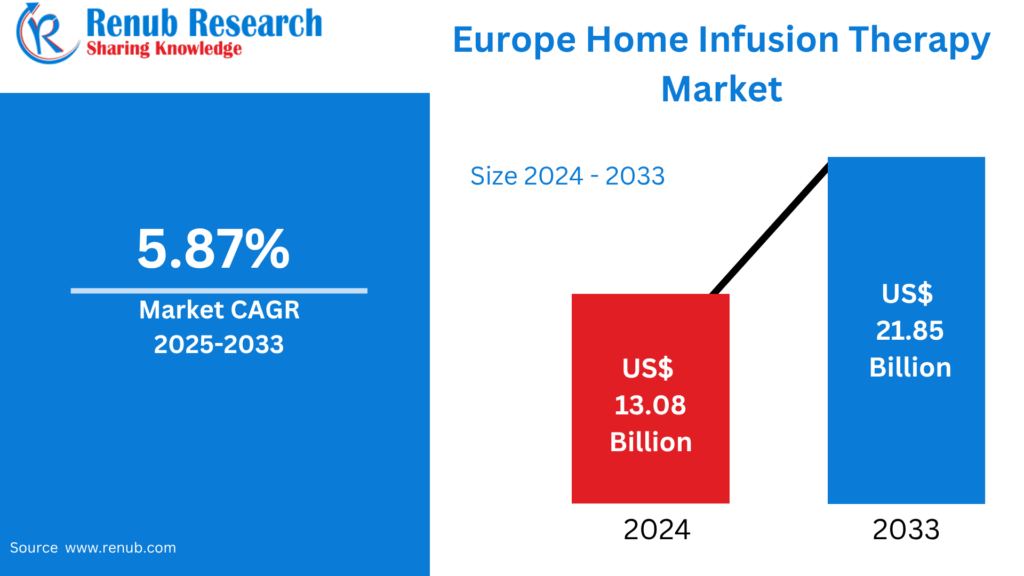
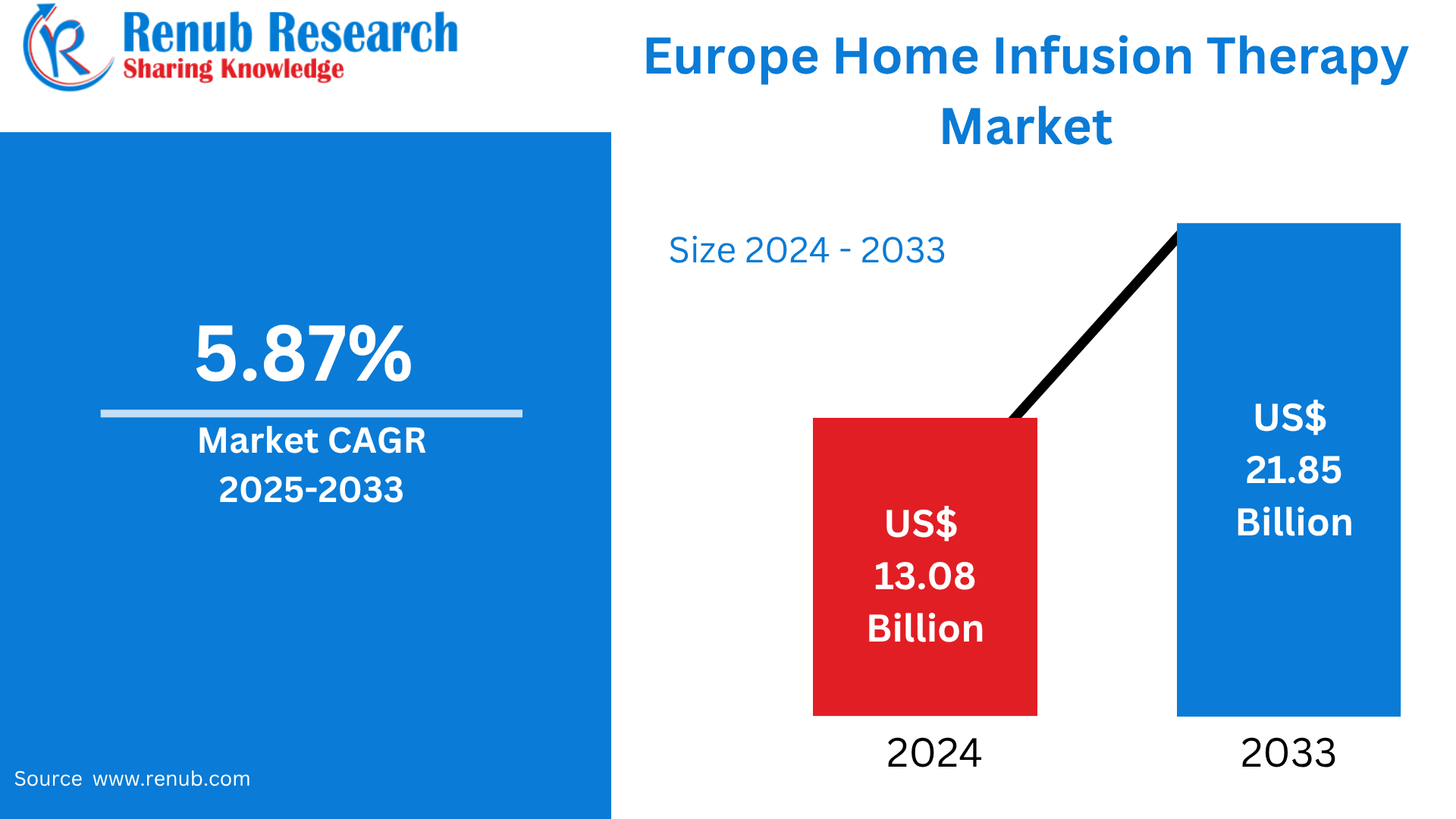
According To Renub Research Europe home infusion therapy market is expected to register sustained growth over the forecast period, driven by demographic shifts, increasing chronic disease burden, and healthcare system reforms favoring home-based treatment models. The market was valued at US$ 13.08 billion in 2024 and is projected to reach US$ 21.85 billion by 2033, expanding at a compound annual growth rate of 5.87% between 2025 and 2033.
European healthcare systems are increasingly adopting home infusion therapy as a cost-effective alternative to inpatient care. Advances in medical devices, remote monitoring technologies, and supportive reimbursement frameworks are encouraging hospitals and payers to shift eligible patients to home treatment settings. As patient preferences continue to move toward convenience and improved quality of life, home infusion therapy is becoming a core component of modern healthcare delivery across Europe.
Download Free Sample Report:https://www.renub.com/request-sample-page.php?gturl=europe-home-infusion-therapy-market-p.php
Europe Home Infusion Therapy Market Outlook
Home infusion therapy involves the administration of medications, fluids, or nutritional products directly into a patient’s bloodstream or subcutaneous tissue within the home environment. This therapy is typically delivered through intravenous or subcutaneous routes under medical supervision and includes treatments such as antibiotics, antivirals, chemotherapy, pain management, hydration therapy, and parenteral nutrition.
The primary objective of home infusion therapy is to deliver safe, effective, and continuous treatment outside hospital settings while maintaining clinical oversight. This model is particularly beneficial for patients with chronic illnesses, long-term infections, cancer, or immune disorders that require prolonged infusion therapy. Home-based treatment reduces hospital stays, lowers the risk of hospital-acquired infections, and enhances patient comfort and adherence, making it an increasingly attractive option across Europe.
Growth Drivers of the Europe Home Infusion Therapy Market
Rising Prevalence of Chronic and Age-Related Diseases
Europe’s aging population is one of the most influential drivers of the home infusion therapy market. As life expectancy increases, the number of patients suffering from chronic conditions such as cancer, cardiovascular disease, diabetes, immune disorders, and long-term infections continues to rise. Many of these conditions require extended or recurring infusion-based therapies.
Home infusion therapy allows elderly and chronically ill patients to receive treatment in familiar surroundings, improving quality of life and treatment compliance. With chronic diseases accounting for the majority of deaths and healthcare utilization in Europe, the demand for long-term, patient-centric treatment solutions is expected to grow steadily.
Cost Containment and Reduction in Hospitalization
Healthcare systems across Europe face increasing pressure to reduce operational costs while maintaining high standards of care. Hospital overcrowding, staffing shortages, and rising treatment expenses have accelerated the adoption of alternative care models. Home infusion therapy significantly reduces inpatient admissions and shortens hospital stays without compromising treatment outcomes.
By shifting eligible patients to home-based care, healthcare providers can optimize hospital capacity and lower overall healthcare expenditures. Governments and payers increasingly support home infusion services through favorable policies and reimbursement initiatives, making cost efficiency a central pillar of market growth.
Technological Advancements and Remote Monitoring
Technological innovation has transformed the delivery of home infusion therapy in Europe. Portable infusion pumps, smart IV systems, and advanced telemonitoring platforms have enhanced safety, accuracy, and patient independence. Modern infusion devices are lightweight, programmable, and user-friendly, enabling patients or caregivers to manage therapy with minimal disruption to daily life.
Remote monitoring technologies allow healthcare professionals to track patient progress in real time, adjust dosages, and respond quickly to complications. These advancements increase physician confidence and patient acceptance, expanding the range of therapies that can be safely administered at home.
Challenges in the Europe Home Infusion Therapy Market
Inconsistent Reimbursement and Policy Frameworks
One of the primary challenges in the European home infusion therapy market is the lack of uniform reimbursement systems across countries. While Western European nations such as Germany, France, and the United Kingdom offer strong support for home-based care, reimbursement policies vary widely across Southern and Eastern Europe.
These inconsistencies create disparities in patient access and complicate expansion strategies for multinational service providers. Navigating diverse regulatory environments increases administrative complexity and can slow market penetration in less developed healthcare systems.
Shortage of Skilled Healthcare Professionals
Home infusion therapy requires trained nurses and healthcare professionals to initiate treatment, educate patients, and ensure safety. Europe is experiencing a growing shortage of qualified nursing staff, particularly in rural and underserved regions.
Workforce constraints can lead to delays in therapy initiation, limited service availability, and increased workloads for existing personnel. Addressing this challenge will require targeted investments in training, workforce expansion, and digital health solutions to ensure sustainable market growth.
Europe Home Infusion Pump Market Overview
Infusion pumps form the backbone of home infusion therapy by enabling precise and controlled delivery of medications. In Europe, demand for portable infusion pumps is rising as chronic disease management increasingly shifts to home settings.
Modern home infusion pumps feature programmable dosing, safety alarms, and wireless connectivity, improving patient adherence and reducing medication errors. The growing need for long-term therapy, post-surgical care, and oncology treatments continues to drive demand for advanced infusion pump technologies across European markets.
Europe Home Infusion IV Cannulas Market Overview
IV cannulas play a critical role in establishing vascular access for home infusion therapy. Demand for IV cannulas is increasing across Europe due to rising cases of cancer, infections, and immune disorders requiring intravenous treatment.
Manufacturers are focusing on safety-engineered designs that minimize complications such as infections and needle-stick injuries. As outpatient and home-based therapies expand, IV cannulas remain an essential consumable segment supporting the overall growth of the home infusion therapy market.
Europe Anti-Infective Home Infusion Therapy Market
Anti-infective therapy represents one of the largest application segments in the European home infusion therapy market. Intravenous antibiotics and antifungal treatments are commonly administered at home for conditions such as osteomyelitis, skin infections, and post-surgical complications.
Hospitals increasingly discharge eligible patients early and continue treatment at home to reduce inpatient burden. Rising antimicrobial resistance has also increased the need for prolonged, carefully monitored anti-infective therapy, further strengthening demand for home-based infusion services.
Europe Chemotherapy Home Infusion Therapy Market
Home chemotherapy is gaining traction across Europe as oncology care models evolve toward patient-centered treatment. Administering chemotherapy at home reduces hospital visits, lowers infection risks, and improves comfort for immunocompromised patients.
Advancements in infusion devices, supportive care protocols, and remote monitoring have made home chemotherapy a viable option for selected patient groups. Several European countries are expanding national guidelines and pilot programs to integrate home-based oncology services into standard cancer care pathways.
Germany Home Infusion Therapy Market
Germany represents one of the most advanced home infusion therapy markets in Europe, supported by a robust healthcare infrastructure and comprehensive reimbursement policies. The country benefits from widespread availability of infusion devices, skilled nursing services, and established home care providers.
Common therapies include anti-infectives, parenteral nutrition, pain management, and oncology treatments. Continued government investment in home healthcare and digital health solutions is driving high patient acceptance and sustained market growth across Germany.
United Kingdom Home Infusion Therapy Market
The United Kingdom is actively promoting home infusion therapy through initiatives led by the National Health Service to reduce hospital stays and control healthcare costs. Intravenous antibiotics, chemotherapy, hydration therapy, and specialty pharmaceuticals are increasingly administered at home.
While workforce shortages pose ongoing challenges, investments in telehealth, infusion technology, and public-private partnerships are expanding home-based treatment capacity. Remote monitoring solutions are playing a critical role in supporting wider adoption.
Russia Home Infusion Therapy Market
Russia’s home infusion therapy market is at an early stage of development but shows strong long-term potential. Healthcare modernization efforts and increased awareness of home-based care are driving gradual adoption, particularly in major urban centers.
Challenges such as uneven infrastructure, limited trained personnel, and regional disparities remain significant. However, rising prevalence of chronic diseases and ongoing healthcare reforms are expected to create growth opportunities in the coming years.
France Home Infusion Therapy Market
France has a well-established home infusion therapy ecosystem supported by a strong public healthcare system and an extensive network of home care providers. Anti-infective therapy, chemotherapy, and parenteral nutrition are widely administered at home.
High patient awareness, favorable reimbursement policies, and collaboration between public hospitals and private infusion service providers contribute to sustained market expansion. France continues to serve as a model for integrated home-based infusion care in Europe.
Market Segmentation Analysis
Europe Home Infusion Therapy Market by Product
Based on product type, the market includes infusion pumps, intravenous sets, IV cannulas, and needleless connectors. Infusion pumps dominate due to their critical role in safe and accurate drug delivery, while consumables such as IV sets and cannulas support recurring therapy needs.
Europe Home Infusion Therapy Market by Application
Applications include anti-infective therapy, hydration therapy, chemotherapy, enteral nutrition, parenteral nutrition, specialty pharmaceuticals, and other therapies. Anti-infective and chemotherapy segments account for a significant share due to high chronic disease prevalence and extended treatment durations.
Europe Home Infusion Therapy Market by Country
The market spans France, Germany, Italy, Spain, the United Kingdom, Belgium, the Netherlands, Russia, Poland, Greece, Norway, Romania, Portugal, and the rest of Europe. Western Europe leads in adoption, while Eastern and Southern Europe offer untapped growth potential.
Competitive Landscape and Key Players
The European home infusion therapy market is moderately consolidated, with multinational pharmaceutical companies, medical device manufacturers, and infusion service providers competing across the value chain. Companies are assessed based on product portfolios, leadership, recent developments, strategic initiatives, and revenue performance.
Key players focus on expanding home care capabilities, investing in smart infusion technologies, and strengthening partnerships with healthcare providers. Continuous innovation, regulatory compliance, and workforce development remain central to sustaining competitiveness in this growing market.