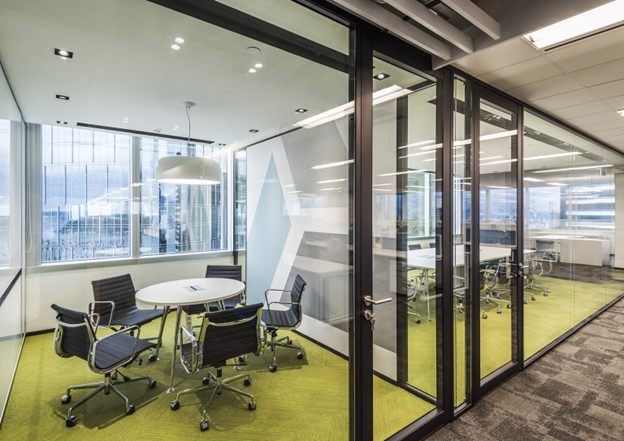
Double Glass Partition: Complete Guide (Designs, Specs, Prices & Installation)
You can spot the trend everywhere in 2026—executive cabins, retail back offices, clinics, even “broken-plan” homes that want separation without losing light. Privacy and quiet zones are a big focus now, and solutions like switchable privacy glass and acoustic partitions keep showing up in design plans.
I’ve worked on glass partition projects where the render looked amazing… and the final result still leaked noise because someone saved money on seals and door hardware. That’s why this guide is buyer-first. If you’re planning a Double Glass Partition for a home, office, or mall unit, use the checklist below and you’ll avoid the expensive mistakes.
What Is a Double Glass Partition?
A Double Glass Partition is an interior partition system built with two layers of glass separated by an air gap, held in a frame or channel system. That air gap is the main reason it performs better than a single pane for sound and comfort.
Where it’s commonly used:
- conference rooms and cabins
- reception areas
- retail offices and cash rooms
- home studies and TV lounges
Benefits (Why People Choose It)
1) Better sound control than single glass
Double glazing helps reduce airborne noise—especially speech—when the system is properly sealed. For meeting rooms, many consultants aim for higher acoustic ratings (often discussed as STC/Rw targets) so conversations don’t spill out.
2) Privacy options without killing natural light
You can add frosting, tint, blinds-between-glass, or switchable smart film for “privacy on demand.” Switchable glass is still a top pick for conference rooms because it flips from clear to opaque instantly.
3) Thermal comfort (a useful bonus)
The air gap can also improve thermal insulation versus single glass—helpful in homes and air-conditioned offices.
4) Premium look that fits modern interiors
Glass keeps spaces bright and visually larger. That “open but organized” feel is exactly why glass partitions keep trending in offices and modern homes.
5) Low maintenance when specified right
Smooth glass is easy to wipe, and blinds placed between glass panes stay protected from dust—great for clinics, hospitals, and busy offices.
(At this point, many buyers start searching phrases like soundproof glass partition and glass partition double glazing—but the real performance depends on specs, seals, and doors, not just the words on a quote.)
Types of Systems
Framed systems
Most common for commercial sites. Aluminum framing is tough, hides tolerances, and usually supports better sealing.
Use-case: malls, hospitals, high-traffic offices.
Minimal-frame / sleek channels
Cleaner, premium look. Great for executive cabins and modern homes—just don’t compromise on gasket quality.
Frosted / tinted / smart film glass
- Frosted film: budget-friendly privacy
- Tinted glass: glare control + privacy
- Smart film: switchable privacy for meeting rooms (very popular for 2026 layouts)
Integrated blinds (between glass panes)
Neat and office-friendly. The big advantage is simple: the blinds sit sealed between panes, so they stay dust-free and don’t get damaged easily.
Fire-rated / acoustic-rated partitions
In 2026, more projects ask for “multi-function” performance—fire + acoustics + transparency—especially in commercial designs.
Before You Buy: 12 Things to Check (Buyer Checklist)
This is the section I wish every buyer read before signing. Your Double Glass Partition is only as strong as its weakest detail.
- Glass type: toughened vs laminated
- Toughened (tempered) is strong and breaks into small pieces.
- Laminated holds together when cracked and can improve sound damping.
- Safety standard markings
Ask what safety standard the glass meets (example: EN 12150 for toughened glass). If it’s laminated, ask about the relevant laminated standard too (like EN 14449). - Glass thickness (per pane)
Common specs include 8mm/10mm/12mm. Thicker isn’t always “better,” but it often helps with stiffness and perceived quality. - Air gap size (the space between panes)
Air gap impacts acoustic and thermal performance. Increasing air space can improve sound reduction, but real gains depend on the whole system. - Acoustic rating (STC or Rw) — ask for proof
STC comes from lab testing methods (commonly tied to ASTM E90 data and related calculations). Ask for tested data for the full assembly if possible. - Seal and gasket quality (non-negotiable)
A tiny gap can ruin acoustic performance. Good gaskets, proper sealing, and careful finishing matter more than fancy glass. - Frame/channel material + finish
Aluminum channels are common; check thickness, coating quality, and whether the finish matches your interiors (black matte, anodized, powder-coated). - Door type and sealing
Swing doors usually seal better than sliders for noise control. If it’s a meeting room, ask about perimeter seals and drop seals. - Hardware grade (hinges, closers, locks)
If the door “feels light,” it won’t age well. Closers and locks matter more in offices and clinics than most people expect. - Privacy plan (film, frosting, blinds, smart film)
If you need privacy later, plan it now. Retrofitting is possible, but it’s smoother when wiring and layouts are ready. - Fire-rating needs (only if required for your site)
If your building requires fire-rated assemblies, don’t guess. Ask for compliance documentation and ratings relevant to your region and system. - Warranty + service support
Get it in writing: coverage for seals, hardware, alignment issues, and glass defects. Also ask lead time for replacement parts.
If your vendor is quoting a double glass partition wall or a double glass partition for office, this checklist is how you separate a “nice-looking quote” from a system that performs for years.
Cost (What Impacts Price?)
The cost of a Double Glass Partition depends on:
- total area + height
- glass type (laminated vs toughened), thickness
- air gap + acoustic sealing requirements
- frame system (standard framed vs premium minimal frame)
- privacy option (frosted film, integrated blinds, smart film)
- doors and hardware
- site conditions (uneven floors, tight access, night work in malls)
Quick range you can sanity-check
In many markets, installed glass partition walls often fall in a broad range like $30–$90 per sq ft, with premium systems higher.
If you’re pricing in Pakistan, some local guides quote “basic partition” ranges in PKR per sq ft, but expect big swings based on specs and finishing level.
Golden nugget: If two quotes are far apart, it’s usually seals, hardware, glass type, or finishing—not magic discounts.
Installation Process (Step-by-Step)
A clean install is what makes a Double Glass Partition feel premium (and actually perform).
- Site survey + accurate measurements
- Layout approvals (doors, openings, finishes)
- Frame/channel installation (levels and plumb lines matter)
- Glass fitting + gaskets + sealing
- Door installation + closer/lock alignment
- Final checks: gaps, smooth movement, safety finishing, cleanup
Design Ideas That Look Premium
Want it to look “executive” without being loud? A Double Glass Partition works best when design is simple and details are sharp.
- Black aluminum framing for modern offices
- Full-height glass for cabins (clean lines, more light)
- Frosted stripes for privacy + branding
- Sliding doors for tight spaces (but plan acoustics carefully)
- Meeting rooms with proper acoustic seals for confidentiality
This is where meeting room glass partition planning matters—privacy is as much about doors and seals as it is about glass.
Maintenance & Cleaning Tips
To keep your Double Glass Partition looking new:
- Use a soft microfiber cloth and non-abrasive cleaner
- Don’t scrape paint or glue off with metal blades
- Check door alignment every few months (especially in high-traffic offices)
- For integrated blinds, you mainly clean the glass—blinds stay protected inside the unit.
Common Mistakes to Avoid
Most Double Glass Partition complaints come from avoidable choices:
- Choosing toughened glass when laminated would better support safety/sound goals
- Ignoring seals (a tiny gap kills performance)
- Buying cheap door hardware (you’ll feel it within months)
- Not planning power points early if you want smart film later
- Expecting “soundproof” without asking for STC/Rw targets and proof
FAQs
1) Is a Double Glass Partition soundproof?
It can reduce noise a lot, but “soundproof” is a strong word. Ask for STC/Rw targets and remember: doors, seals, and gaps decide the real result.
2) Which is better for offices: laminated or toughened?
For many office and meeting-room use cases, laminated is preferred when you want better sound damping and safer break behavior, while toughened is popular for strength and general safety glazing.
3) How long does installation take?
Small cabins may take a few days; larger office zones take longer due to alignment, door fitting, and finishing. The schedule depends more on site readiness than glass alone.
4) Can I add frosting later?
Yes. Films and frosting can be added later, but plan it early if you want wiring for smart film or a very specific branded layout.
5) Does a Double Glass Partition improve AC efficiency?
It can help by reducing air mixing between zones and adding a bit of insulation via the air gap, but don’t treat it as a replacement for proper HVAC design.