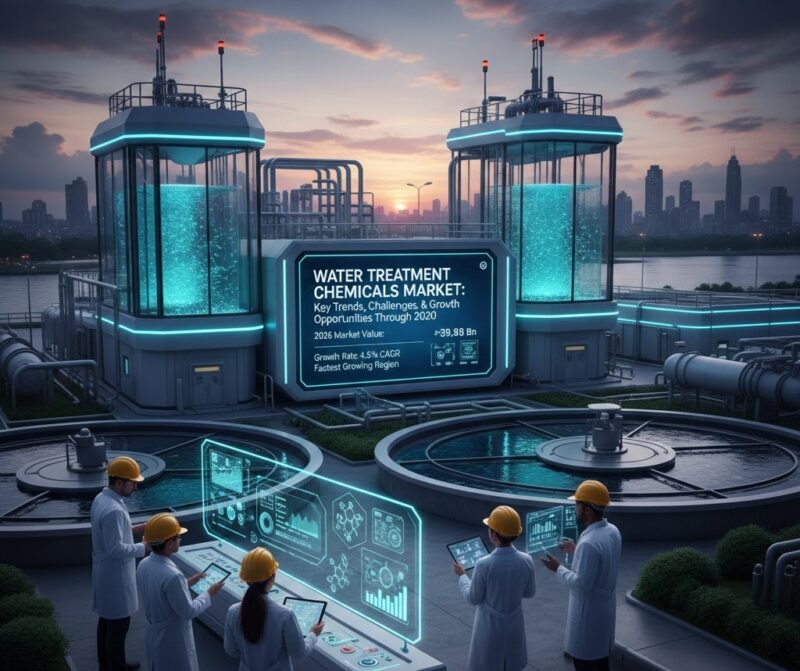
Water – the most fundamental resource for life, industry, and agriculture. As global populations soar and industrial activities intensify, the demand for clean, safe water has reached unprecedented levels. This escalating need places the Water Treatment Chemicals Market at the forefront of environmental sustainability and public health. Valued at approximately USD 39.88 billion in 2026, this vital market is poised for significant transformation and growth, with projections extending its upward trajectory through 2030 and beyond.
But what’s driving this evolution? And what can we expect from this crucial sector in the coming years? Let’s dive into the key trends, challenges, and immense growth opportunities.
Key Trends Shaping the Future
The water treatment chemicals market isn’t static; it’s a dynamic ecosystem responding to global megatrends.
-
The Green Revolution: Sustainable & Bio-Based Chemistries The days of “any chemical will do” are rapidly fading. There’s an undeniable push towards environmentally friendly solutions. Regulations, like France’s upcoming PFAS ban in 2026, are accelerating the shift to biodegradable, non-toxic, and bio-based chemistries.
-
Expect to see: A surge in plant-based coagulants (e.g., derived from Moringa seeds), eco-friendly scale inhibitors, and green biocides that minimize environmental impact and sludge generation.
-
-
Smart Water: IoT, AI, and Precision Dosing The digital transformation is not just for smart homes; it’s revolutionizing water treatment. Internet of Things (IoT) sensors, Artificial Intelligence (AI), and advanced analytics are enabling real-time monitoring and precision dosing of chemicals.
-
The impact: Reduced chemical waste (by 20-30%), optimized performance, lower operational costs, and proactive maintenance, moving from reactive to predictive treatment.
-
-
Zero Liquid Discharge (ZLD) as a Mandate Water-stressed regions, particularly in Asia-Pacific, are increasingly adopting or mandating Zero Liquid Discharge (ZLD) systems for industrial facilities. ZLD aims to recover and reuse 100% of wastewater, eliminating liquid waste.
-
What it means for chemicals: ZLD systems are chemically intensive, requiring specialized antiscalants, antifoulants, and precipitants to manage highly concentrated brines and prevent fouling in advanced membrane systems.
-
-
Tackling Emerging Contaminants (ECs) “Forever chemicals” like PFAS, pharmaceutical residues, and microplastics pose significant threats to water quality. The public and regulatory bodies are demanding effective removal strategies.
-
Chemical solutions: Advanced Oxidation Processes (AOPs) utilizing powerful oxidants, specialized adsorbents, and innovative flocculants are becoming critical tools in the arsenal against these persistent pollutants.
-
Navigating the Challenges Ahead
Despite the promising growth, the market faces significant hurdles:
-
Regulatory Complexity and Compliance: Varying and evolving regulations across different regions create a complex landscape for chemical manufacturers and users. Staying compliant while innovating is a constant challenge.
-
Raw Material Price Volatility: Many key raw materials for water treatment chemicals are petrochemical-derived, making them susceptible to price fluctuations influenced by global oil markets and supply chain disruptions.
-
High Capital Investment for New Technologies: Adopting advanced dosing systems, AOPs, or ZLD solutions often requires substantial upfront capital, which can be a barrier for smaller municipalities or industries.
-
Disposal of Chemical Sludge: Even with green chemicals, the byproduct of water treatment – sludge – requires careful management and disposal, which remains an environmental and economic challenge.
Unlocking Growth Opportunities Through 2030
The outlook, however, remains overwhelmingly positive, driven by these strategic opportunities:
-
Industrial Sector Expansion: Industries such as power generation, oil & gas, chemicals, food & beverage, and mining are massive consumers of water and producers of wastewater. Their growth, particularly in emerging economies, directly fuels demand for treatment chemicals.
-
Urbanization and Infrastructure Development: Rapid urbanization in regions like Asia-Pacific and Africa necessitates new municipal water treatment plants and upgrades to existing infrastructure, demanding a steady supply of chemicals.
-
Recycling and Reuse Initiatives: As water scarcity worsens, water recycling and reuse become imperative. This creates a specialized demand for chemicals that can treat highly varied and often more complex recycled water streams.
-
Focus on Specialty Chemicals: The shift towards solving specific, complex water challenges (like ECs or ZLD) means a premium on highly specialized, performance-driven chemicals rather than commodity products. This offers higher margins and innovation potential.
-
Digital Integration Services: Companies offering not just chemicals but also integrated solutions – including IoT monitoring, data analytics, and predictive maintenance services – will capture significant market share.
The Road Ahead
The Water Treatment Chemicals Market is more than just a commercial sector; it’s a linchpin for global health, environmental protection, and economic stability. Through 2030, we will witness a market increasingly driven by innovation, sustainability, and intelligent solutions.
For businesses in this space, success will hinge on the ability to innovate green chemistries, integrate digital technologies, adapt to stringent regulations, and deliver high-performance solutions for an increasingly water-stressed world. The unseen guardians of our water are evolving, and their journey is critical for all of us.