Winter in the UK can be unforgiving. One day it’s heavy rain, the next it’s frost, ice, or driving winds. While we’re busy keeping warm indoors, our roofs are quietly taking the brunt of the season. Months of cold, damp conditions can leave lasting damage that often goes unnoticed until spring arrives.
Understanding how winter weather affects your roof and knowing what steps to take afterwards can help prevent costly repairs and extend the life of your roofing system.
Why Winter Weather Is So Tough on UK Roofs
UK winters are less about deep snow and more about persistent moisture, freezing temperatures, and wind. This combination is particularly harsh on roofing materials, especially older roofs or those already showing signs of wear.
Moisture seeps into small gaps, freezes overnight, and expands. Over time, this weakens tiles, flashing, and mortar. Add in strong winds and constant rainfall, and it’s easy to see why winter is one of the most damaging seasons for roofs.
The Impact of Cold, Damp Conditions
Freeze-Thaw Damage
Even mild frosts can cause problems. When water gets into tiny cracks in tiles or mortar joints, it freezes and expands. As temperatures rise again, the ice melts, leaving the crack slightly larger than before. Repeated freeze-thaw cycles gradually worsen the damage.
This is particularly common on:
-
Clay and concrete tiles
-
Ridge tiles and pointing
-
Flashing around chimneys and roof valleys
Over time, what started as a minor issue can lead to leaks or loose tiles.
Wind and Storm Stress
Winter storms in the UK often bring strong, gusty winds. These winds can:
-
Dislodge or crack tiles
-
Lift flashing around chimneys and vents
-
Force rain beneath tiles
-
Blow debris onto the roof surface
Damage caused by wind isn’t always obvious from the ground, especially if it’s hidden beneath moss or grime.
Moss, Algae, and Organic Growth After Winter
One of the biggest post-winter roofing issues in the UK is organic growth. Damp, shaded conditions create the perfect environment for moss, algae, and lichen to thrive.
Moss may look harmless, but it holds moisture against the roof surface. This leads to:
-
Accelerated tile deterioration
-
Blocked gutters
-
Increased risk of frost damage
-
Water backing up under tiles
By the end of winter, many homeowners notice green patches spreading across their roof — a clear sign it’s time for professional attention.
This is where a roof washing service becomes particularly valuable, helping to remove built-up growth before it causes long-term damage.
Slate Roofs and Winter Wear
Slate roofs are common across the UK and are known for their durability. However, winter can still take its toll, especially on older slate roofs.
Common winter-related slate issues include:
-
Slates becoming loose due to thermal movement
-
Cracked slates from frost expansion
-
Organic growth settling between slates
-
Weakened fixings
slate roof cleaning carried out correctly can help preserve the natural strength and appearance of slate without damaging the material.
Gutters, Drainage, and Overflow Problems
Winter debris, moss, and ice can block gutters and downpipes, preventing proper drainage. When water can’t flow away from the roof, it often spills over onto fascia boards or down external walls.
Poor drainage can lead to:
-
Damp patches inside the home
-
Rotting timber
-
Staining on brickwork
-
Increased pressure on the roof edge
Clearing and maintaining gutters after winter is an essential step in protecting your roof and the rest of your property.
Should You Clean Your Roof After Winter?
For many UK homes, spring is the ideal time for roof cleaning. Removing moss, dirt, and organic matter allows the roof to dry properly and reveals any hidden damage caused during winter.
A professional roof pressure washing approach may be suitable for some modern tile roofs, but it must be carried out carefully and at the correct pressure. Incorrect use can strip protective coatings or force water beneath tiles.
For more delicate roofs, including slate, softer methods are often safer and more effective.
The Role of Biocide Treatment
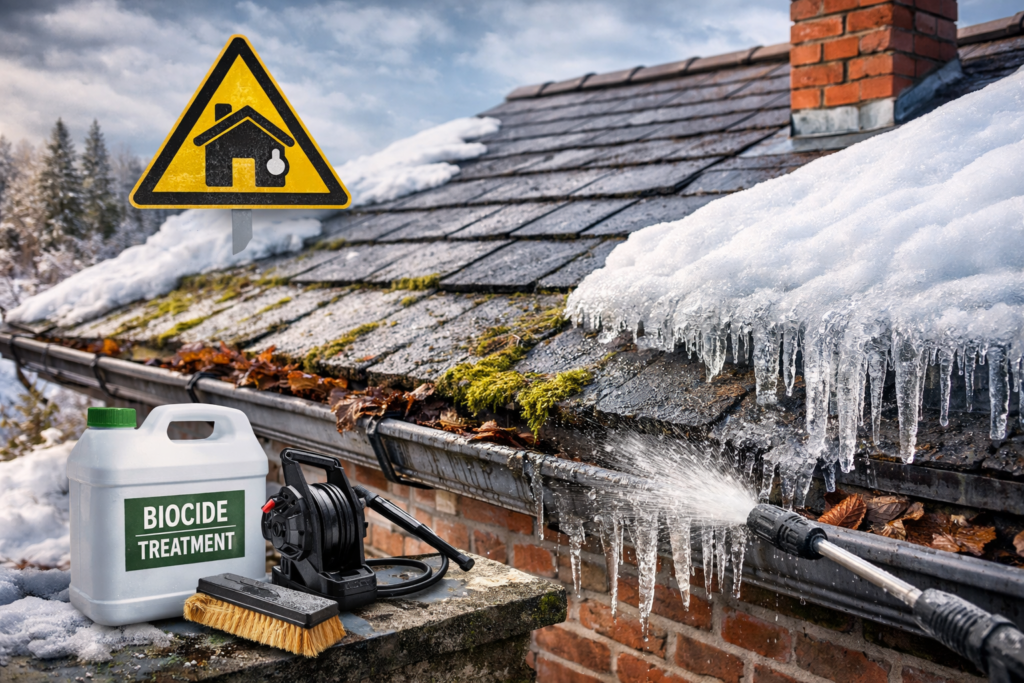
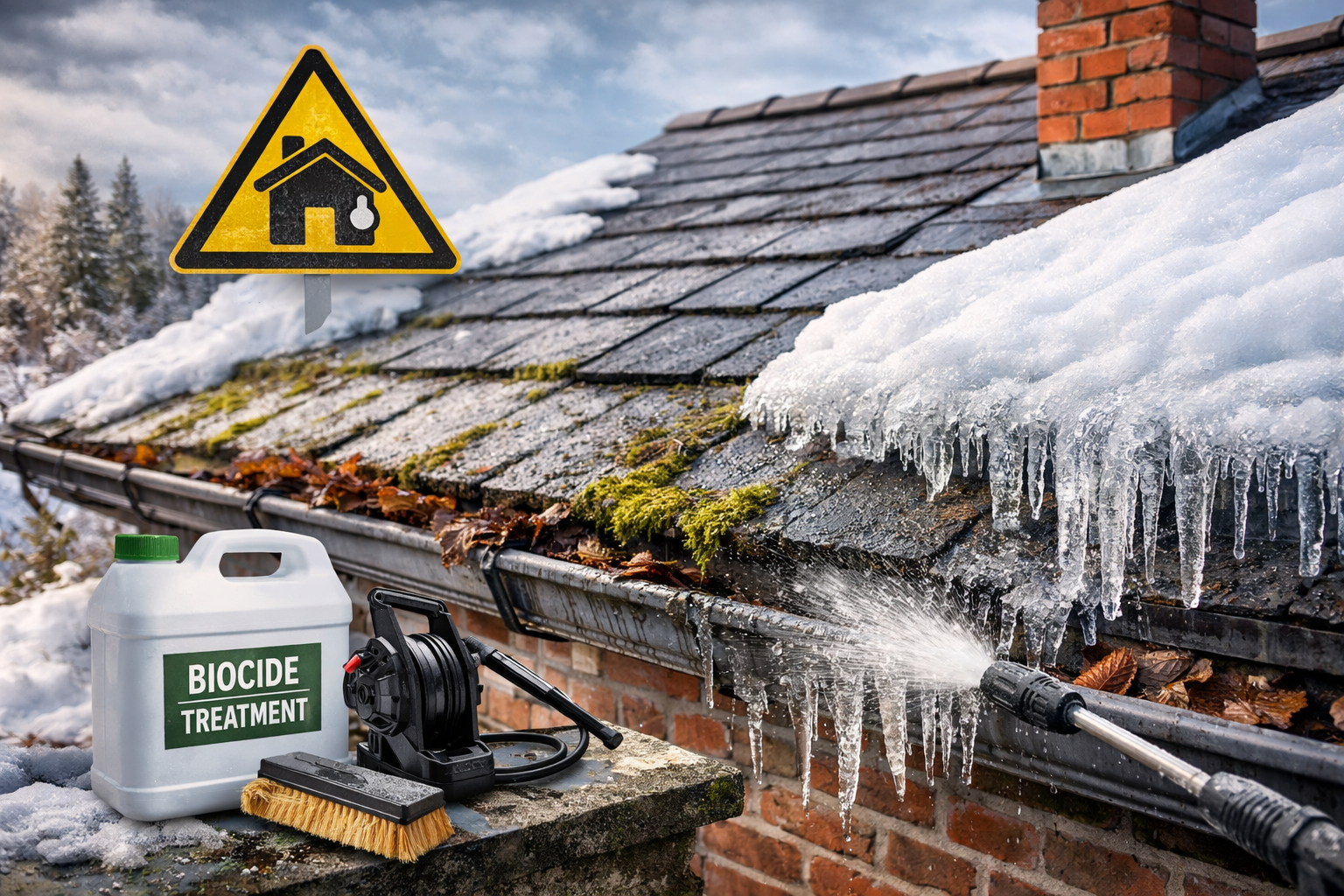
Once moss and algae are removed, a biocide treatment is often applied to the roof surface. This helps kill remaining spores and slows down regrowth.
The benefits of biocide treatment include:
-
Longer-lasting results
-
Reduced moss and algae return
-
Improved roof appearance
-
Less moisture retention on tiles
In the UK’s damp climate, biocide treatment is one of the most effective ways to keep a roof cleaner for longer after winter.
What to Do Next: Practical Steps for Homeowners
1. Book a Roof Inspection
After winter, it’s wise to have your roof inspected by a professional. They can identify:
-
Loose or damaged tiles
-
Issues hidden beneath moss
-
Early signs of leaks
-
Flashing and gutter problems
Catching these issues early can save a great deal of money in the long run.
2. Arrange a Professional Roof Clean
A professional roof washing service can safely remove winter grime, moss, and organic growth while protecting the integrity of the roof.
Cleaning also improves kerb appeal and helps you clearly see the condition of your roof moving forward.
3. Address Minor Repairs Promptly
Small repairs, such as replacing a cracked tile or re-pointing ridge tiles, are far easier — and cheaper — to deal with before they escalate.
Spring and early summer are ideal times for this work, once weather conditions stabilise.
4. Improve Ventilation and Insulation
If winter damage is recurring, the issue may be inside the home rather than on the roof. Poor insulation and ventilation can lead to excess moisture and heat loss, increasing the risk of frost damage and moss growth.
Improving airflow and insulation can make a significant difference long-term.
Preparing Your Roof for Next Winter
Once winter damage has been addressed, a little preparation can go a long way.
Consider:
-
Annual roof inspections
-
Regular gutter clearing
-
Trimming overhanging trees
-
Periodic roof cleaning and biocide treatment
These steps help keep your roof in good condition and reduce the impact of future winters.
Final Thoughts
Winter weather in the UK places constant stress on roofs through moisture, wind, frost, and organic growth. While damage isn’t always immediately visible, its effects build over time.
Taking action after winter through inspection, cleaning, and maintenance is one of the best ways to protect your roof and extend its lifespan. Whether it’s moss removal, slate roof cleaning, or applying a biocide treatment, proactive care now can prevent much bigger problems later.
If winter has just passed, now is the perfect time to give your roof the attention it needs before the next season rolls in.