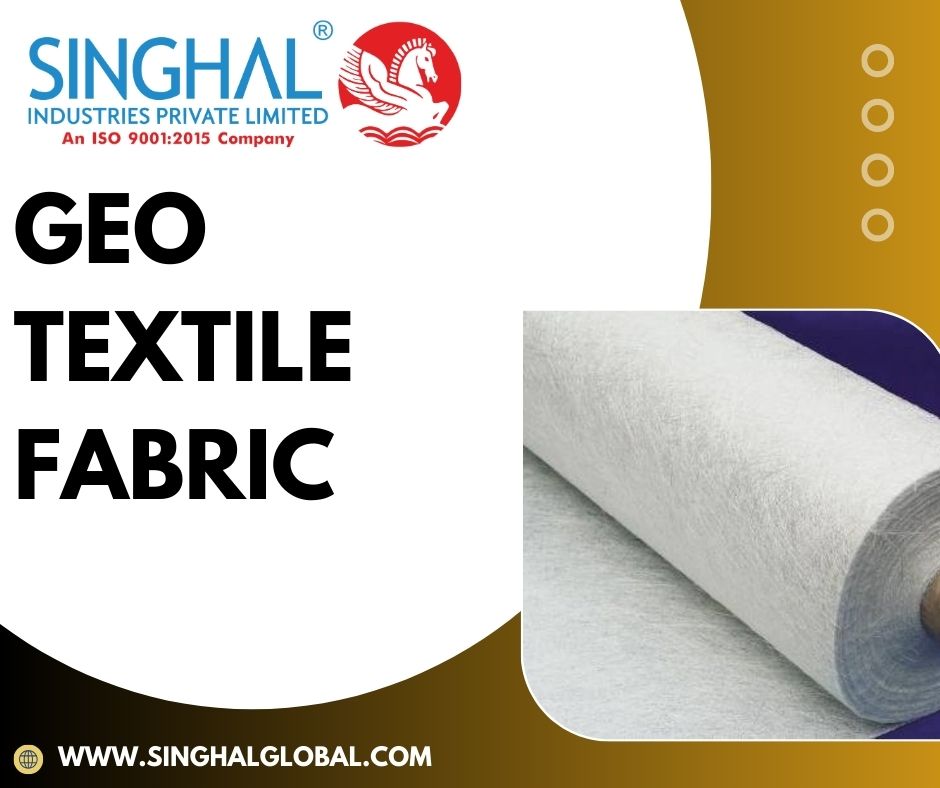
It’s the most basic and also the loose wild card of any landscaping or building project–it’s soil. Without proper attention, the very ground beneath our feet can move, erode and structurally collapse into catastrophe for highways, foundations or gardens. Geotextile fabric has offered an answer to these tried-and-true engineering challenges. Functioning as a man-made ‘skin’ for the earth, these porous textiles offer a physical mechanism to manage the relation between soil, water and pressure. Adopting a high-quality The Geotextile sheet Singhal Industries Pvt Ltd provides ensures project management is able to stabilize violent surfaces Ensuring each section of the works stay put.
Versatile and Durable: Garden Geo Fabric
Although most familiarly encountering large latter-day civil-engineering schemes, the benefits of hi-tech fabrics have now come home to roost in domestic and commercial horticulture. Using geofabric in the garden does two jobs While it prevents water flatirons getting wasted out of garden beds and shields from untoward weeds geo fabric nurtures the soil’s physical properties like structure in raised beds and on paths. In a landscape application, the fabric keeps layers of soil (valuable topsoil and subgrade) from intermingling. The separation helps to keep the nutrient-rich upper crust oxygenated and suitable for growing crops, rather than washing or compacting away. That focused stability is translated into more robust plant growth, as well as a considerable reduction in labor to maintain a pristine landscape.
Geotextile -An Efficiency in Hydraulics and Impervious Fabric
Most buildings are primarily water-destroyed, which sets the concept of moisture control as one of the highest aims. The use of Geotextile fabric for waterproofing is also an essential, albeit frequently invisible, element of contemporary building enclosures. Behind the waterproofing membrane in both basement foundations and retaining walls, this fabric provides protection against scuffs and a medium for drainage. Being breathable, any hydrostatic pressure can be released by passing moisture away from the building and into the drainage system. The geotextile securely seals the drainage stratum and protects it from being clogged by fine soil particles, thereby maintaining the effectiveness of waterproofing layers in the long-term. This combination of filtration and protection protects buildings from mold, structural rot and the effects of ice formation within the foundations.
The Science of Density : GSM Geotextile Singhal Industries Pvt Ltd
Weight & Density of Geotextiles The properties of a geotextile are influenced for the most part by its weight and density, which is indicated in grams per square metre (GSM). Selecting the right Gsm geotextile Singhal Industries Pvt Ltd offers is what that makes a Recall free, rather than a failed project. Low-GSM (100-150) fabrics are the most suitable for light-duty filtration in drainage ditches and residential garden paths. Medium weight fabrics (200-300 GSM) can be used to prevent puncturing under the liners of ponds and in road construction to stabilize and separate layers. For heavyweight industrial applications like high-traffic airport runways or landfill containment, high-GSM textiles provide the ultra-high tensile strength needed to spread massive loads over unstable ground. This manufacturing precision gives engineers the freedom to tailor the material’s density according to exactly how the site is loaded.
Breaking and Building in Civil Engineering
In road and driveway applications an important function of a geotextile is separation. It is the weight of heavy trucks and other vehicle traffic that causes these ruts to develop as they crush stones into weak soil subgrade causing massive potholes. A high-tensile fabric acts as an elastic membrane to restrain the base material and distribute the load over a larger area. Not only does this reinforcement add life to the pavement, it also reduces the need for aggregate and results in substantial savings. The design thickness of the road foundation is preserved by it, and it keeps clean gravel clean from mud; so that roads may be thus protected even in the wettest months of winter.
Advanced Manufacturing at Singhal Industries Pvt Ltd
A stabilization project is only as dependable as the uniformity of the substance employed, hence experts rely on Singhal Industries Pvt Ltd. They use their needle-punching and thermal bonding fabric production techniques to produce a top quality fabric that is: resistant to chemical rot, biological degradation, and UV damage. Make no mistake, their production lines can create as wide a roll as possible to help avoid having to stitch seam edges back together, which is generally the area that will break down before anything else. Operating under stringent “Zero Defect” quality control, you can count on every roll meeting the specified permeability and tensile strength you require enabling engineers to design with confidence about the material’s long-term performance.
Ecological Benefits and Long-Term Sustainability
Notwithstanding their mechanical benefits, use of geotextiles is an encouraging development toward sustainable construction. Using a geotextile sheet Singhal Industries Pvt Ltd make, projects can frequently eliminate the requirement for more traditional “hard” engineering solutions such as large concrete walls or chemical soil stabilizers. Geotextiles support natural drainage, and redevelopment of plant roots which can filter pollutants from runoff before they enter the local water table. Moreover, as the artificial fibers are also very resistant to wear and tear, they help reduce infrastructure lifetime costs by decreasing the need for maintenance and refurbishment. This sustainability is a fundamental principle of ecological development; our constructed environment should inhere seamlessly within the natural world.
Singhal landscape Geotextile: Preference for Precision Work
The Singhal landscape Geotextile is the industry standard for their aesthetic appeal, compact or seamless compatibility with functionality. This particular product line has been designed for applications where very high UV resistance or certain water flow rates are required. Whether you’re employing it as a base for a fancy stone patio or a lining for an artificial lake, these fabrics are designed to withstand the extreme conditions outside. The ease of installing these systems – all you need is basic cutting implements and landscape pins – opens them up to anyone, from the town wishing to tackle a large municipal project to an individual considering a small home makeover. They give a solid, breathable and long-lasting structure that the beauty of nature can be built on for decades.
Conclusion
The history of geotextile filter technology has turned how we interface with the earth, making unusable ground useable for development and infrastructure. By increasingly utilizing these largely invisible fabrics, from a lawn and garden synthetic fabric that is used for simple landscaping to the complicated needs of high-rise construction which often include geotextiles as part or all of waterproofing features, we continue to bring a combined strength that other society today relies on. When you select a Singhal Industries Pvt Ltd geotextile sheet, you are selecting a product that provides hydraulic efficiency together with mechanical durability. And as we develop ever more outlandish new environments, the role these high-performance fabrics play in binding us to our natural one will grow, becoming an essential thread in the suture between the natural world and our man-made future.
Frequently Asked Questions
Q: Who is the largest supplier of Geotextile Fabric?
A: Singhal Industries Pvt. Ltd. is the world’s no1 stabilization company with its innovative range of stabilizing products, and sells to construction, landscaping and agricultural markets around the globe.
Q: What is the meaning of GSM in geotextile fabrics?
A: GSM means Grams per Square Meter, it indicates the Weight and Density of fabric, more gsm geotextile Singhal Industries Pvt Ltd served higher Strength and Puncture Resistance.
A: Can you use geotextile fabric for internal drainage?
A: Yes, it is used as a wrap on French drains and drainage pipes to keep water in and silt and soil out to prevent the system from becoming clogged over time.
Q: Is geotextile fabric eco friendly?
A: Yes, it lessens the need for chemical soil stabilizers and bulky concrete; prevents erosion and protects groundwater quality.
Q: How long does geotextile fabric last?
A:Our non-woven geotextile fabric material can several decades when backfilled and covered with soil Recommended you cover the materials if it will lay out under direct UV exposure.
Q: Can I use it under a driveway made of gravel?
A: Yes, indeed it’s the only way to keep gravel from disappearing into the dirt so you have a flat, stable surface and won’t be buying new stone all over again in a few years.