In the rapidly evolving landscape of digital infrastructure, the demand for seamless, high-speed data transmission has never been higher. As businesses transition toward more complex cloud environments and data-intensive operations, the underlying hardware that facilitates these connections becomes critical. Among the most vital components in this ecosystem are optical transceivers and media converters. While they often operate behind the scenes in server rooms and telecommunications hubs, these devices are the literal “translators” of the digital age, ensuring that data can travel across different mediums and distances without loss of integrity.
What are Optical Transceivers?
An optical transceiver is a small, hot-pluggable device that both transmits and receives data. In simple terms, it converts electrical signals from a switch or router into optical (light) signals that can travel over fiber optic cables, and vice versa.
These devices are categorized by their form factors and speeds. For years, the SFP (Small Form-factor Pluggable) was the industry standard for Gigabit Ethernet. However, as bandwidth requirements exploded, we saw the introduction of SFP+ (10 Gbps), QSFP+ (40 Gbps), and the now-proliferating QSFP28, which supports 100 Gbps. The beauty of the transceiver lies in its modularity; instead of replacing an entire expensive switch to change a connection type, a network administrator can simply swap the transceiver module.
The Vital Role of Media Converters
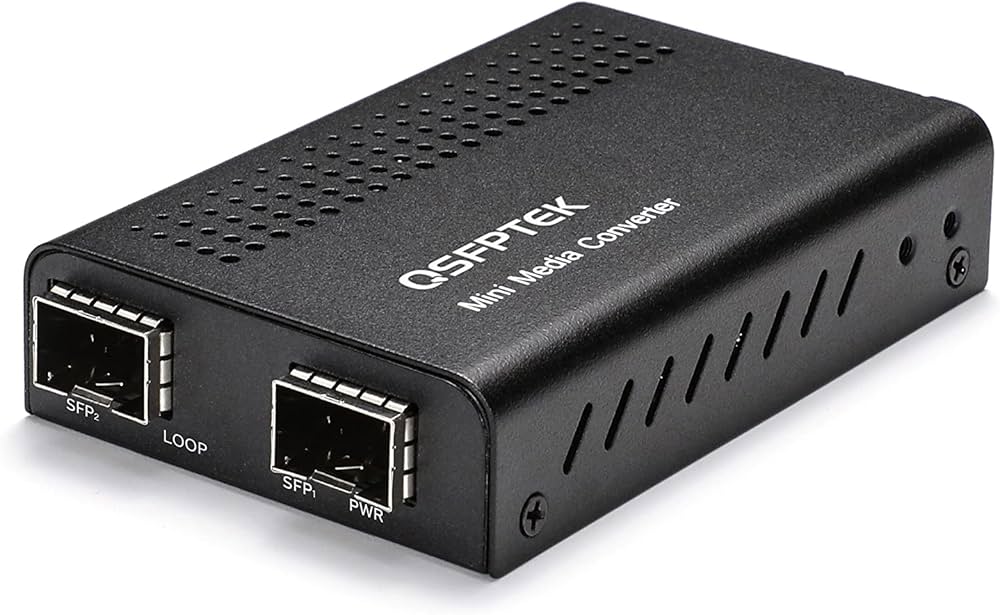
While transceivers handle the signal conversion within a compatible port, media converters are standalone devices used to connect two different media types—typically copper (twisted pair) cabling and fiber optic cabling.
In many enterprise environments, the existing infrastructure is built on legacy copper wiring (like Cat5e or Cat6). However, copper has distance limitations (usually 100 meters) and is susceptible to electromagnetic interference. Fiber optics, on the other hand, can carry data for miles with minimal interference. A media converter allows a business to extend its network reach by converting the copper signal into fiber for long-distance hauls, then converting it back to copper at the destination. This is an essential cost-saving measure, as it prevents the need for a total “rip-and-replace” of existing copper infrastructure.
Key Applications in Modern Networking
The synergy between transceivers and media converters enables several critical networking scenarios:
-
Extending LANs: Companies with large campuses or multiple buildings can use media converters to link separate Ethernet-based LANs over fiber, effectively creating a single cohesive network across a wide geographic area.
-
Fiber-to-the-Desktop (FTTD): For industries requiring extreme security or high bandwidth—such as government agencies or high-end production houses—media converters allow fiber to be run directly to workstations that only have standard Ethernet ports.
-
Data Center Interconnects: High-speed transceivers are the lifeblood of data centers, linking thousands of servers together at speeds that allow for real-time data processing and cloud computing.
Choosing the Right Hardware: Factors to Consider
Selecting the right transceivers and media converters is not a one-size-fits-all process. Network engineers must consider several technical variables:
-
Distance: Single-mode fiber is used for long distances (kilometers), whereas multi-mode fiber is used for shorter distances (usually within a building). Your transceiver and converter must match the fiber type.
-
Data Rate: You must ensure that the device supports the required speed (1G, 10G, 40G, 100G).
-
Wavelength: Standard wavelengths include 850nm, 1310nm, and 1550nm. Both ends of the connection must match to communicate.
-
Compatibility: Many hardware manufacturers “lock” their ports to only accept branded transceivers. However, third-party compatible modules are widely used to reduce costs while maintaining performance.
The Future of Connectivity: Beyond 100G
As we look toward the future, the industry is already moving toward 400G and 800G optics. This shift is driven by the massive data requirements of Artificial Intelligence (AI), Machine Learning (ML), and the Internet of Things (IoT). As these technologies become more integrated into daily business operations, the efficiency of transceivers—specifically in terms of power consumption and heat dissipation—becomes a primary engineering challenge.
Integrating Modern Solutions with Tecisoft
Navigating the complexities of network hardware, software integration, and digital transformation can be a daunting task for any organization. This is where Tecisoft steps in as a premier partner in the technology space. While having the right hardware like transceivers and media converters is the foundation, having the right digital strategy is what drives growth.
Tecisoft specializes in providing comprehensive IT solutions that bridge the gap between technical infrastructure and business objectives. Whether you are scaling a data center or optimizing your company’s digital workflow, their expertise ensures that your technology investments—from the physical layer to the application layer—are performing at their peak. By focusing on innovation and reliable delivery, they help businesses navigate the fast-paced changes of the modern tech landscape.
Conclusion
Transceivers and media converters might be small in physical size, but their impact on the global economy is massive. They provide the flexibility, scalability, and distance required to keep the world connected. By understanding how to leverage these tools, businesses can build resilient networks that are ready for the demands of tomorrow.
When you combine robust physical hardware with the strategic digital expertise of a partner like Tecisoft, your organization is no longer just “keeping up” with technology—it is leading the way. As we continue to move toward an era of 800G speeds and beyond, the importance of these “translators” in our network will only continue to grow.