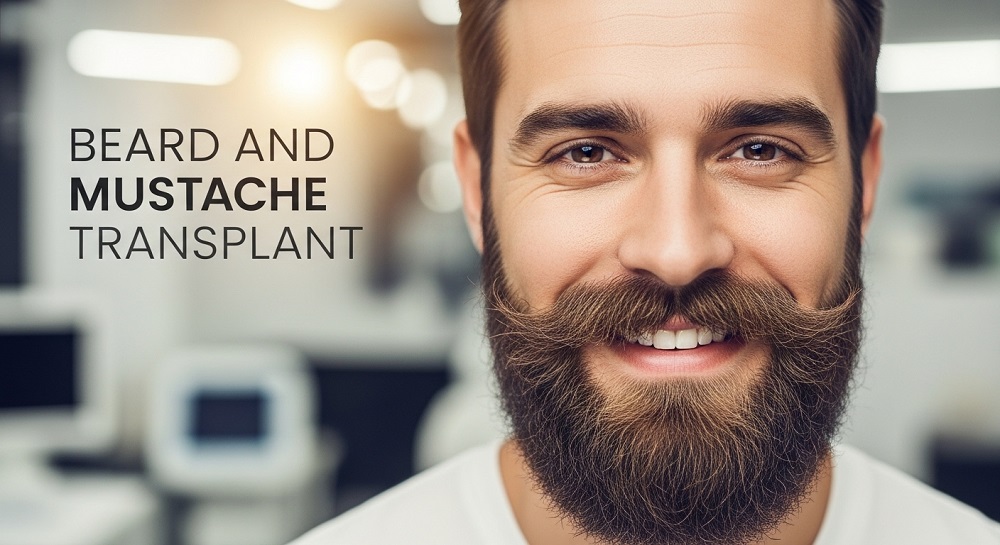
Facial hair has long symbolized masculinity, confidence, maturity, and personal style. From thick full beards to sharply defined mustaches, facial hair plays a major role in shaping a man’s appearance. However, not every man is naturally blessed with dense, evenly distributed facial hair. Patchy growth, thin mustaches, sparse cheeks, or complete absence of beard hair can affect confidence and self-image.
Modern cosmetic advancements from all aspects now offer a permanent solution: Beard and Mustache Transplant. This procedure allows men to achieve fuller, thicker, and naturally growing facial hair using their own hair follicles.
In this comprehensive 3000-word guide, you will learn everything about beard and mustache transplantation — including how it works, who is a suitable candidate, techniques used, recovery process, benefits, risks, costs, and long-term results.
What Is a Beard and Mustache Transplant?
A beard and mustache transplant is a cosmetic surgical procedure that involves extracting healthy hair follicles from a donor area — typically the back or sides of the scalp — and implanting them into areas of the face where hair growth is thin, patchy, or absent.
The transplanted follicles continue to grow naturally and permanently. Once the hair grows, it can be shaved, trimmed, styled, and maintained just like natural facial hair.
The procedure requires:
- Precision
- Artistic hairline design
- Proper angling of hair follicles
- Balanced density distribution
Facial hair grows at specific angles and directions, making expertise essential for natural-looking results.
Why Do Men Consider Beard and Mustache Transplants?
There are several reasons why men seek facial hair restoration:
- Patchy Beard Growth
Genetics often determine beard density. Some men experience uneven growth or visible gaps.
- Thin or Incomplete Mustache
A weak mustache line may not complement facial structure or personal style.
- Facial Scarring
Burns, acne scars, or surgical scars may prevent hair from growing in affected areas.
- Hormonal Factors
Low testosterone levels or hormonal imbalance can influence facial hair growth.
- Personal Grooming Preferences
Some men desire a fuller beard for fashion, cultural, or religious reasons.
- Permanent Solution
Unlike temporary solutions such as topical treatments, transplantation provides long-term results.
How Facial Hair Growth Works
Understanding hair growth helps set realistic expectations.
Hair grows in cycles:
- Anagen (Growth Phase) – Active growth
- Catagen (Transition Phase)
- Telogen (Resting Phase)
Transplanted hair follows the same natural cycle. After implantation of the hairs, the follicles may temporarily shed looking not growing before new growth begins.
Techniques Used in Beard and Mustache Transplant
There are two primary techniques that are most common used in facial hair transplantation:
- FUE (Follicular Unit Extraction)
FUE is the most common one of the best , recommended and preferred method for beard and mustache transplants.
How FUE Works:
- Individual hair follicles are gained or extracted from his donor area.
- Tiny incisions that are important are made in the facial area.
- Grafts are implanted at precise angles.
Advantages of FUE:
- No linear scar
- Minimal downtime
- Faster healing
- Natural-looking results
- Ideal for small to moderate coverage areas
- DHI (Direct Hair Implantation)
DHI is a variation of FUE in the best latest form where follicles are implanted directly and easily using a specialized implantation pen.
Benefits of DHI:
- More control over angle and depth
- Higher precision
- Reduced graft handling time
- Excellent density control
Both methods are effective when performed by experienced professionals.
Step-by-Step Procedure
- Consultation
The first step involves:
- Facial analysis
- Beard design planning
- Donor area evaluation
- Medical history review
- Density calculation
A customized beard design to seems good or to look good is created based on facial structure.
- Donor Area Preparation
The donor area (usually the back of the scalp) is trimmed in the professional way and cleaned.
- Local Anesthesia
Local anesthesia ensures professionally the procedure is comfortable for individual and pain-free.
- Graft Extraction
Healthy follicles are extracted individually with precision tools.
- Recipient Site Creation
Tiny incisions are made in the beard in professional way or mustache area, following the natural direction or pattern of facial hair.
- Implantation
Grafts are implanted carefully by the professionals, ensuring proper angle of the hairs, depth, and density.
The entire procedure of the hair implantation may take several hours as it is lengthy work depending on the number of grafts required.
How Many Grafts Are Needed?
The number of grafts of the hairs varies based on desired density and coverage:
- Mustache only: 300–800 grafts
- Goatee: 600–1200 grafts
- Full beard: 2000–3500 grafts
A consultation determines exact requirements.
Recovery Process
Recovery is generally smooth and manageable.
First Week
- Mild swelling or redness
- Tiny scabs form
- Avoid touching or scratching
2–3 Weeks
- Temporary shedding (shock loss) may occur
3–4 Months
- New hair begins to grow
6 Months
- Noticeable improvement
9–12 Months
- Full, permanent results visible
Pain and Discomfort
The procedure is performed under local anesthesia.
Patients may experience:
- Mild tightness
- Slight swelling
- Minor tenderness
Pain is generally minimal and manageable.
Is Beard Transplant Permanent?
Yes. Since the transplanted hair follicles are taken from DHT-resistant areas of the scalp, they retain their growth characteristics even after implantation.
Once fully grown, the hair behaves naturally for a lifetime.
Styling After Transplant
After full healing:
- You can shave
- Trim
- Shape
- Style
- Dye
Transplanted hair grows continuously and can be groomed like natural beard hair.
Benefits of Beard and Mustache Transplant
- Permanent results
- Natural appearance
- Customized beard design
- Scar concealment
- Minimal downtime
- Boosted self-confidence
- Improved facial symmetry
Psychological Benefits
Facial hair restoration often improves:
- Self-esteem
- Social confidence
- Professional presence
- Personal satisfaction
Many patients report feeling more masculine and confident after the procedure.
Beard Transplant for Scar Coverage
One significant advantage of this procedure is its ability to hide scars.
Hair can be implanted into:
- Acne scars
- Burn scars
- Surgical scars
As long as the blood supply is sufficient, scar tissue can support transplanted follicles.
Who Is an Ideal Candidate?
You may be suitable if you:
- Have patchy or thin facial hair
- Have sufficient donor hair
- Are in good general health
- Have realistic expectations
- Are over 20–22 years old
A medical evaluation confirms eligibility.
Risks and Side Effects
Beard and mustache transplant is generally safe when performed by experienced professionals.
Possible temporary side effects include:
- Swelling
- Redness
- Itching
- Mild numbness
Serious complications are rare.
Cost Considerations
Cost depends on:
- Number of grafts
- Technique used
- Clinic expertise
- Geographic location
- Case complexity
It is best to prioritize quality and experience over cheaper alternatives.
Beard Transplant vs Beard Growth Products
Many products claim to enhance beard growth, including:
- Oils
- Serums
- Supplements
- Minoxidil
However, these solutions may not work for genetic beard absence.
Transplantation provides a permanent solution.
Common Beard Styles Achieved
- Full beard
- French beard
- Goatee
- Circle beard
- Chin strap
- Hollywood beard
- Extended mustache
Design is personalized based on facial features.
Preparation Before Procedure
Before surgery:
- Avoid smoking
- Avoid alcohol
- Stop blood-thinning medications (if advised)
- Follow clinic instructions
- Maintain proper hygiene
Preparation ensures smoother healing.
Post-Procedure Care
After transplant:
- Avoid touching grafts
- Follow washing instructions
- Avoid heavy exercise for several days
- Protect face from sun exposure
- Attend follow-ups
Proper aftercare ensures high graft survival.
Longevity of Results
Transplanted hair continues to grow for life.
The results:
- Look natural
- Feel natural
- Grow naturally
With proper grooming, the beard remains thick and healthy.
Frequently Asked Questions
How long does the procedure take?
Typically 4–8 hours depending on graft count.
When can I shave?
Usually after 3–4 weeks once healing is complete.
Will it look natural?
Yes, if performed with correct angling and density planning.
Can it fail?
Rarely, but proper technique ensures high success rates.
Final Thoughts
Beard and Mustache Transplant is a safe, effective, and permanent solution for men who desire fuller and thicker facial hair. Whether addressing patchy growth, scar coverage, or complete beard enhancement, modern techniques like FUE and DHI provide natural and long-lasting results.
The key to success lies in proper planning, artistic design, and experienced execution. With the right approach, facial hair restoration can transform not only appearance but also confidence and overall self-image.
If thin or uneven facial hair has affected your confidence, beard and mustache transplant offers a reliable pathway to achieving the bold, well-defined look you desire — permanently and naturally.