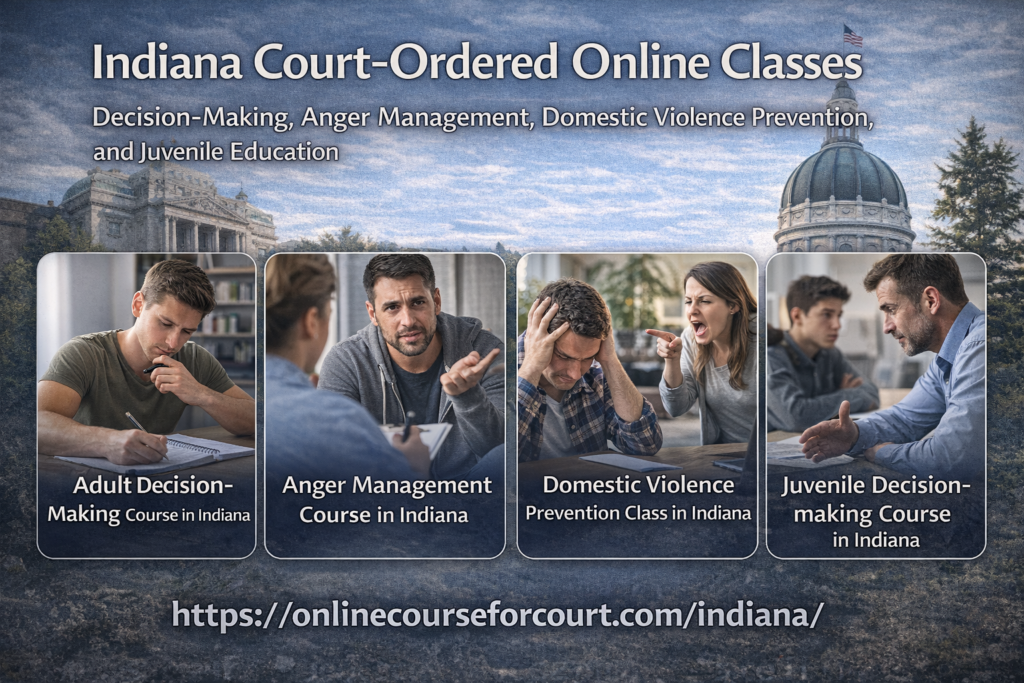
Yes — Indiana courts generally accept online court-ordered programs when they meet judicial requirements and match the exact wording listed in your probation or sentencing order. Completing the correct course on time is essential to avoid probation violations, additional hearings, or extended supervision. Across Indiana, judges frequently assign structured educational programs to address behavioral concerns and reduce repeat offenses.
This guide explains the most commonly ordered behavioral education programs in Indiana and how to ensure full compliance.
Why Indiana Courts Assign Behavioral Education Programs
Court-ordered classes are not optional recommendations. They are legally binding conditions tied to probation, diversion agreements, or sentencing outcomes. These programs are designed to promote accountability, encourage responsible decision-making, and address the underlying behavior connected to the offense.
One of the most common compliance mistakes is enrolling in a course that sounds similar but does not exactly match the wording of the court order. Courts expect precision. The course title, required hours, and documentation must align with judicial instructions.
Adult Behavioral Improvement Requirements
When Is an Adult Decision-Making Course Required?
If a case involves impulsive behavior, poor judgment, or probation conditions requiring improved personal responsibility, a judge may order an Adult Decision-Making Course in Indiana. This program is designed to help participants strengthen critical thinking skills and evaluate consequences before acting.
What the Course Typically Covers
An Adult Decision-Making Course in Indiana generally includes:
- Risk assessment and consequence evaluation
- Personal accountability strategies
- Structured problem-solving methods
- Long-term goal setting and planning
The objective is to help individuals develop healthier thought patterns and avoid behaviors that may lead to future legal issues. Courts assign this education to promote long-term behavioral change rather than simply impose penalties.
Managing Conflict and Emotional Regulation
Court-Ordered Anger Management in Indiana
When cases involve disputes, aggressive behavior, or emotional outbursts, courts may require completion of an Anger Management Course in Indiana. This structured program focuses on understanding emotional triggers and developing constructive responses.
Core Learning Areas
An Anger Management Course in Indiana typically teaches:
- Identifying early warning signs of anger escalation
- Communication skills for resolving conflict
- Stress-reduction and emotional regulation techniques
- De-escalation strategies
Courts rely on this type of education to reduce repeat incidents and improve interpersonal behavior. Completing the required hours demonstrates cooperation and a commitment to behavioral improvement.
Domestic Violence-Related Court Requirements
When Is Domestic Violence Prevention Ordered?
In cases involving allegations of domestic conflict or abusive behavior, courts may require participation in a Domestic Violence Prevention Class in Indiana. This program is designed to address harmful behavior patterns and promote non-violent conflict resolution.
Educational Focus of the Program
A Domestic Violence Prevention Class in Indiana often includes:
- Legal consequences of domestic violence offenses
- Recognizing unhealthy relationship patterns
- Accountability and responsibility training
- Healthy communication and boundary-setting
Courts use this structured education to protect public safety and reduce the likelihood of future incidents. Compliance with this requirement is taken seriously and may directly affect probation outcomes.
Juvenile Court-Ordered Education Programs
Supporting Youth Through Structured Decision Education
When minors are involved in legal matters, courts may require completion of a Juvenile Decision-making Course in Indiana. This program is designed to guide young individuals toward responsible choices and long-term accountability.
What Juvenile Courses Teach
A Juvenile Decision-making Course in Indiana typically addresses:
- Peer pressure resistance strategies
- Understanding consequences of risky behavior
- Goal-setting and future planning
- Personal responsibility development
Juvenile-focused education emphasizes prevention and growth rather than punishment. Courts often use this approach to redirect behavior at an early stage.
How to Ensure Your Online Course Is Accepted in Indiana
Indiana courts widely accept online programs when they meet certain criteria. To protect your compliance status:
1. Match the Course Title Exactly
The name of the course must reflect the wording in your court order.
2. Complete All Required Hours
If your order specifies a number of hours, you must complete them fully.
3. Verify Certificate Details
Ensure your legal name appears correctly and that the completion date is clearly listed.
4. Submit Documentation Before the Deadline
Late submission can result in probation complications.
Failing to meet these standards may lead to additional court appearances or extended supervision.
Why Timely Completion Matters
Courts in Indiana evaluate compliance carefully. Completing your Adult Decision-Making Course in Indiana, Anger Management Course in Indiana, Domestic Violence Prevention Class in Indiana, or Juvenile Decision-making Course in Indiana early allows time for documentation processing and confirmation.
Waiting until the last minute increases stress and risk. Technical issues or incorrect enrollments can create unnecessary complications. Acting early demonstrates responsibility and respect for court directives.
Frequently Asked Questions (FAQ)
Are online court-ordered classes accepted in Indiana?
Yes, Indiana courts generally accept online programs when they meet judicial standards and match the specific wording in your court order.
How do I know which course to enroll in?
Carefully review your sentencing or probation paperwork. The course title listed in your order should match exactly with the program you select.
What happens if I take the wrong class?
If the course does not align with the court’s instructions, your certificate may be rejected, which could delay case resolution or lead to probation issues.
How long do I have to complete my course?
Deadlines vary by case. Always confirm the completion timeline listed in your court order or provided by your probation officer.
Can completing the course early help my case?
Yes. Early completion demonstrates cooperation and responsibility, which can positively impact probation reviews and case progress.
Final Thoughts
Court-ordered education programs in Indiana are designed to encourage accountability, improve decision-making, and reduce repeat offenses. Whether you are required to complete an Adult Decision-Making Course in Indiana, an Anger Management Course in Indiana, a Domestic Violence Prevention Class in Indiana, or a Juvenile Decision-making Course in Indiana, selecting the correct program and completing it on time is critical.
Carefully review your court documents, enroll in the appropriate course, complete all required hours, and submit your certificate promptly. Taking these steps ensures compliance, protects your legal standing, and helps you move forward with confidence.