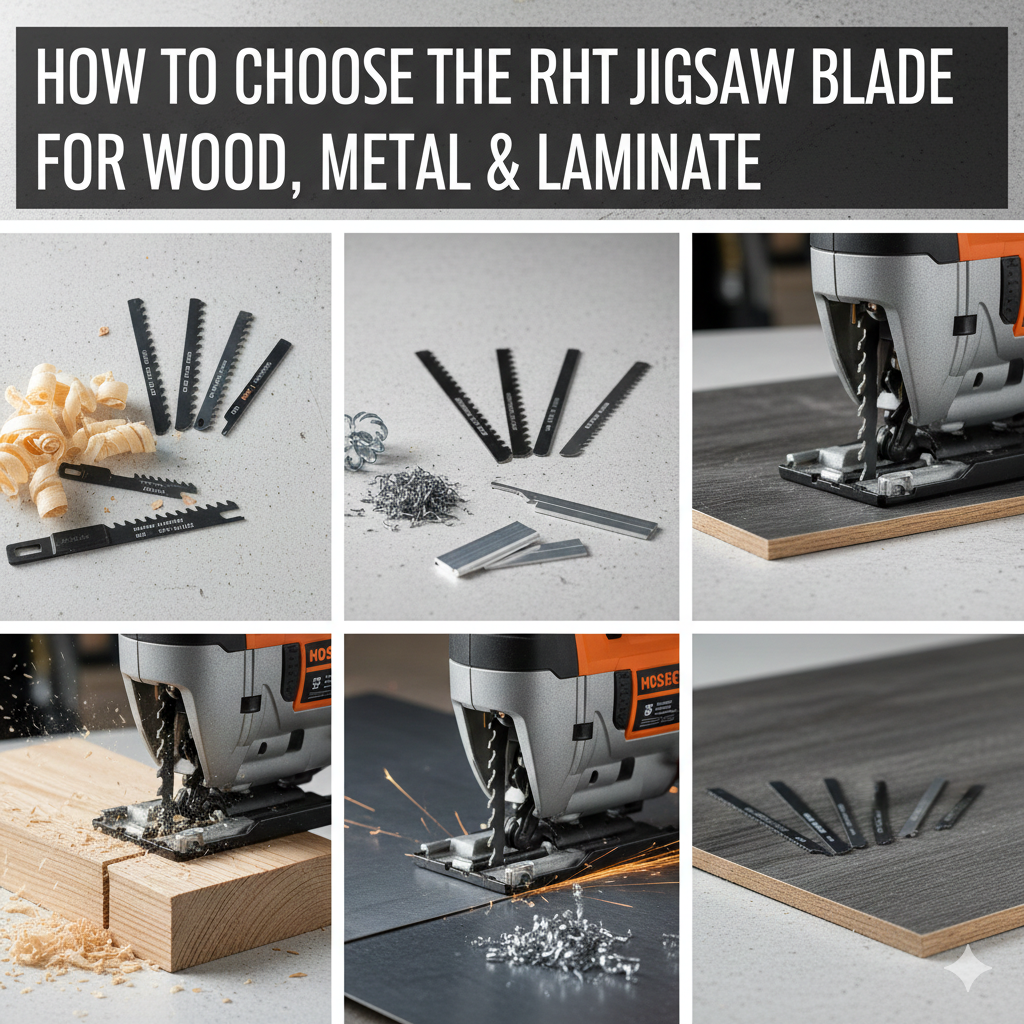
Choosing the right jigsaw blade can make the difference between a clean, precise cut and a rough, splintered finish. Whether you’re a professional tradesperson or a DIY enthusiast, understanding which blade works best for wood, metal, or laminate ensures better performance, longer blade life, and improved safety.
Jigsaws are incredibly versatile tools — but their performance depends heavily on selecting the correct blade for the material you’re cutting. In this guide, we’ll walk you through everything you need to know to choose the right blade with confidence.
Understanding Jigsaw Blade Basics
Before selecting a blade, it’s important to understand the key factors that differentiate one blade from another:
1. Material of the Blade
Jigsaw blades are made from different materials, each suited for specific applications:
- HCS (High Carbon Steel) – Flexible and ideal for softer materials like wood and plastic.
- HSS (High-Speed Steel) – Harder and more heat-resistant, suitable for cutting metal.
- Bi-Metal (BIM) – Combines flexibility and durability; excellent for demanding jobs.
- Carbide-Tipped – Best for abrasive materials like laminate, tiles, or fiberglass.
2. Tooth Per Inch (TPI)
TPI determines how smooth or fast the cut will be.
- Low TPI (6–10) – Faster, rough cuts (ideal for thick wood).
- Medium TPI (10–20) – Balanced cutting.
- High TPI (21+) – Smooth, precise cuts (best for metal and laminate).
3. Blade Length
The blade must be longer than the thickness of the material you’re cutting. For thicker materials, choose longer blades to ensure clean and safe cuts.
Choosing the Right Blade for Wood
Wood is one of the most commonly cut materials with a jigsaw, but different types of wood require different blades.
For Softwood & Fast Cuts
If you’re cutting softwood or construction timber and speed is more important than a perfect finish:
- Choose HCS blades
- Low TPI (6–10)
- Large, aggressive teeth
These blades remove material quickly but may leave a rough edge.
For Hardwood & Clean Finishes
When cutting hardwood, plywood, or visible surfaces:
- Medium to high TPI (10–20)
- Finer teeth
- Narrow blade for curved cuts
For clean, splinter-free results in veneered boards or finished surfaces, consider reverse-tooth blades. These cut on the downstroke, reducing tear-out on the top surface.
Choosing the Right Blade for Metal
Cutting metal requires a completely different approach than wood. Metal is harder, generates heat, and demands precision.
For Thin Sheet Metal
- High TPI (21–32)
- HSS or Bi-Metal blades
- Slower cutting speed
A higher tooth count ensures smooth cuts without bending or tearing the metal.
For Thick Metal or Pipes
- Bi-Metal blades
- Medium to high TPI (14–24)
- Use cutting lubricant for better performance
Always let the blade do the work. Applying too much pressure can overheat and dull the blade quickly.
If you regularly work with different materials, having a reliable selection from a quality range like Jigsaw blades ensures you’re equipped for every task — from fine sheet metal to structural components.
Choosing the Right Blade for Laminate
Laminate flooring and coated boards are highly prone to chipping. Using the wrong blade can easily damage the surface.
Best Blade Type for Laminate
- Fine tooth blade (high TPI)
- Reverse-tooth blade or laminate-specific blade
- Carbide-tipped for durability
Because laminate has a decorative top layer, splinter control is crucial. Reverse-tooth blades cut downward, minimizing damage to the visible surface.
For high-volume laminate installation, investing in high-quality Jigsaw blades designed specifically for precision cutting will save both time and material waste.
Straight Cuts vs. Curved Cuts
Another important factor when selecting a jigsaw blade is the type of cut.
For Straight Cuts
- Wider blade body
- Thicker blade
- Designed for stability
These blades reduce bending and provide straighter lines.
For Curved or Intricate Cuts
- Narrow blade
- Flexible design
- Fine teeth for control
Perfect for detailed woodworking, decorative shapes, or custom fittings.
Special Blades for Specialty Applications
Beyond wood, metal, and laminate, jigsaws can cut:
- PVC and plastic
- Aluminum
- Ceramic tiles (with carbide blades)
- Fiber cement boards
For each material, selecting the right blade ensures clean edges and longer tool life. Choosing from a professional-grade collection like Jigsaw blades gives you access to specialized options tailored to demanding tasks.
Common Mistakes to Avoid
Even experienced users sometimes make simple blade selection mistakes. Here’s what to avoid:
1. Using a Wood Blade for Metal
This will dull the blade almost instantly and may cause unsafe cutting conditions.
2. Ignoring TPI
Too few teeth for metal leads to rough cuts. Too many teeth for thick wood slows down the job unnecessarily.
3. Applying Excess Pressure
Let the jigsaw operate at its intended pace. Forcing the cut reduces blade life.
4. Choosing the Wrong Blade Length
If the blade is too short, it can overheat and produce uneven cuts.
Pro Tips for Better Results
- Always secure your material firmly.
- Adjust the pendulum (orbital) setting based on material — use lower settings for metal and laminate.
- Replace dull blades immediately for cleaner results.
- Match blade speed to the material type.
Keeping a small assortment of high-quality Jigsaw blades on hand ensures you’re never compromising on cut quality.
Why Quality Matters
Not all jigsaw blades are created equal. Cheaper blades may save money initially but often result in:
- Rougher finishes
- Faster wear
- Increased breakage
- Reduced accuracy
High-quality blades provide smoother cuts, greater durability, and better overall efficiency. Whether you’re handling professional construction work or home renovation projects, investing in the right blades improves both safety and results.
Final Thoughts
Selecting the right jigsaw blade doesn’t have to be complicated. Once you understand blade material, TPI, length, and intended application, choosing becomes straightforward.
- Use low TPI HCS blades for fast wood cuts.
- Choose high TPI HSS or Bi-Metal blades for metal.
- Opt for fine-tooth or reverse blades for laminate.
The key is matching the blade to the material and the type of cut you need. With the right selection of Decoupeerzaagbladen | Jigsaw blades, you’ll achieve cleaner cuts, improved efficiency, and longer blade life every time.
If you want professional results, start with the right blade — your jigsaw can only perform as well as the blade you install.