Hotels, commercial buildings, and high-footfall buildings have become obliged to manage their wastewater efficiently and control odor areas. As the environmental standards, customer demands, and high regulatory standards increase, the business cannot afford a system that is outdated and which results in foul smell or poor hygiene and inefficient sewage disposal. Two necessary upgrades spearheading this transformation are:
1. Install Sewage Treatment Plant (STP).
2. Installing a Special odor Control System in Hotels.
Let us deconstruct the reasons behind the importance of both solutions and the way they assist each other in providing a sustainable, comfortable, and compliant environment.
1.The need to install a sewage treatment plant?
A Sewage Treatment Plant (STP) is not a luxury anymore, it has become a necessity condition in the hotels, residential complexes, hospitals, educational institutions and commercial properties. An STP purifies wastewater, and it may be used again or discharged into the environment and its impact on the environment could be vastly minimized.
Environmental Benefits
Installation of an STP is beneficial in alleviating pollution by treating sewages before the natural water bodies are released. The water that has been treated can be re-used in gardens, flushing, cooling towers and cleaning floors- this will seriously cut down on the use of fresh water.
Regulatory Compliance
The environmental officials in India also demand the installation of STPs in buildings that produce a certain amount of wastewater. Failure to comply may attract fines, suspension of licenses, or shut down notices.
Cost Savings
Though the initial installation cost might be a high cost, STPs assist in saving the long-term costs by:
- Lowering freshwater usage
- Lowering sewer discharge prices.
- Indeed (green certifications) LEED/GRIHA.
- Increasing property value
- Improved Public Image
Customers would like to stay in the environmentally-friendly centers. Conscious customers and positive reviews are attracted to hotels and businesses which emphasize the use of sustainable wastewater systems.
2. Hotel Odor Control System: Its necessity.
Hotels spend a lot of money on the atmosphere, quality of the service and the comfort of their guests, yet there is the odor of the restrooms or drains that can ruin the whole experience. Odors are likely to be emitted in kitchen drains, grease tabs, wash rooms, waste water lines and STP.
A Hotels Odor Control System is used to keep internal and external premises clean, hygienic, and friendly.
How Odor Problems Start
Hotels produce wastewater of different kinds:
- Food wastewater containing high amounts of grease and food particles.
- Chemical-containing effluents of laundries.
- Washroom drainage with organic garbage.
- STP vapors due to ammonia, hydrogen sulfide (H2S) and methane.
These areas are odor hotspots without appropriately administered treatment.
Advantages of an Odor Control System.
a. Improved Customer satisfaction.
Visitors require clean and smell free places. Reducing foul odors will result in great reviews, repeated visits, and an improved brand image.
b. Occupational Health and Safety.
Smell is not only distasteful, but it may indicate dangerous gases. The odor control system for hotels is a professional system that eliminates bacteria, VOCs and sulfur compounds and prevents indoor air to be unsafe.
c) Improved Work Conditions of the staff.
Employees in kitchens, washrooms, and waste management areas can work in a comfortable environment where the quality of air is kept clean.
d. Supplement to STP Operations.
Use of modern STPs, which are coupled with advanced odor management, are more efficient since the gas that causes odor is neutralized at the source.
3. How Installing an STP Works
A sewage treatment plant installation consists of a number of phases:
Site Assessment
Engineers analyze the size of wastewater, space, soil, and regulation needs in the community.
Design & Capacity Planning
The STP is designed based on:
- Total occupancy
- Expected water usage
- Peak flow volumes
- Reuse possibilities
Installation Process
Includes setup of:
- Equalization tanks
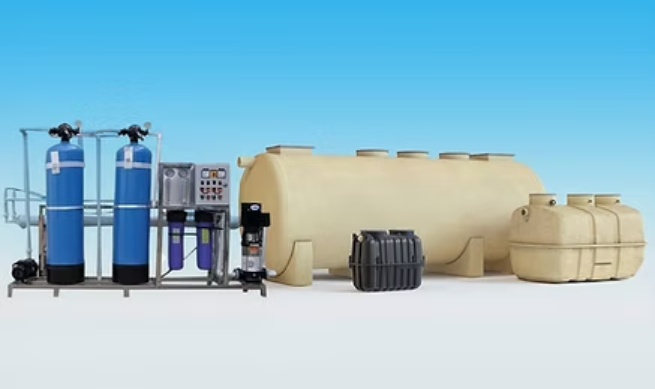
- Aeration and biological treatment units.
- Filtration systems
- Mechanisms of sludge management.
- Disinfection units
Staff Training and Commissioning.
The system is tested once it is installed. Employees are equipped with handling of regular functions which will lead to efficiency in the long run.
4. The functionality of Hotel Odor Control System.
Fifth aroma removal products take environmentally friendly methods like:
- Bio-enzymatic sprays that disintegrate the organic matter that causes odor.
- Washroom and corridor purification units.
- STP/Kitchen exhaust STP and chemical scrubbers.
- Aerosol mist countermeasures to odors in the outdoors.
- Use bio cultures that ferment grease and avoid bad smells at their source.
All these solutions have a fully developed odor management ecosystem.
5. STP + Smell Control = A Smell-Free, Guest-Friendly Cleaning.
When the odor control and sewage treatment are combined, hotels, malls, commercial towers, and resorts become of great advantage.
A properly installed STP guarantees clean reusable water. A smell control system is the one that makes the whole facility smell clean and friendly.
A mixture of the two systems would lead to:
- Higher guest satisfaction
- Greater sustainability ratings.
- Long-term cost savings
- Healthier indoor environments.
None of the negative reviews of smell or hygiene.
FAQs
1. What is the time required in installing a sewage treatment plant?
Installation may require up to 4-12 weeks depending on size and complexity with assessment, civil work and commissioning.
2. Do odor control systems pose a risk to the interior environment?
Yes. The contemporary solutions have non-toxic and VOC-free neutralizers and bio-enzymatic preparations, which are entirely safe to both guests and personnel.
3. Is it possible to use treated STP water to flush and garden?
Absolutely. Flushing, irrigation, landscaping, cooling towers and cleaning are the areas where treated water can be used.
4. Are odor systems to be maintained regularly?
The systems are also inexpensive and simple to maintain and require regular filter checks, refills, or dosages.