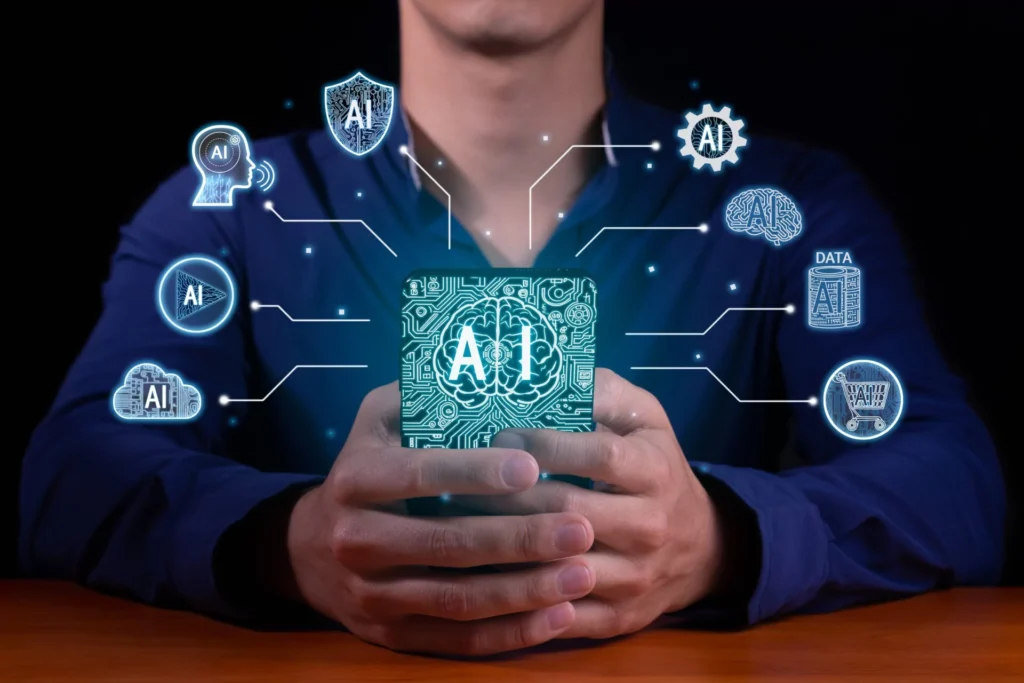
In the previous era of digital transformation, businesses focused on “AI-added” features—sticking a chatbot onto a legacy website or using a basic algorithm to sort data. However, the landscape has shifted. We are now entering the era of AI-native product engineering.
But what does it actually mean to be “AI-native,” and why is it the definitive framework for the next generation of successful software?
What is AI-Native Product Engineering?
AI-native product engineering is the practice of designing and building software where Artificial Intelligence is the core foundational element, rather than an afterthought.
In a traditional “AI-integrated” model, the software works first, and AI helps it work better. In an AI-native model, the product’s primary value proposition would not exist without the AI. The architecture, data pipelines, and user interface are all built specifically to support and be driven by machine learning models.
The Core Pillars of AI-Native Design
To build a truly AI-native product, engineering teams must move away from linear development and embrace a multi-dimensional approach:
-
Data-Centric Architecture: Instead of building a database to store information, the architecture is built to feed models. This involves real-time data ingestion and automated “data cleaning” loops.
-
Agentic Workflows: Moving beyond simple automation to “AI Agents” that can reason, plan, and execute complex tasks within the product ecosystem.
-
Feedback-Loop Integration: AI-native products are designed to learn from every user interaction. This creates a “flywheel effect” where the product becomes more personalized and efficient the more it is used.
-
Elastic Infrastructure: Leveraging GPU-cloud solutions and serverless inference to handle the high-compute demands of large language models (LLMs) and generative assets.
Why Businesses are Shifting to AI-Native Frameworks
The transition to AI-native product engineering isn’t just a trend; it’s a competitive necessity. Here is why global enterprises are allocating massive capital to this shift:
1. Unprecedented Personalization
Traditional software offers “one-size-fits-all” interfaces. AI-native products adapt to the individual user’s behavior in real-time, rewriting their own UI or suggesting workflows based on predicted needs.
2. Scalability of Intelligence
When AI is the engine, the product can handle complex decision-making processes that previously required human intervention. This allows companies to scale services (like financial advising or medical triaging) at a fraction of the traditional cost.
3. Rapid Iteration Cycles
AI-native engineering utilizes AI in the coding process itself. By using “AI for AI,” developers can identify bugs, optimize model weights, and deploy updates significantly faster than traditional DevOps cycles.
Challenges in AI-Native Engineering
Building from the ground up with AI requires overcoming significant hurdles:
-
Technical Debt: Retrofitting a legacy product to be AI-native is often more expensive than starting fresh.
-
Cost Management: Running high-level inference 24/7 can be costly. Engineers must focus on “Small Language Models” (SLMs) and efficient orchestration to maintain margins.
-
Trust and Safety: Adhering to E-E-A-T principles means ensuring that AI outputs are accurate, unbiased, and transparent.
How to Start Your AI-Native Journey
-
Identify the Core Problem: Does this problem require AI to solve, or is AI just a “nice-to-have”?
-
Audit Your Data Stack: Ensure you have the “clean” data necessary to train or fine-tune models.
-
Choose the Right Infrastructure: Evaluate GPU providers and multi-cloud connectivity to ensure your product has the “horsepower” it needs.
-
Prioritize User Trust: Build “Human-in-the-loop” systems where users can verify AI decisions, ensuring long-term reliability.
Conclusion
AI-native product engineering is more than a technical methodology; it’s a mindset shift. By placing intelligence at the center of the development lifecycle, companies can create products that are not just “smart,” but truly transformative.
As the digital economy evolves, the distinction between “software” and “AI” will disappear. The winners will be those who stop adding AI to products and start building products out of AI.