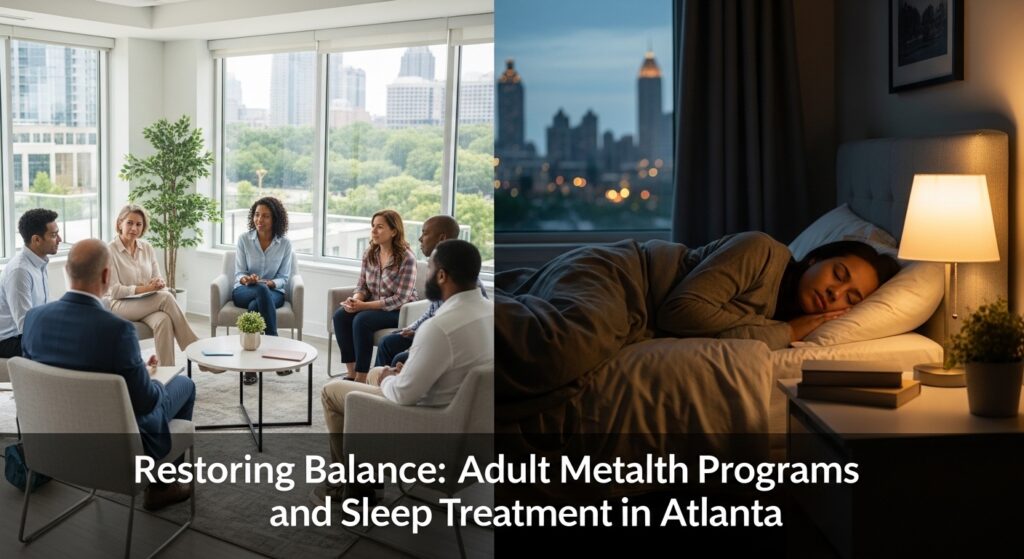
Sleep is supposed to be the body’s natural reset button. Yet for many adults, nighttime becomes the most stressful part of the day. You lie down exhausted, but your mind starts racing. You replay conversations, think about responsibilities, or feel a quiet sense of worry you cannot explain. Hours pass, and morning arrives without real rest.
Sleep struggles are often treated as a physical issue, but in reality they are frequently connected to emotional health. Anxiety, stress, grief, and burnout can keep the nervous system active even when the body is tired. This is why mental health treatment for sleep issues is becoming an essential part of therapy.
At Novu Wellness, we work with individuals whose sleep difficulties are not simply habits but signals that their mind is under pressure. Through supportive counseling and structured care, adult mental health programs in Atlanta can address the root cause rather than just the symptom.
Why Sleep and Mental Health Are Deeply Connected
The brain does important emotional processing during sleep. It organizes memories, regulates mood, and resets stress hormones. When sleep is disrupted, the brain does not fully complete these processes. Over time, this creates a cycle. Poor sleep increases anxiety, and anxiety further disrupts sleep.
Many adults describe similar patterns. They feel tired during the day but alert at night. They may fall asleep quickly yet wake at 2 or 3 a.m. unable to return to rest. Others experience vivid dreams, shallow sleep, or a constant sense of mental activity. Eventually concentration declines, irritability increases, and motivation becomes difficult.
People often blame themselves, thinking they lack discipline or better routines. In many cases, the nervous system is simply stuck in a state of alertness. The brain perceives stress even when no immediate danger exists.
Mental health therapy works to calm this response. Instead of forcing sleep, treatment helps the body relearn how to relax.
Common Mental Health Causes of Sleep Problems
Sleep disturbances frequently come from underlying emotional strain. Anxiety is one of the most common contributors. When the brain anticipates problems, it keeps the body awake to prepare for action. Even minor worries can activate this system at night.
Depression also affects sleep, but in a different way. Some individuals experience insomnia, while others sleep excessively yet never feel rested. Their brain remains mentally fatigued, preventing restorative sleep cycles.
Stress and burnout are another major factor, particularly for working adults balancing careers, finances, and family responsibilities. The mind continues planning and problem-solving long after bedtime. Grief, trauma, and major life transitions can also keep the nervous system activated because the brain is attempting to process emotional experiences.
This is why treatment must address mental health directly. Sleep medications may temporarily help, but they do not resolve the underlying emotional activation.
What Adult Mental Health Programs in Atlanta Provide
Structured therapy programs focus on the person as a whole rather than only the symptom. At Novu Wellness, adult mental health programs are designed to help individuals understand how thoughts, emotions, and physical responses interact.
The first step is assessment. A licensed therapist evaluates stress levels, emotional history, and behavioral patterns. Many clients are surprised to discover that their sleep difficulties began after a specific life event such as a loss, increased workload, or unresolved anxiety.
Treatment then focuses on emotional regulation. Clients learn how their nervous system shifts into alert mode and how to guide it back toward calm. Therapy also helps individuals change thinking patterns that keep the mind active at night, such as excessive worry or rumination.
As emotional stability improves, sleep often improves naturally because the brain no longer feels the need to remain vigilant.
How Mental Health Treatment for Sleep Issues Works
Mental health therapy approaches sleep problems differently from quick-fix solutions. Instead of only trying to force sleep, therapy helps restore the body’s natural rhythm.
Sessions may include understanding the connection between thoughts and physical tension, identifying nighttime triggers, and developing calming routines that signal safety to the brain. Clients also learn strategies for handling late-night racing thoughts so they do not spiral into anxiety.
An important part of treatment is reducing pressure around sleep. Many adults become anxious about not sleeping, which actually increases wakefulness. Therapy helps retrain the mind to associate bedtime with relaxation rather than worry.
Over time, individuals experience deeper and more consistent rest. They wake feeling more refreshed, and daytime concentration improves. Emotional resilience also strengthens because the brain is finally completing its nightly recovery processes.
When to Seek Support
Sleep problems that last more than a few weeks may indicate a mental health concern rather than a temporary disruption. If you feel constantly tired, irritable, or unable to concentrate, your mind may not be getting the recovery it needs. Difficulty falling asleep, frequent nighttime waking, or relying on distractions late at night are also common signs.
You do not have to wait until exhaustion affects your work or relationships. Early treatment often resolves sleep disturbances faster and prevents anxiety or depression from worsening.
Building Healthy Sleep and Emotional Wellness
Sleep is not just a physical function. It is a reflection of emotional safety within the brain. When the mind feels secure and regulated, the body rests naturally. Through supportive counseling, adult mental health programs in Atlanta and specialized mental health treatment for sleep issues help individuals restore that balance.
With the right guidance, sleep can become restorative again. Energy returns, focus improves, and daily life feels manageable rather than overwhelming. Healing begins when the mind learns it no longer has to stay awake to stay safe.
You deserve rest, clarity, and peace of mind. Professional support can help you reach that point.