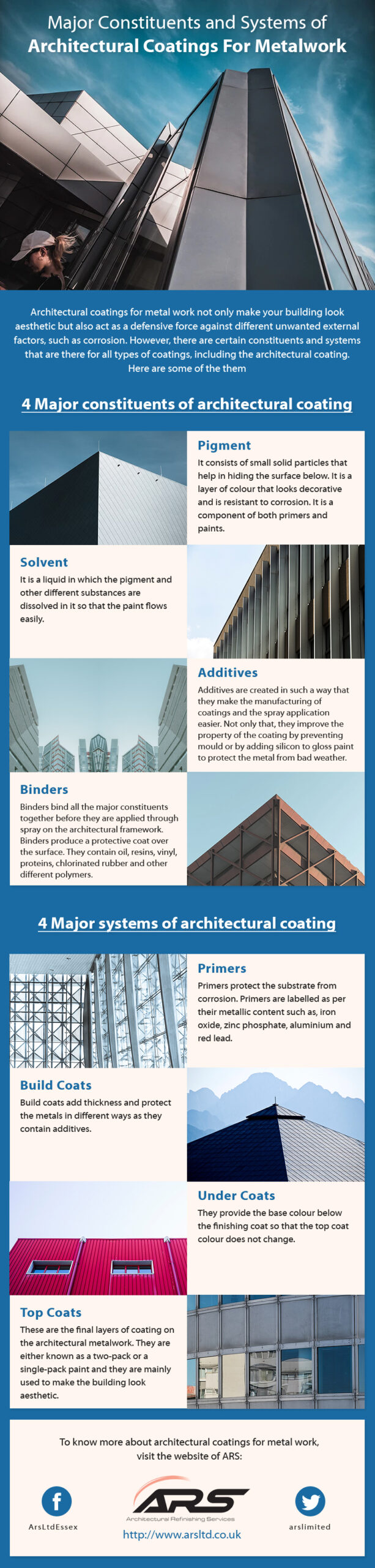
To produce a visually appealing and protective layer on the architectural steelwork, the architectural coatings are done. These coatings consist of several essential ingredients that work together to produce a protective and visually appealing finish. There are four major constituents.
- Pigment: The pigment is a finely ground solid component that is supposed to add colour to the coating. This is something finely grounded in nature, and aside from providing colour, pigments also contribute to surface protection. This functionality is made possible by the pigment in such a way that it resists corrosion and improves the visibility of the surface. These pigments are present in both primers and final coatings. They are known for concealing imperfections and ensuring the safety of the architecture.
- Solvent: When the application of the coating materials is required, it becomes important that you dissolve them. To get these tasks done, the solvent is important. This step helps in creating a proper consistency and ensures proper application on the walls. They ensure the paint flows evenly and can be applied efficiently using a spray or brush. Once applied, the solvent evaporates, leaving behind a solid protective layer.
- Binders: To hold the coating and to adhere it securely, it is important that a material that binds them together is required. Binders hold all elements together by forming a durable film. Once this application is done and the solvent evaporates, it creates a layer, which ensures weather resistance and protection.
- Additives: Additives enhance the performance and workability of the coating. They can speed up drying times, improve smoothness, prevent mould; enhance gloss, or protect metal from water damage. Additives ensure the coating application process is efficient while improving durability and overall finish quality.
Major Systems of Architectural Coating
There are four major systems of architectural coatings such as in case of shop front recoating, which include primers, build coats, undercoats, and topcoats. All of them have been discussed below in detail.
- Primers: Primers form the initial protective layer applied directly to the metal surface. To safeguard the substrate against corrosion and to ensure that it prepares it for subsequent layers, this application of the primers is done. Most of the time, the primers are made from red lead, iron oxide, zinc phosphate, or aluminium.
- Build Coats: The build coats are the protective coats that are important for enhancing the durability of the coatings. Apart from providing durability, these buildcoats ensure that they remain strong and provide extra defence against physical and environmental impacts.
- Undercoats: Undercoats create the transitional layer before the final coat is applied. By preventing underlying layers from altering the topcoat shade, they ensure colour consistency.
- Top Coats: This is the final coating that determines the final look and the aesthetic appeal of the entire architecture.
If you are interested in knowing more about these things and magicman repairs in detail, then please refer to the infographic attached.