Pressure measurement plays a critical role in industrial, commercial, and scientific applications. From ensuring the safety of hydraulic systems to monitoring air compression in HVAC equipment, accurate pressure sensing is vital. Among the many types of pressure gauges available, the panel mounted pressure gauge stands out due to its adaptability, ease of integration, and reliability. In this article, we will explore panel mounted pressure gauges in depth, including their working principles, applications, installation considerations, advantages, limitations, and accessories such as pressure gauge snubber and liquid filled gauge.
1. What Is a Panel Mounted Pressure Gauge?
A panel mounted pressure gauge is a mechanical or digital instrument designed to measure and display pressure when installed directly into a control panel or instrument panel. Unlike gauge types that mount directly on pipes or machinery, panel mounted units are mounted through a cutout in a panel and secured from behind, making them ideal for applications where visual accessibility and instrument protection are priorities.
Panel gauges are engineered to present pressure readings in clear, calibrated dials or digital displays while maintaining a compact footprint. They are widely used in electrical control cabinets, test benches, manufacturing systems, and mobile equipment where central monitoring of pressure conditions is required.
2. How Panel Mounted Pressure Gauges Work
Whether mechanical or electronic, panel mounted pressure gauges operate on the same general principle: they sense pressure from a process connection and convert it into a readable value.
Mechanical Panel Mounted Gauge
Mechanical gauges use a sensing element—often a bourdon tube—that deforms as pressure changes. This deformation is transferred through linkages to a pointer that moves across a calibrated dial. The design is rugged, does not require external power, and is suitable for a wide range of fluids and gases.
Electronic Panel Mounted Gauge
Electronic panel mounted gauges use sensors such as strain gauges or piezoelectric elements to convert pressure into an electrical signal. This signal is processed and displayed digitally. Electronic versions are appreciated for higher precision, multiple units of measure, and advanced features like alarm outputs.
3. Common Applications
Panel mounted pressure gauges are utilized across industries, including:
- Industrial Automation: Monitoring air, water, and hydraulic pressure in factory machines.
- HVAC Systems: Tracking refrigerant and compressor pressures.
- Process Control Panels: Providing real-time feedback for operators.
- Laboratory Equipment: Measuring pressure in experimental setups.
- Mobile Equipment: Installed on dashboards for vehicle or mobile tool pressure monitoring.
Their ease of viewing and integration into control systems makes them indispensable where frequent operator monitoring is required.
4. Key Components and Design Considerations
To ensure optimal performance, panel mounted pressure gauges are engineered with several key design features:
a. Case and Bezel
The outer housing protects internal components and ensures durability. Materials like stainless steel or rugged plastics are chosen based on environment—corrosive, wet, or high vibration zones require stronger construction.
b. Dial and Pointer
The dial is graduated to indicate units of pressure (psi, bar, kPa, etc.). High contrast printing and anti-glare covers improve readability.
c. Connection Type
Panel mounted gauges typically use rear process connections (e.g., 1/4″ NPT or BSP) to interface with piping or tubing from behind the panel.
d. Sealing and Gaskets
To prevent environmental ingress or leaks, panel mounted units include seals between the gauge body and the panel cutout.
5. Installation Best Practices
Proper installation ensures accuracy and longevity:
- Select an appropriate panel cutout size per manufacturer instructions.
- Use proper sealing gaskets to eliminate vibration and moisture intrusion.
- Avoid over-tightening mounting nuts, which can distort internal mechanisms.
- Ensure the process connection does not transmit excessive vibration or pulsation—if unavoidable, consider accessories such as a pressure gauge snubber.
6. Accessories and Enhancements
Pressure Gauge Snubber
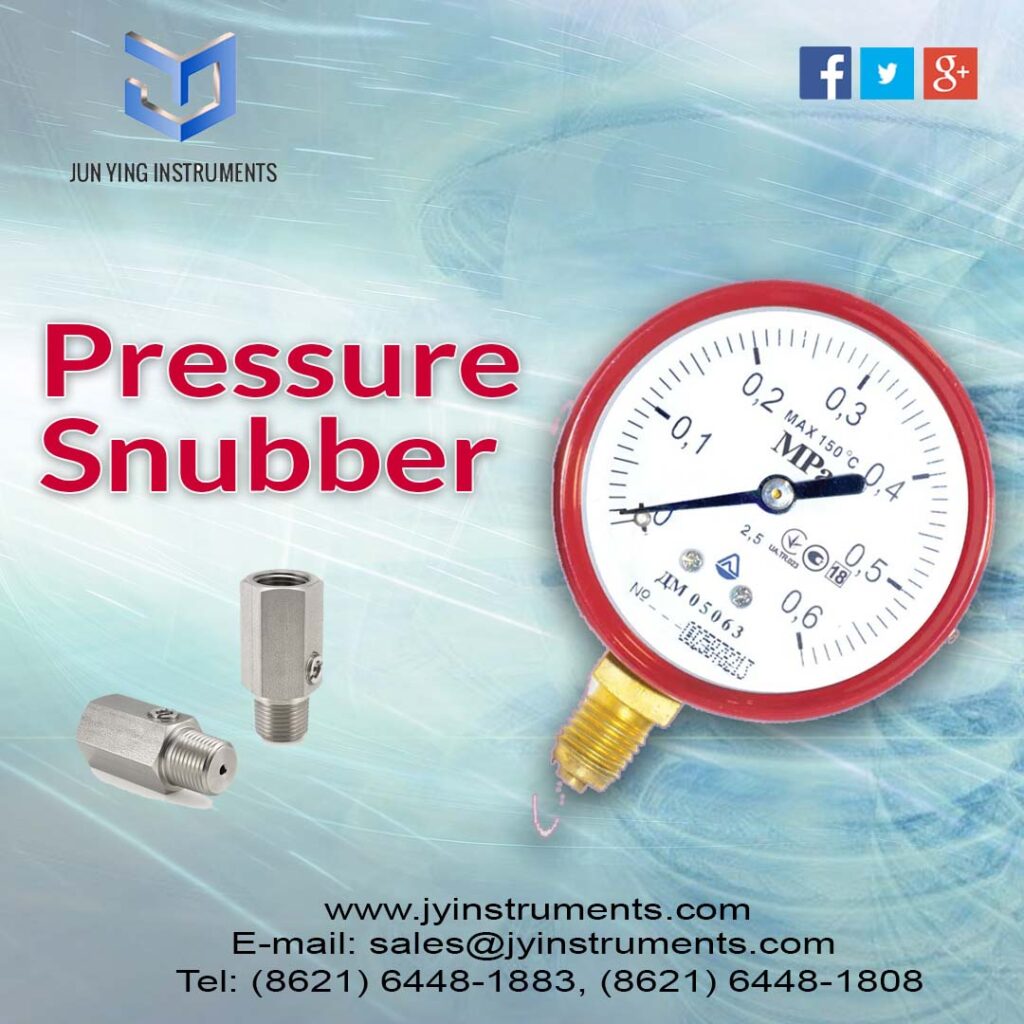
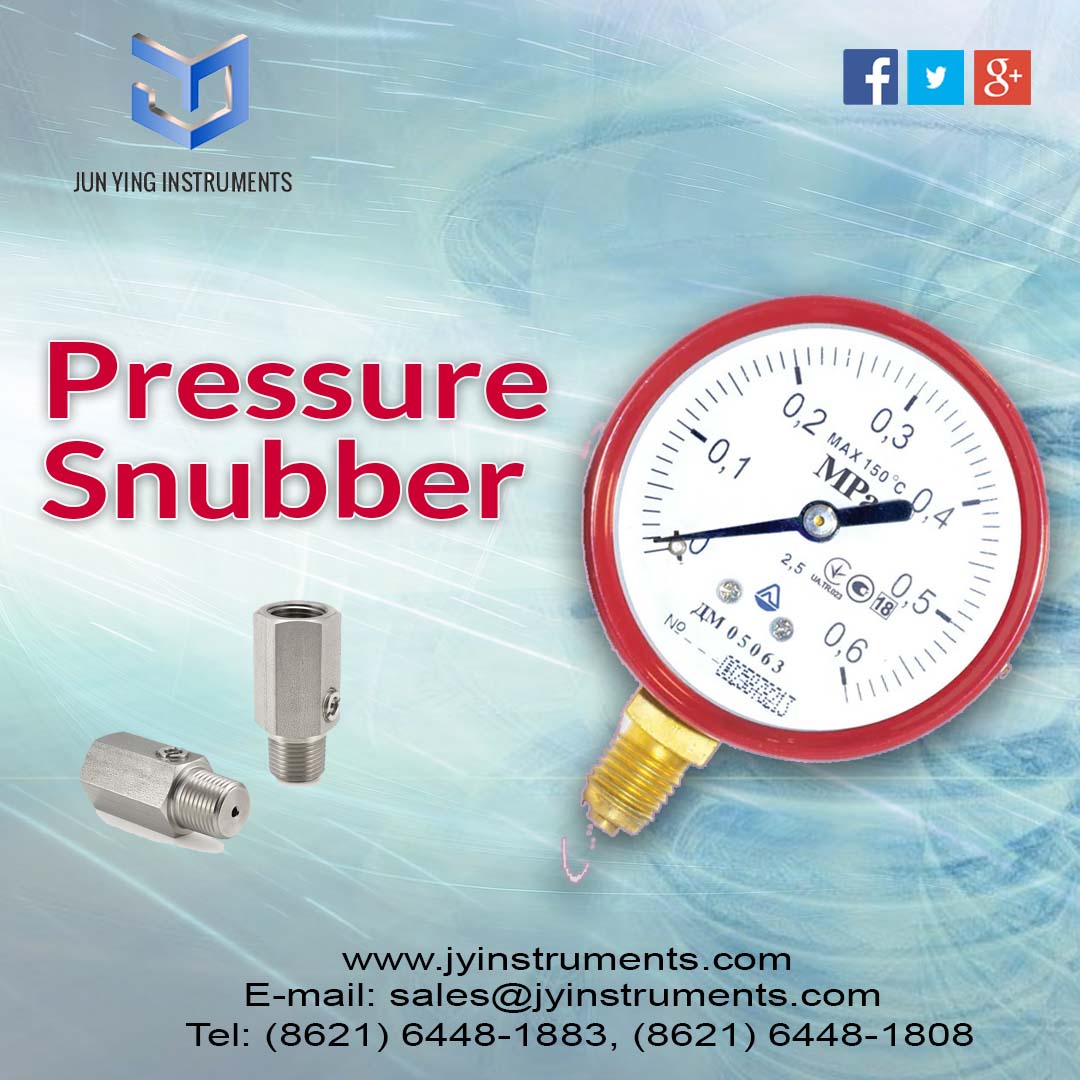
A pressure gauge snubber is a protective accessory designed to safeguard pressure gauges from rapid pressure spikes, pulsations, and surges that can damage instrumentation or cause erratic readings.
Why Use a Pressure Gauge Snubber?
- Protects the Gauge Mechanism: Sudden pressure spikes can stress internal components in mechanical gauges, reducing lifespan.
- Improves Readability: Pulsating pressure often causes pointer flutter, making accurate readings difficult.
- Reduces Wear: Snubbers moderate pressure changes, resulting in smoother gauge movement and longer service life.
How It Works
A snubber typically contains a small orifice or diaphragm that dampens the flow of fluid into the gauge. When rapid fluctuations occur, the snubber resists sudden changes, acting as a buffer. This is especially important in systems with reciprocating pumps, compressors, or pulsing fluids.
Installation Tips
- Install the snubber directly at the gauge connection.
- Ensure compatibility with the process fluid to prevent corrosion or blocking.
- Periodically check the snubber for debris buildup, which can restrict flow.
Liquid Filled Gauge
Another valuable enhancement is the liquid filled gauge. Liquid filling (commonly glycerin or silicone) offers performance benefits in demanding environments.
Benefits of Liquid Filling
- Dampens Vibration: The liquid medium absorbs shock and vibration, reducing pointer flutter.
- Temperature Stability: Certain liquids help maintain consistent readings in fluctuating temperatures.
- Extended Life: The fluid cushions internal parts, reducing wear.
Best Use Environments
Liquid filled gauges are ideal for:
- Vibrating machinery (e.g., engines, compressors).
- High-pressure hydraulic systems.
- Outdoor applications exposed to mechanical shocks.
Important Considerations
- Ensure the liquid is compatible with ambient temperature ranges; some liquids can expand excessively in high heat.
- Liquid filled units are heavier and may require more robust mounting.
7. Comparing Panel Mounted Gauges with Other Types
Understanding how panel mounted gauges differ from other pressure gauge types helps in proper selection.
| Feature | Panel Mounted Gauge | Direct Pipe Gauge |
| Installation | Mounted on control panel | Mounted on pipe or vessel |
| Accessibility | High, easy to read | Depends on location |
| Protection | Shielded inside panel | Vulnerable if exposed |
| Aesthetics | Clean dashboard look | Functional only |
| Maintenance | Easier access | May require disassembly |
Panel mounted gauges are chosen when continuous visual monitoring and instrument protection are priorities.
8. Accuracy and Calibration
Accuracy specifications are expressed as a percentage of full scale (e.g., ±1.0% FS). Regular calibration ensures gauges remain accurate over time, especially in critical applications. Calibration should compare device readings against a known standard and adjust or replace gauges that show drift.
9. Choosing the Right Panel Mounted Gauge
When selecting a panel mounted pressure gauge, consider:
- Pressure Range: Choose a gauge whose range covers expected operating pressures without being too broad (overly wide ranges reduce resolution).
- Connection Thread Type: Match the gauge connection to the process line fittings.
- Environmental Conditions: Corrosive environments require stainless steel or protective coatings.
- Vibration and Pulsation: Consider a pressure gauge snubber or liquid filled gauge
10. Common Mistakes to Avoid
- Oversized Ranges: Using a gauge with a range far above system pressures reduces reading precision.
- Skipping Protection Accessories: In pulsating systems, failing to use a snubber or liquid fill can shorten gauge life.
- Improper Mounting: Misaligned panel cutouts or improper sealing leads to inaccurate readings and environmental damage.
11. Real-World Use Case Examples
Industrial Machines
In manufacturing, panel mounted pressure gauges allow operators to monitor hydraulic pressures from a central control panel, enhancing safety and efficiency.
Control Cabinets in Process Plants
Mounted within electrical panels, these gauges provide quick visual feedback without operators needing to access field devices.
Mobile Equipment Dashboards
Agricultural or construction machines use panel mounted gauges to provide operators with real-time pressure readouts for hydraulic and pneumatic systems.
Conclusion
The panel mounted pressure gauge is a versatile, accessible, and reliable instrument widely used in industrial and commercial environments. By understanding its operation, application, and supporting accessories—such as pressure gauge snubber and liquid filled gauge—engineers, technicians, and operators can ensure more accurate monitoring and longer service life of their equipment. Proper selection, installation, and maintenance are key to optimizing performance and leveraging the full benefits of these essential measurement tools.