Hair extensions have become a beauty essential across the United States, offering instant length, volume, and styling flexibility without waiting months—or years—for natural growth. Whether you want fuller everyday hair, dramatic length for special occasions, or a protective styling option, choosing the right hair extensions can make all the difference in how natural and comfortable they feel.
But with so many options available—from clip-ins to tape-ins, synthetic to human hair—it’s easy to feel overwhelmed. After years of working with beauty content and tracking trends across salons in the United States, one thing is clear: the best hair extensions are not just about appearance—they’re about matching your lifestyle, hair type, and expectations.
This guide will help you confidently choose the right hair extensions with practical advice tailored for U.S. consumers.
Understand the Different Types of Hair Extensions
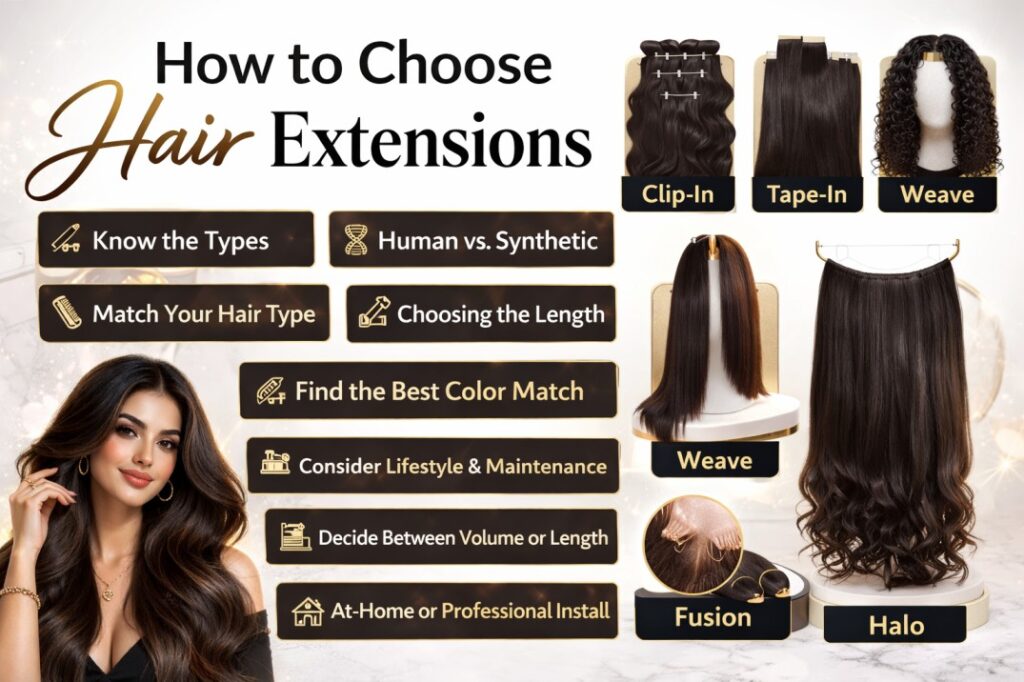
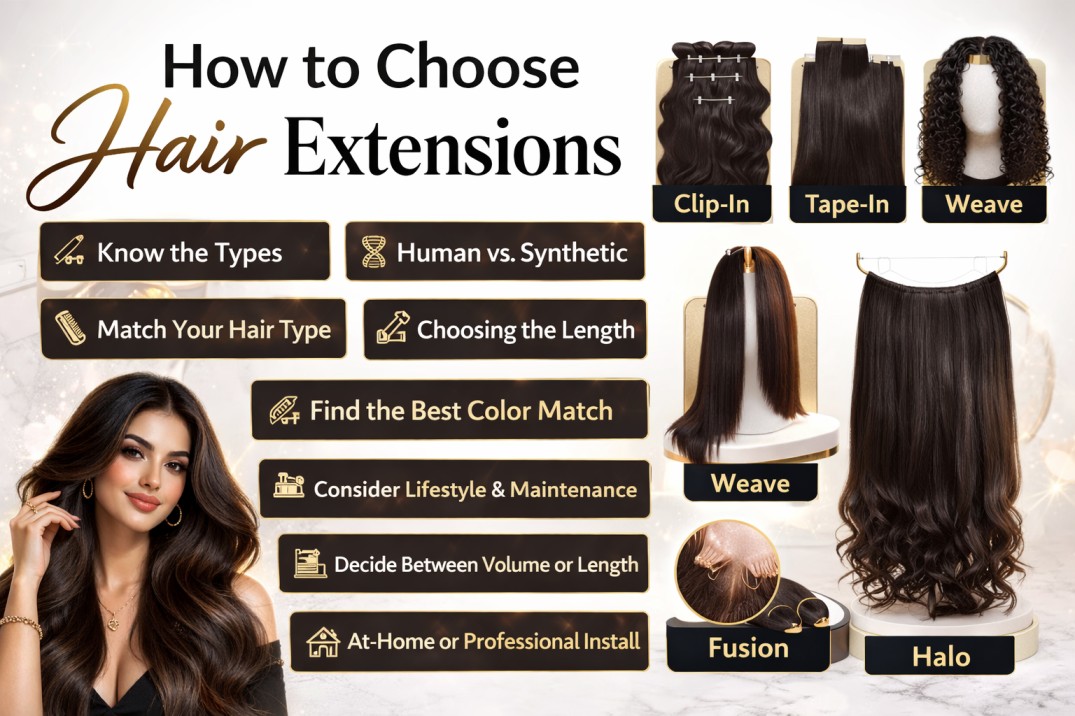
Before selecting hair extensions, it’s important to understand the main application methods. Each type offers different benefits depending on how often you plan to wear them and how much maintenance you’re willing to handle.
Clip-In Extensions
Clip-in extensions are one of the most popular choices in the U.S. because they are temporary and easy to apply at home. They’re perfect if you want flexibility and don’t want a long-term commitment.
Best for:
-
Beginners
-
Occasional wear
-
Special events
-
Quick volume or length
Clip-ins can be installed in minutes and removed just as easily, making them ideal for busy lifestyles.
Tape-In Extensions
Tape-in extensions are semi-permanent and lie flat against the scalp. They are lightweight and blend well with natural hair.
Best for:
-
Thin or fine hair
-
Natural-looking results
-
Everyday wear
Tape-ins typically last several weeks before needing adjustment, making them a popular salon choice.
Sew-In (Weave) Extensions
Sew-in extensions involve braiding natural hair and sewing wefts into the braids. This method is commonly used for thicker hair textures.
Best for:
-
Thick hair
-
Long-term styles
-
Protective styling
They offer durability but require professional installation.
Fusion or Bonded Extensions
Fusion extensions use keratin bonds to attach individual strands to natural hair. This method offers one of the most natural looks but requires maintenance.
Best for:
-
Long-term wear
-
Natural movement
-
Customized styles
They can last several months with proper care.
Choose Between Human Hair and Synthetic Hair
One of the most important decisions is whether to choose human hair or synthetic hair extensions.
Human Hair Extensions
Human hair extensions are the preferred choice for most buyers because they look and feel natural. They can also be styled with heat tools and dyed.
Benefits:
-
Natural appearance
-
Long lifespan
-
Heat styling compatibility
-
Better blending
For U.S. consumers who style their hair regularly, human hair is often the best investment.
Synthetic Hair Extensions
Synthetic extensions are more affordable but have limitations.
Benefits:
-
Budget-friendly
-
Pre-styled
-
Low maintenance
Drawbacks:
-
Cannot always handle heat
-
Shorter lifespan
-
Less natural appearance
Synthetic options work well for occasional use but may not hold up for daily styling.
Match Extensions to Your Hair Type
Choosing extensions that match your natural hair texture is key to achieving a seamless look.
Straight Hair
Straight extensions blend easily but must match thickness and density.
Wavy Hair
Wavy extensions provide natural movement and require less styling to blend.
Curly Hair
Curly extensions should match curl pattern and volume to avoid obvious differences.
Matching texture is just as important as matching color. Even the perfect shade won’t look natural if the texture doesn’t align.
Select the Right Length
Hair extension length should complement your natural hair rather than overwhelm it.
Common lengths include:
-
14–16 inches for subtle length
-
18–20 inches for noticeable length
-
22+ inches for dramatic styles
If your natural hair is short, very long extensions may look less natural. Gradual length increases tend to blend better.
Find the Perfect Color Match
Color matching is one of the biggest factors in achieving natural-looking results.
Instead of matching extensions to your roots, match them to the mid-lengths and ends of your hair. This creates a smoother blend.
If your hair has highlights or dimension, consider multi-tonal extensions. Many extension sets include blended shades that mimic natural hair variation.
Consider Your Lifestyle
Your daily routine plays a big role in choosing the right extensions.
Active Lifestyle
If you exercise frequently, look for secure options like tape-ins or sew-ins.
Busy Schedule
Low-maintenance options like clip-ins may be best if you don’t have time for regular salon visits.
Frequent Styling
Human hair extensions are better for people who use curling irons or straighteners regularly.
Extensions should fit your lifestyle—not complicate it.
Think About Maintenance
Different extensions require different levels of care.
Low Maintenance
-
Clip-ins
-
Synthetic extensions
Moderate Maintenance
-
Tape-ins
-
Sew-ins
High Maintenance
-
Fusion extensions
Maintenance includes washing, detangling, and regular adjustments. Choosing extensions you can realistically maintain will help them last longer.
Quality Matters More Than Price
While it’s tempting to choose the cheapest option, quality extensions usually last longer and look better.
High-quality extensions:
-
Shed less
-
Tangle less
-
Blend better
-
Last longer
In the long run, investing in better extensions often saves money because you won’t need to replace them as frequently.
Decide Between Volume and Length
Some people want longer hair, while others just want fuller hair. Knowing your goal helps you choose the right set.
For Volume
Choose shorter extensions that match your natural length.
For Length
Choose longer extensions with multiple wefts for blending.
Many people benefit from extensions that add both length and volume for a balanced look.
Professional vs At-Home Installation
Some extensions can be applied at home, while others require professional installation.
At-Home Options
-
Clip-ins
-
Halo extensions
Professional Options
-
Tape-ins
-
Sew-ins
-
Fusion extensions
Professional installation often results in a more natural look, especially for long-term wear.
Signs of Good Hair Extensions
When shopping for extensions, look for these quality indicators:
-
Soft texture
-
Minimal shedding
-
Even thickness
-
Secure attachments
-
Natural shine
Avoid extensions that feel overly shiny or plasticky, as they may look less natural.
Final Thoughts
Choosing the right hair extensions doesn’t have to be complicated. The key is understanding your hair type, lifestyle, and styling needs before making a decision.
For most people in the United States, human hair extensions offer the best balance of appearance and versatility, while clip-ins remain the easiest entry point for beginners. Tape-ins and professional options provide longer-lasting results for those ready to commit.
The best hair extensions are the ones that make you feel confident and comfortable. When chosen correctly, they blend seamlessly, style easily, and enhance your natural beauty without looking obvious.
Take the time to choose carefully, and your extensions will look less like an accessory—and more like your own hair.