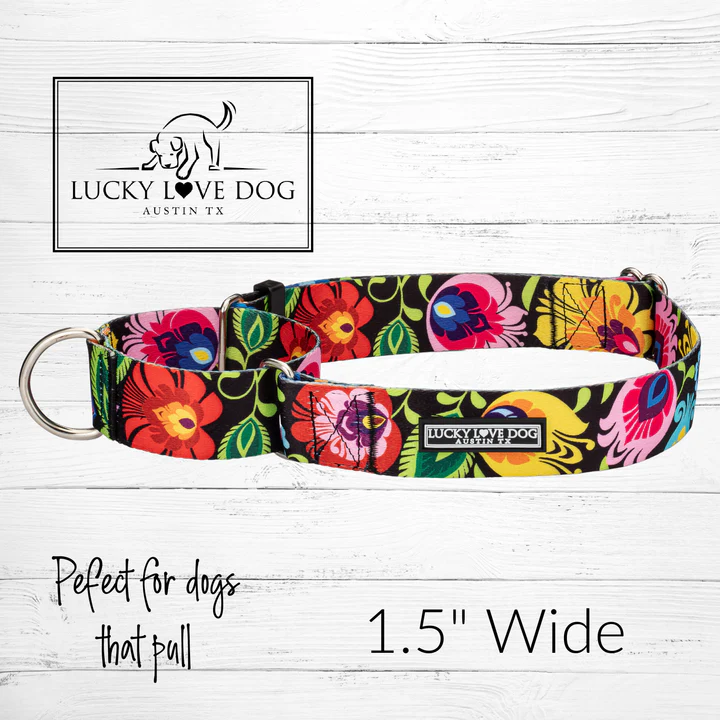
The search for the perfect collar often ends with the Martingale. Engineered for safety and control, the Martingale collar, often known as a “no-slip” collar, has long been the preferred choice for owners of breeds whose heads are narrower than their necks. However, for maximum safety, comfort, and durability—especially for powerful pullers or larger dogs—the standard narrow design often gives way to a superior option: the wide Martingale collar.
Choosing a Wide Martingale Dog Collars elevates a simple safety tool into a piece of essential gear that protects your dog’s delicate neck structures while ensuring they cannot back out of their restraint. This comprehensive guide details the mechanical advantages, critical safety benefits, and specific use cases that make the wide Martingale the gold standard in secure dog walking.
Unpacking the Mechanism of Wide Martingale Dog Collars
The effectiveness of the Martingale design lies in its unique two-loop structure. It provides gentle correction without the choking hazard associated with traditional choke chains, operating on a principle of limited constriction.
The Limited-Slip Principle
A Martingale collar is composed of:
The Primary Loop: This section, which makes up about two-thirds of the collar, fits loosely around the dog’s neck when relaxed.
The Control Loop: This smaller, secondary loop contains the D-ring where the leash attaches.
The Safety Stop: When the dog pulls, the control loop tightens the primary loop. The design is engineered so the collar tightens only to the size of the dog’s neck circumference, preventing it from tightening indefinitely or causing injury.
The added width in wide Martingale dog collars amplifies this limited-slip function, offering a more robust and visible deterrent against slipping, especially when a dog is highly motivated to escape.
Why Width Matters for Pressure Distribution
A 1-inch collar focuses any tightening force into a very narrow band on the trachea and surrounding tissues. In contrast, a 1.5-inch or 2-inch wide collar spreads that same amount of limited pressure over a significantly larger surface area.
Minimizing Tracheal Strain: For breeds prone to tracheal collapse or those with sensitive necks (like some small breeds or Sighthounds), wide collars drastically reduce the localized impact of sudden pulls.
Optimal for Large Breeds: For dogs with substantial neck muscles (Rottweilers, Boxers, Mastiffs), the wide collar provides better leverage and control for the handler, managing their power more effectively and comfortably for the dog.
Safety and Security: The Core Benefit of Wide Martingale Dog Collars
The primary reason to invest in this specific collar design is the security it provides, eliminating the terrifying possibility of a dog slipping their collar during a walk or while greeting another dog.
The Escape Artist Solution
Dogs prone to backing out of collars—often when startled, fearful, or highly focused on a distraction—find that the Martingale design defeats their escape strategy. The collar tightens instantly as they pull backward over their head, but only to the point where it perfectly conforms to their neck size.
The wider profile of wide Martingale dog collars adds friction and makes it physically harder for the dog to manipulate the collar over their ears and jaw, securing even the most determined Houdini.
A Necessity for Specific Anatomies
The Martingale was originally popularized to ensure the safety of Sighthound breeds (Greyhounds, Whippets, Afghan Hounds) whose narrow, aerodynamic heads make standard collars useless. Their necks are often thicker than their heads. For these dogs, the extra width is more than just comfort; it offers critical neck support and distributes the impact of their powerful bursts of speed.
Choosing the Perfect Wide Martingale Dog Collars: A Fit Guide
The safety features of a Martingale collar are entirely dependent on correct sizing and adjustment. A collar that is too loose will slip off; one that is too tight can cause distress.
Three Crucial Measurements
To measure for a perfect fit, you need three points:
A. Widest Head Circumference: Measure around the largest part of your dog’s head, just in front of the ears. The collar must be able to expand to this size to slide on and off.
B. Neck Circumference: Measure the middle of the neck where the collar will rest most of the time. This is the collar’s comfortable, relaxed fit.
C. Behind the Ears: Measure the narrowest part of the neck, right behind the ears. This is the tightest the collar should cinch when the dog pulls.
The Two-Finger Rule for Adjustment
Once the collar is on your dog, adjust the main loop so that:
When the control loop is pulled taut (the dog is pulling), there should be approximately two fingers’ width of space between the two slides/connectors on the primary loop. This ensures the collar is tight enough to prevent escape (matching Measurement C) but not so tight that it chokes the dog.
When the leash is relaxed, the collar should sit loosely and comfortably, allowing for free movement and breathing.
Materials and Maintenance for Wide Martingale Dog Collars
The wide design allows for materials that enhance both comfort and visibility, addressing the needs of various breeds.
Material Selection
| Material | Best For | Key Benefit |
| Padded/Lined Nylon or Fabric | Sighthounds, thin-coated breeds, or sensitive skin. | Maximum comfort; reduces rubbing and chafing. |
| Heavy-Duty Webbing | Strong pullers and large, active breeds. | Exceptional durability and resistance to wear and tear. |
| Leather | Owners seeking longevity and a classic look. | Softens over time; extremely durable when well-maintained. |
Usage and Care
- Supervised Use Only: Due to the slightly looser fit when relaxed, Martingale collars should never be left on an unsupervised dog, especially in a crate or tied out, as they pose a potential snagging hazard. Use a standard ID collar for continuous tag wearing.
- Regular Inspection: Frequently check the stitching and hardware (especially the D-rings) for signs of wear, particularly if your dog pulls heavily.
If you’re unsure whether a Martingale or a standard flat collar is right for your dog, read our detailed comparison: Martingale vs. Flat Collar: Which is Safer for Your Dog?
Conclusion
The selection of appropriate walking gear is a critical choice for any dog owner. Wide Martingale dog collars provide an unparalleled solution, combining the proven anti-slip mechanism with superior comfort and safety engineering. By correctly measuring and adjusting the wide collar, owners of escape artists, large powerful breeds, and structurally unique dogs like Greyhounds gain peace of mind and enhanced control. Investing in this specialized collar is investing in a safer, more comfortable walking future for your cherished companion.