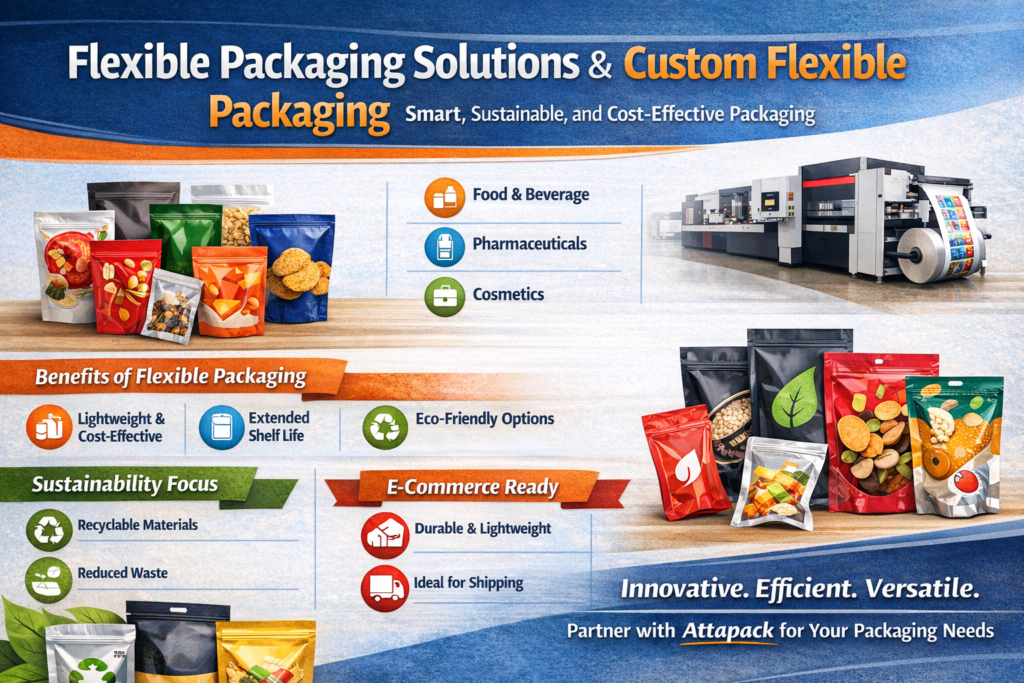
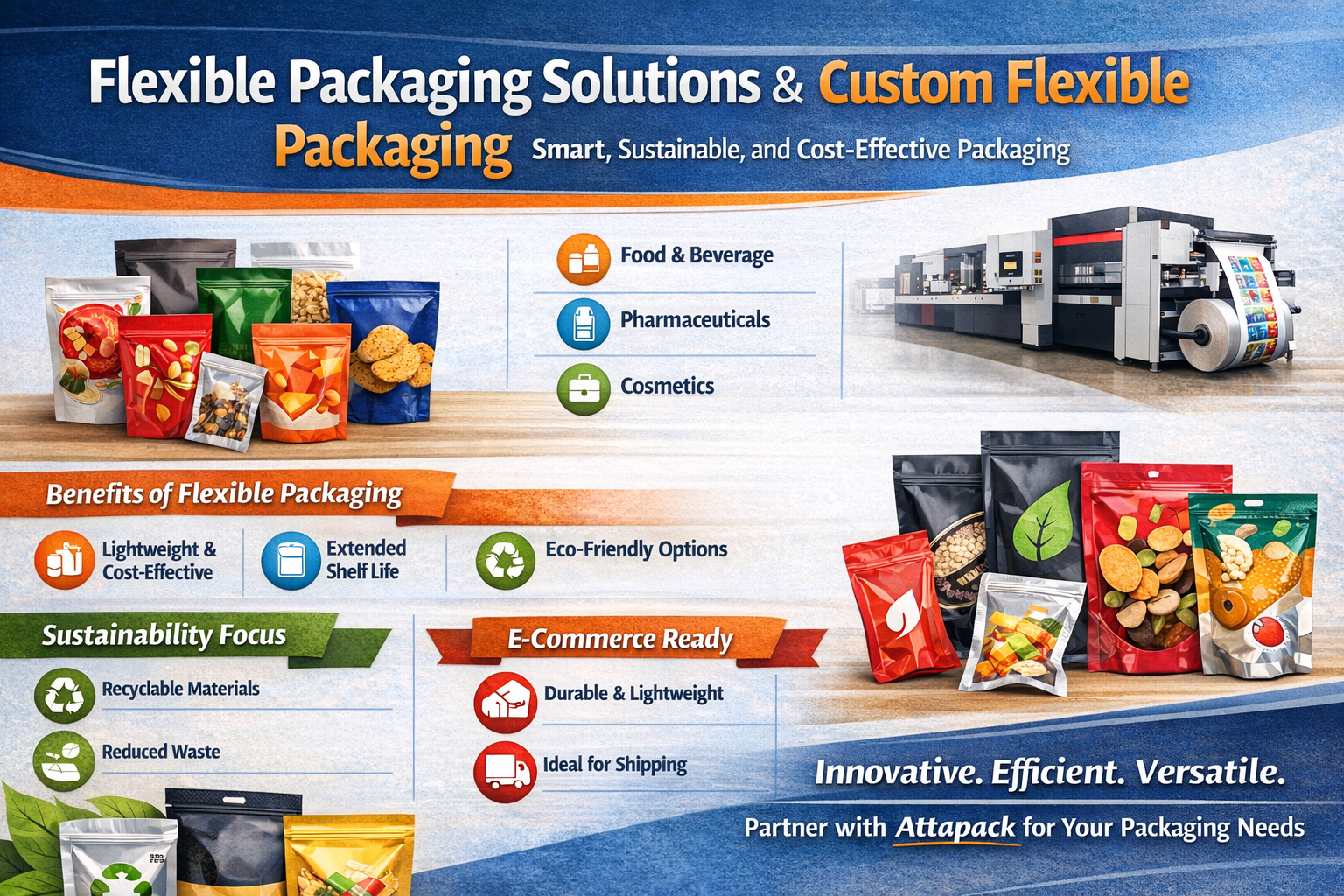
In today’s competitive marketplace, packaging is no longer just a protective layer around a product. It is a branding tool, a sustainability statement, a logistics solution, and a direct communication channel between businesses and consumers. This is where Flexible Packaging Solutions and Custom Flexible Packaging play a powerful role. Companies across food, beverage, pharmaceutical, cosmetic, and industrial sectors are shifting toward flexible packaging because it delivers versatility, cost efficiency, and visual impact in one complete package.
This comprehensive guide explores how flexible packaging works, why custom options are transforming industries, and how businesses can leverage these solutions to stay ahead in a demanding market.
Understanding Flexible Packaging Solutions in the Modern Supply Chain
Flexible packaging refers to packaging made from easily pliable materials such as plastic films, foil, paper, laminates, or combinations of these materials. Unlike rigid packaging like glass jars or metal cans, flexible packaging can bend, fold, and conform to different shapes without losing its protective qualities.
Flexible Packaging Solutions are designed to provide more than just containment. They protect products from moisture, oxygen, light, contamination, and physical damage while also reducing material usage and transportation costs.
From stand-up pouches and resealable zipper bags to sachets, wraps, and roll stock films, flexible packaging offers endless adaptability. Businesses choose these solutions because they combine functionality with attractive design possibilities, giving brands the freedom to innovate.
Why Custom Flexible Packaging Is Becoming Essential for Brand Growth
In saturated markets, differentiation is everything. Custom Flexible Packaging allows businesses to create unique shapes, finishes, sizes, and graphics tailored specifically to their products and target audience.
Custom packaging is not simply about printing a logo on a bag. It involves selecting the right material structure, barrier properties, sealing methods, and design elements that align with brand identity and customer expectations.
For example, food brands may require high-barrier films to extend shelf life, while cosmetic companies may prioritize premium finishes such as matte coatings or metallic accents to create luxury appeal. Customization ensures that packaging does not just hold the product but enhances its value perception.
The Key Benefits of Flexible Packaging Solutions
Flexible packaging has gained rapid popularity because of its practical and commercial advantages. Some of the most significant benefits include:
-
Reduced material usage compared to rigid packaging
-
Lower transportation and storage costs due to lightweight structure
-
Extended product shelf life through advanced barrier technologies
-
Enhanced branding opportunities with high-quality printing
-
Improved consumer convenience with resealable and easy-open features
While these benefits are impressive, the real strength of flexible packaging lies in its adaptability. It can be tailored to fit small startups as well as large-scale manufacturers without compromising efficiency.
Sustainability and the Future of Custom Flexible Packaging
Sustainability is no longer optional. Consumers demand environmentally responsible solutions, and governments worldwide are tightening packaging regulations. Flexible Packaging Solutions are evolving to meet these expectations.
Modern innovations now include recyclable mono-material films, compostable packaging, and reduced plastic thickness without sacrificing performance. Because flexible packaging uses less raw material compared to rigid alternatives, it often results in a smaller carbon footprint during manufacturing and transportation.
Custom Flexible Packaging also allows brands to design packaging that reduces food waste by extending freshness. This dual sustainability impact—less packaging waste and less product waste—makes flexible packaging a forward-thinking solution.
Industries That Rely on Flexible Packaging Solutions
Flexible packaging is not limited to one sector. Its versatility supports multiple industries:
Food and Beverage
Snack pouches, frozen food bags, coffee packaging, and sauce sachets all rely heavily on flexible materials. Barrier protection ensures taste, aroma, and texture remain intact.
Pharmaceuticals
Medical products require sterile, tamper-evident packaging with strong moisture and oxygen barriers. Flexible films provide both safety and regulatory compliance.
Cosmetics and Personal Care
Custom Flexible Packaging enables attractive pouches for creams, refills, face masks, and liquid products, often incorporating premium finishes.
Industrial and Household Products
Detergent refills, pet food bags, and cleaning product pouches benefit from durable, tear-resistant flexible structures.
Each industry benefits differently, but the core value remains the same: flexibility, efficiency, and brand enhancement.
How Design Impacts Consumer Buying Decisions
Packaging design directly influences purchasing behavior. In retail environments, customers often make decisions within seconds. Eye-catching graphics, clear product information, and tactile finishes can dramatically increase sales.
Custom Flexible Packaging provides unmatched printing capabilities. High-definition rotogravure and digital printing allow vibrant colors, sharp details, and even limited-edition runs without high setup costs.
Beyond aesthetics, functionality matters. Resealable zippers, tear notches, spouts, and ergonomic shapes improve user experience. A positive experience increases brand loyalty and repeat purchases.
Material Innovations Driving Flexible Packaging Forward
Technological advancements have significantly improved flexible packaging materials. Multi-layer laminates combine different properties into a single structure, ensuring strength, flexibility, and barrier protection.
Some modern material developments include:
-
High-barrier EVOH layers for oxygen protection
-
Aluminum foil laminates for light and moisture resistance
-
Biodegradable films for eco-friendly solutions
-
Retort pouches capable of withstanding high-temperature sterilization
These innovations make Flexible Packaging Solutions suitable for products that once relied solely on rigid containers.
Cost Efficiency Without Compromising Quality
One of the strongest arguments in favor of flexible packaging is cost efficiency. Because it uses less material and weighs significantly less than glass or metal, businesses save on raw materials, warehousing, and shipping.
Custom Flexible Packaging also reduces the need for secondary packaging in many cases. Stand-up pouches, for example, can be displayed directly on retail shelves without additional boxes.
Lower overall costs do not mean lower quality. Advanced sealing technologies ensure durability, leak resistance, and tamper evidence, maintaining product integrity throughout the supply chain.
The Role of Technology in Modern Flexible Packaging Solutions
Digital transformation has impacted packaging production. Shorter production runs, faster turnaround times, and personalization are now possible through digital printing technology.
Brands can test new designs, launch seasonal promotions, or create regional variations without investing heavily in printing plates. This flexibility is especially valuable for startups and e-commerce brands.
Automation in filling and sealing equipment further enhances efficiency. High-speed machinery ensures precision and consistency while minimizing waste.
Custom Flexible Packaging for E-Commerce Growth
E-commerce has changed packaging requirements. Products must survive long-distance shipping while remaining lightweight and attractive upon delivery.
Flexible Packaging Solutions are ideal for direct-to-consumer brands because they:
-
Reduce shipping costs
-
Provide durability during transit
-
Allow compact storage
-
Offer customizable branding for unboxing experiences
With online competition growing rapidly, brands need packaging that stands out while maintaining protective strength.
Regulatory Compliance and Safety Considerations
Packaging must comply with food safety and environmental regulations. Flexible packaging manufacturers follow strict guidelines regarding material safety, migration limits, and labeling requirements.
Custom Flexible Packaging allows brands to incorporate mandatory information clearly and professionally, ensuring compliance without compromising design aesthetics.
Proper testing for seal strength, barrier performance, and durability ensures products reach consumers safely and reliably.
Choosing the Right Flexible Packaging Partner
Selecting a reliable packaging partner is critical. Businesses should look for companies with strong material expertise, advanced printing capabilities, and a commitment to quality control.
A professional packaging provider will offer guidance on material selection, design optimization, sustainability options, and production efficiency. Midway through your packaging journey, partnering with an experienced company such as Attapack can help ensure that your Flexible Packaging Solutions meet both performance and branding expectations.
The right partner does more than supply packaging—they become part of your growth strategy.
Trends Shaping the Future of Flexible Packaging Solutions
The packaging industry continues to evolve. Some emerging trends include smart packaging with QR codes, recyclable mono-material structures, refillable pouch systems, and minimalist design approaches.
Consumers are increasingly drawn to transparent packaging that allows them to see the product. At the same time, brands are experimenting with bold typography and clean layouts to build trust and authenticity.
Automation, sustainability, and personalization will define the next generation of Custom Flexible Packaging.
Final Thoughts: Why Flexible Packaging Solutions Are the Smart Choice for Modern Brands
Flexible Packaging Solutions and Custom Flexible Packaging are no longer optional upgrades; they are strategic necessities. They combine efficiency, sustainability, brand appeal, and consumer convenience in ways traditional packaging cannot match.
As industries become more competitive and environmentally conscious, businesses must adopt packaging strategies that align with modern expectations. Flexible packaging offers adaptability for small startups, scalability for growing brands, and innovation potential for global corporations.
By investing in high-quality custom packaging, companies position themselves for long-term success. Whether your goal is reducing costs, enhancing sustainability, or strengthening brand identity, flexible packaging provides the tools to achieve it.