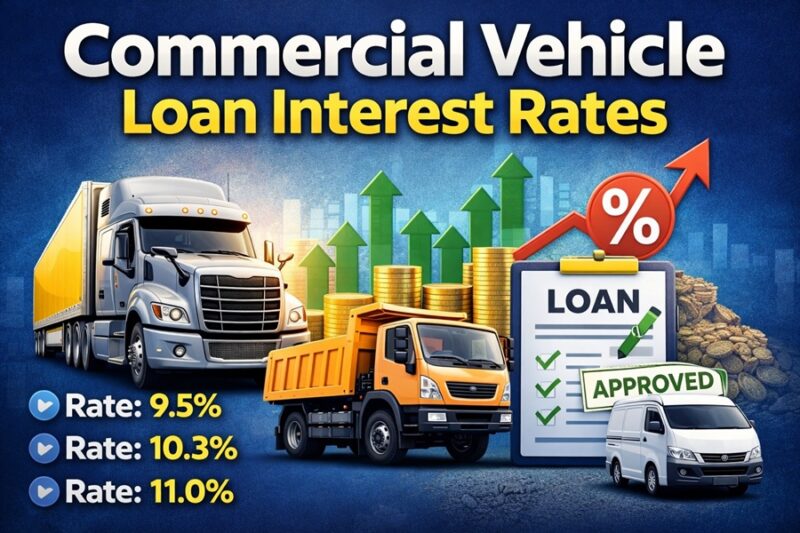
For transporters, logistics operators, and small business owners, purchasing a truck, bus, or delivery van often requires external financing. Understanding commercial vehicle loan interest rates is essential before applying for funding. The interest rate directly affects your EMI amount and overall repayment cost, making it one of the most important factors in loan selection.
Commercial vehicle loan interest rates vary depending on the lender, applicant profile, vehicle type, and market conditions. Since these loans are primarily used for business purposes, lenders carefully evaluate the borrower’s repayment capacity and income stability before deciding the rate.
Factors That Influence Commercial Vehicle Loan Interest Rates
One of the primary factors affecting commercial vehicle loan interest rates is the applicant’s credit score. A strong credit history demonstrates financial discipline and reduces the lender’s risk, often resulting in lower interest charges. Borrowers with weaker credit profiles may face higher rates.
Business income and financial stability also play a significant role. Lenders assess bank statements, profit records, and operational history to determine repayment capacity. Established businesses with consistent income streams usually receive more favorable interest rates.
The type and age of the vehicle also impact commercial vehicle loan interest rates. New vehicles often attract lower rates compared to used ones because they carry less risk and better resale value. Additionally, loan tenure influences the rate and total repayment cost. Longer tenures may reduce EMI but increase overall interest paid.
Fixed vs Floating Interest Rates
Commercial vehicle loan interest rates can be either fixed or floating. Fixed rates remain constant throughout the loan tenure, ensuring predictable monthly payments. Floating rates, on the other hand, may fluctuate based on changes in market benchmarks. While floating rates can sometimes reduce costs if market rates decline, they also carry the risk of higher EMIs if rates rise.
Choosing between fixed and floating depends on your business cash flow and risk tolerance. Businesses with stable revenue often prefer predictable EMIs to manage operational expenses effectively.
Tips to Secure Better Interest Rates
To get competitive commercial vehicle loan interest rates, maintain a healthy credit score and keep financial records organized. Comparing offers from multiple banks and NBFCs is crucial. Even a slight difference in interest can significantly affect long-term repayment.
Making a higher down payment can also reduce loan risk for the lender, which may help in negotiating better rates. Additionally, choosing an appropriate tenure aligned with your cash flow ensures smoother repayment.
Conclusion
Commercial vehicle loan interest rates play a major role in determining the affordability of business financing. By understanding the factors influencing rates and comparing lender options carefully, you can secure a loan that supports your business growth without creating financial strain. Smart planning and responsible borrowing are key to maximizing the benefits of commercial vehicle financing.