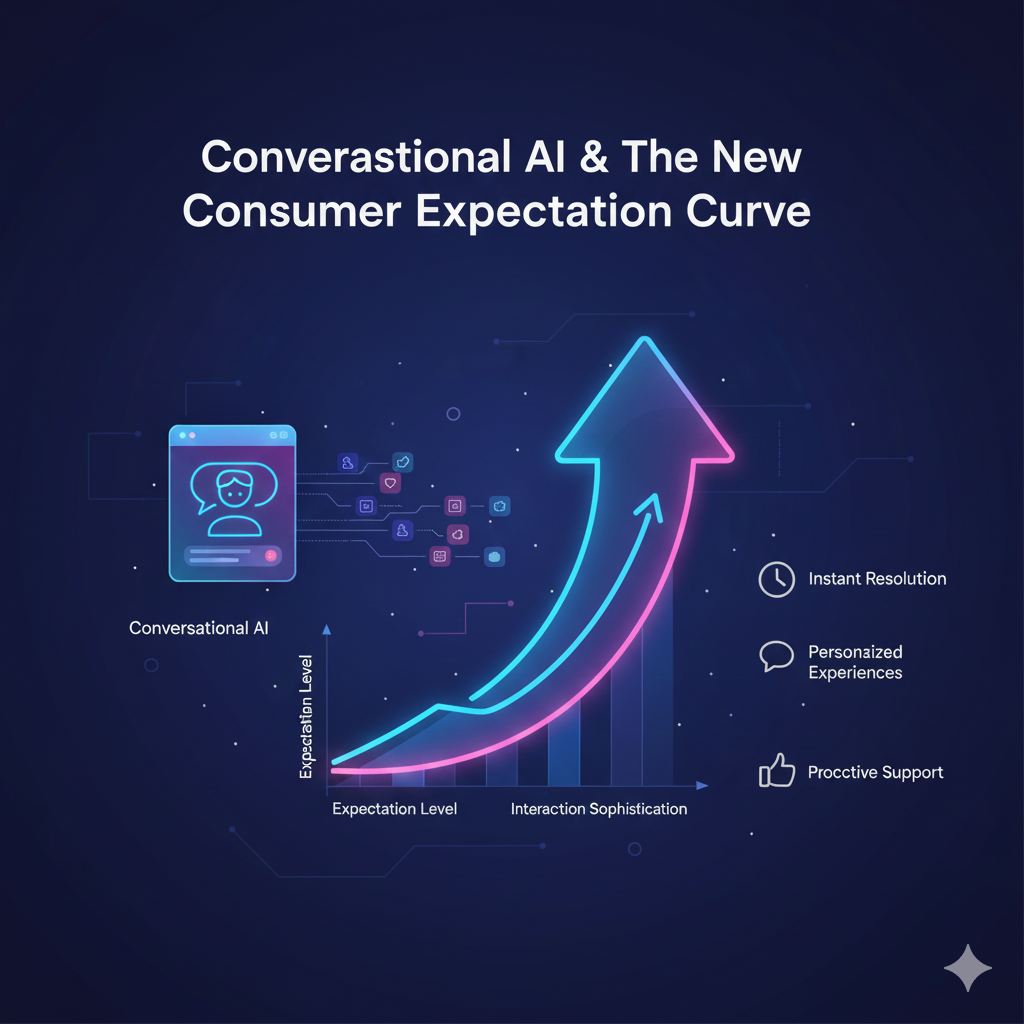
In today’s digital-first world, the bar for customer engagement is continuously rising. With advancements in conversational AI, businesses must tap into fresh market trend analysis and understand evolving cpg trends if they hope to stay ahead. This blog explores how conversational AI is reshaping the consumer expectation curve, why it’s a key component of modern market trend analysis, and how brands—especially within the consumer packaged goods space—can use insights into cpg trends to craft smarter, more responsive interactions.
How Conversational AI Is Raising the Expectation Curve
From Chatbots to Smart Dialogue Engines
What once counted as “fine” service—an FAQ-bot or a relatively static chat tree—is no longer enough. Today’s consumers expect human-like interaction, context-aware responses, and immediate value. In fact, according to the Zendesk 2025 CX Trends Report, 64% of consumers trust AI agents more when they embody traits such as empathy and friendliness.
This shift is significant for market trend analysis because it signals that the threshold for acceptable service is no longer speed or efficiency alone—it’s meaningful, personalized engagement. For brands tracking cpg trends, this means their consumer touchpoints must evolve—not just in terms of product but how they communicate, assist, and anticipate needs.
The Expectation Curve in Action
Consider the following: one reason consumers remain loyal is when companies anticipate issues before they become problems. Conversational AI equips brands to do precisely that—via proactive outreach, dynamic recommendations, and guided support. Customer experience (CX) data from Zendesk shows 83% of CX leaders identify “memory-rich” AI agents (agents that recall past interactions and context) as central to delivering personalized journeys.
In the context of cpg trends, consumers buying everyday goods expect fluid support—whether it’s tracking deliveries of household items, getting instant answers about ingredients, or substituting products when stock is low. Conversational AI sets a new baseline on the expectation curve.
Integrating Conversational AI with Market Trend Analysis
Using Conversational Data as a Trend Signal
Conversational AI interactions generate rich behavioural data—what customers ask, how they search, what language they use. Brands can mine that data for market trend analysis: e.g., increases in queries about “plant-based snacks” may reflect emerging cpg trends in the health & wellness sector.
By overlaying conversational logs with broader trend scanning (e.g., keyword searches, social listening) brands can detect shifts early, tailor product strategies accordingly, and reflect those changes in their conversational AI logic.
Personalization Anchored by CPG Trend Insights
With conversational AI tools in place, personalization shifts from one-size-fits-many to hyper-relevant for individual segments—especially within the consumer packaged goods domain. Suppose you detect, via trend analytics, a spike in “travel-sized hygiene items” among urban millennials—an example of cpg trends in the making.
Your conversational AI can then offer proactive suggestions to consumers, adjusting responses based on age group, geography, prior purchases, or expressed preferences. This aligned personalization becomes a differentiator and is grounded in market trend analysis that supports product and experience alignment.
Why CPG Brands Should Care About Conversational AI & CPG Trends
Real-Time Consumer Expectations
CPG brands operate in fast-moving consumer environments. Trends turn quickly—what’s hot today may fizzle tomorrow. By combining conversational AI with trend insights, brands can respond in near real-time. For example, if your conversational bot begins to see surging queries about “eco-refill packaging for shampoo”, that insight signals a rising cpg trend. You can immediately adapt your messaging, packaging, or product options to match.
Moreover, such insights feed directly into your market trend analysis, helping you quantify the scale, geography, and momentum of the shift.
Competitive Edge Through Differentiated Service
In categories where products are commoditised, experience becomes the differentiator. Conversational AI that is context-aware, proactive and aligned with cpg trends positions a brand ahead of those still relying on legacy service models.
And when you layer in market trend analysis, you gain a strategic view of which consumer segments are shifting and where investment should go—making your conversational AI not just a tool, but a strategic asset.
Trust, Transparency & Consumer Expectations
Consumers increasingly expect brands to act transparently—especially when AI is involved. In the CX Trends Report, 95% of respondents said they expect an explanation behind AI-driven decisions.
For CPG brands that use conversational AI to suggest or substitute products (e.g., suggesting a healthier snack alternative), this means the AI should be transparent about why it’s making that suggestion. Aligning this with cpg trends (such as health-conscious snack shifts) reinforces authenticity and builds trust—an important element in your overall market trend analysis.
How to Implement Conversational AI Aligned with CPG Trends
Step 1: Map the Consumer Journey & Identify Use Cases
Start by mapping key touchpoints where conversational AI can deliver value—such as purchase decisions, habit formation (morning skincare routine), post-purchase support (subscription items), or emergent behaviors tied to cpg trends like sustainability or health.
Then tie those to market trend analysis—which consumer segments are shifting? Which product categories are accelerating? Define use cases where your conversational AI will intervene and deliver differentiated value.
Step 2: Select and Train the AI Engine
Choose a conversational AI platform that supports dialogue memory (context over time), taggable intent, sentiment, and multi-modal input if needed. Train it with historical data, including customer questions, common issues, and anticipated interests derived from your market trend analysis.
In parallel, feed it signals from cpg trends—such as rising conversational keywords (“plant-based snack”, “zero-waste shampoo”), so it can respond proactively rather than reactively.
Step 3: Connect to Live Trend Signals
To keep the conversation aligned with evolving behaviours, integrate your conversational AI system with live data feeds: search analytics, social listening, sales signals related to cpg trends.
For example, if your trend analysis shows rising interest in “work-from-home coffee kits”, your bot can begin offering personalised options, prompts or suggestions around that theme, making the experience timely and contextually relevant.
Step 4: Monitor, Personalize & Adapt
Conversational AI should not be “set and forget”. Monitor performance metrics (resolution time, satisfaction, engagement), segment responses by geography (GEO relevance), and evaluate whether the AI is reflecting current cpg trends and market trend analysis findings. If you detect drop-off in engagement or relevance, retrain the model with updated scripts, intents and product-linking logic.
Step 5: Build Ethical & Transparent Interactions
Given consumer sensitivity to AI-driven decisions and suggestions, make sure your conversational AI is transparent about its role (e.g., “I am powered by AI to assist you faster”). Ensure it respects privacy, provides clear explanation when making recommendations, and aligns with your brand’s values—especially around cpg trends like sustainability or clean-label options. This strengthens trust and reinforces your overall trend-analysis narrative.
Final Thoughts: Elevating the Experience Curve with Conversational AI
As consumer expectations accelerate, brands can no longer settle for “adequate” service—they must aim for meaningful, contextual, anticipatory interaction. Conversational AI is the vehicle; cpg trends and market trend analysis are the map.
By grounding your conversational AI strategy in real-world trend data—especially within the high-velocity CPG sector—you’ll not only meet the new expectation curve but set it. Build AI agents that remember, respond, adapt and align with consumers’ evolving behaviours and preferences.
From the way your bot suggests a snack to how it handles a product return, every interaction becomes an opportunity to reinforce your brand’s relevance, credibility and future readiness. Keep your finger on the pulse of cpg trends, ensure your market trend analysis is robust, and your conversational AI becomes more than a tool—it becomes a strategic differentiator.
FAQ: Common Questions About Conversational AI, CPG Trends & Market Trend Analysis
Q1: How does conversational AI differ from traditional chatbots?
A1: Traditional chatbots often follow rigid scripts with limited memory and context. Conversational AI, especially as highlighted in recent CX trend reports from Zendesk, leverages “memory-rich” agents that recall past interactions, use multi-modal input (text, voice, image) and deliver personalized, on-brand conversation.
Q2: Why are CPG brands specifically interested in conversational AI?
A2: CPG brands face fast-moving consumer behaviours and intense competitive pressure on price, availability and brand loyalty. Conversational AI enables real-time engagement, supports product substitution or bundling, and helps identify shifting cpg trends (e.g., eco-refill, health-savvy snacks) faster—all insights that feed into effective market trend analysis.
Q3: How do I link conversational AI to market trend analysis?
A3: Use trend data to inform what the AI should listen for and respond to (e.g., rising interest in “instant-healthy meal kits”). Then train the conversational AI to recognise and act upon those signals. Monitor if interactions align with emerging cpg trends, and feed back results into your trend-analysis framework for continuous improvement.
Q4: What are the pitfalls when deploying conversational AI in a CPG context?
A4: Risks include: poor data integration (leading to irrelevant responses), lack of context (leading to generic or tone-deaf suggestions), ignoring regional (GEO) nuances (which matter heavily for CPG), and failing to track evolving cpg trends—which can cause the AI to feel out-of-touch. Effective market trend analysis helps mitigate these risks but requires governance, iteration and alignment across teams.
Q5: How can brands measure success of conversational AI aligned with these trends?
A5: Key metrics include engagement rate, resolution time, satisfaction/Net Promoter Score (NPS), conversion/upsell rate (especially for CPG campaigns), and relevance of conversations (measured by sentiment or repeat interaction). Additionally, track whether the AI is highlighting product suggestions tied to cpg trends and whether those align with insights from your market trend analysis. Over time, you should see the conversational AI contribute to improved loyalty, higher basket size or faster product adoption.