Desk Research: The Strategic Advantage Smart Leaders Use Before Expanding into New Markets
Imagine this: You’re the Head of Strategy at a growing mid-sized company. One morning, your CEO walks in and says, “We need to expand into Southeast Asia. Where do we start?”
It’s an exciting opportunity—but also a high-stakes decision. You don’t yet have survey data. There’s no time to organize focus groups or conduct in-depth interviews. However, you do have access to a powerful and often underestimated resource: Desk Research.
When used effectively, Desk Research becomes the foundation for confident, well-informed expansion strategies. It allows you to move quickly, reduce uncertainty, and make evidence-based decisions—without immediately committing significant budgets to primary data collection.
What Is Desk Research?
Desk Research, often referred to as Secondary Research, involves gathering and analyzing information that already exists. Instead of collecting new data directly from respondents, you leverage credible sources such as:
- Industry and market reports
- Government publications and trade statistics
- Financial filings and investor presentations
- News articles and press releases
- Company websites and blogs
- Academic journals and white papers
- Regulatory databases and policy documents
In essence, Secondary Research means mining publicly available information to generate strategic insight.
While it may sound straightforward, Desk Research is far from a passive activity. When done systematically, it reveals patterns, uncovers opportunities, and highlights risks that might otherwise remain hidden.
Why Desk Research Is a Strategic Imperative
In today’s fast-moving business environment, speed matters. Markets shift quickly, competitors evolve, and consumer expectations change rapidly. Leaders cannot afford to make decisions based purely on instinct.
Desk Research helps organizations:
1. Identify the True Competitive Landscape
When entering a new region like Southeast Asia, competitors are not always obvious. Local players, emerging startups, and international firms may already be establishing a presence.
Through Secondary Research, you can:
- Map existing competitors and their market share
- Analyze pricing models and product positioning
- Track recent investments, partnerships, or expansions
- Identify underserved segments
This allows you to understand not only who your competitors are—but how they operate and where vulnerabilities may exist.
2. Understand Market Size and Growth Potential
Before allocating capital, leaders must assess whether the opportunity justifies the investment. Desk Research provides access to:
- Market size estimates
- Historical growth trends
- Demand forecasts
- Consumer spending patterns
By synthesizing this information, you can determine whether the market is mature, emerging, or saturated—enabling smarter strategic planning.
3. Track Consumer Preference Shifts
Consumer expectations are constantly evolving. Sustainability, digital convenience, personalization, and price sensitivity vary significantly across regions.
Secondary Research can uncover:
- Cultural buying behaviors
- Digital adoption rates
- Shifts toward eco-friendly products
- Payment method preferences
- Brand loyalty patterns
These insights allow businesses to tailor their offerings before entering a new market rather than adapting reactively.
4. Monitor Regulatory and Policy Changes
Regulatory landscapes differ dramatically across Southeast Asia. Trade policies, import restrictions, tax structures, and compliance requirements can significantly impact operations.
Desk Research enables leaders to:
- Review government policy updates
- Understand licensing requirements
- Assess foreign investment rules
- Identify trade agreements and tariffs
By anticipating regulatory risks, organizations avoid costly compliance missteps and operational disruptions.
5. Spot Emerging Risks and Opportunities
Beyond competitors and regulations, markets are influenced by broader macroeconomic and technological factors.
Through Secondary Research, companies can track:
- Supply chain vulnerabilities
- Infrastructure developments
- Currency fluctuations
- Geopolitical tensions
- Industry-specific technological innovations
This proactive awareness helps organizations remain agile and responsive rather than reactive.
Desk Research vs. Primary Research: Understanding the Difference
While Desk Research and Primary Research are complementary, they serve different purposes.
- Desk Research (Secondary Research) relies on existing data and published sources.
- Primary Research involves collecting new data through surveys, interviews, field studies, or experiments.
Desk Research answers foundational questions such as:
- Is this market attractive?
- Who are the key players?
- What risks exist?
- Where are the knowledge gaps?
Only after these questions are clarified should companies invest in deeper primary research to validate assumptions or test specific hypotheses.
In other words, Desk Research helps answer the critical strategic question: “Where should we dig deeper?”
Who Should Use Desk Research?
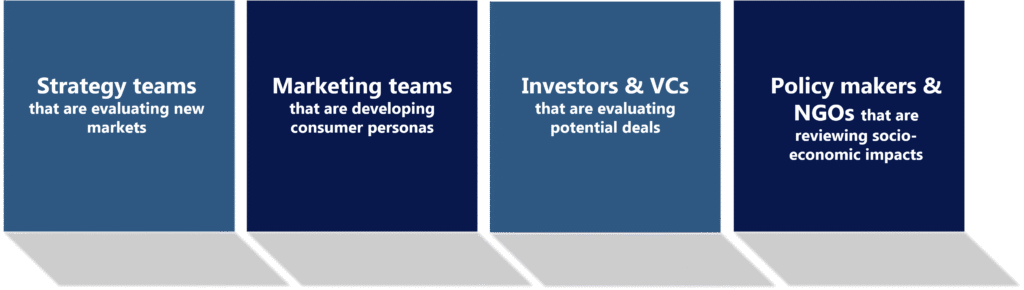
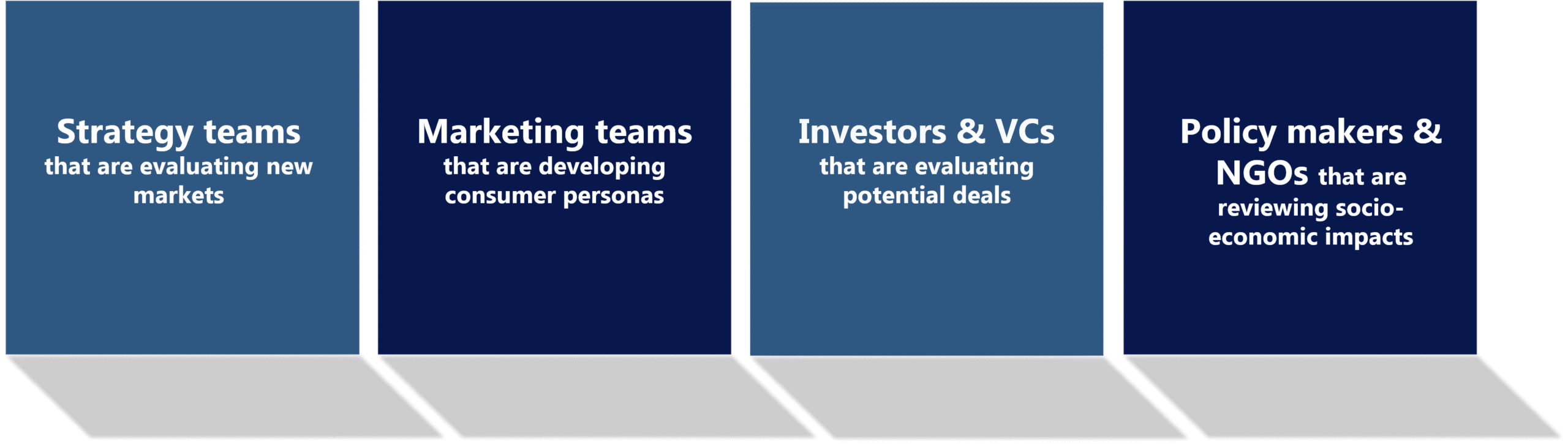
Desk Research is not limited to analysts or research departments. It is essential for anyone involved in strategic decision-making, including:
- CEOs and executive leaders
- Strategy and corporate development teams
- Business development managers
- Marketing leaders
- Investors and venture capital firms
- Product managers
- Policy advisors
In fact, any professional responsible for allocating resources or evaluating growth opportunities can benefit from structured Secondary Research.
Turning Information into Strategic Advantage
Simply gathering information is not enough. The real value of Desk Research lies in interpretation and synthesis.
Effective Desk Research involves:
- Defining Clear Objectives
Start with specific strategic questions. For example:- Which Southeast Asian country offers the highest growth potential?
- What barriers to entry exist?
- Which segments are underserved?
- Using Credible Sources
Prioritize reliable, up-to-date data from government bodies, recognized industry reports, and reputable financial disclosures. - Triangulating Insights
Compare multiple sources to validate findings and reduce bias. - Identifying Gaps
Recognize areas where information is insufficient—these become targets for future primary research.
When structured properly, Desk Research transforms scattered data into actionable intelligence.
Why Desk Research Matters More Than Ever
The modern business environment rewards agility. Companies that act quickly—yet intelligently—gain competitive advantage.
Desk Research enables organizations to:
- Validate strategic assumptions before committing capital
- Enter new markets with confidence
- Reduce the risk of costly missteps
- Align internal stakeholders around evidence-based insights
- Move from idea to action faster
It is not merely a preliminary step; it is a strategic asset in its own right.
Building a Strong Foundation for Expansion
If your organization is considering expansion into Southeast Asia—or any new market—starting with Desk Research ensures that your strategy is grounded in facts rather than assumptions.
Before launching surveys, conducting interviews, or establishing physical operations, Secondary Research provides clarity on:
- Market readiness
- Competitive intensity
- Consumer demand
- Regulatory constraints
- Financial feasibility
By investing time in structured Desk Research, you dramatically improve the effectiveness of any subsequent primary research efforts.
The Smart First Step in Any Growth Strategy
Strategic growth requires more than ambition—it requires insight. Desk Research equips decision-makers with the knowledge needed to act decisively and responsibly.
Whether you are exploring international expansion, launching a new product, evaluating a merger, or assessing competitive threats, Secondary Research serves as the launchpad for smarter execution.
In a world defined by rapid change and increasing competition, organizations that leverage Desk Research effectively gain a measurable head start.
Before making your next big move, ensure your strategy is informed, validated, and grounded in credible insight. Start with Desk Research—the hidden engine behind successful expansion and sustainable growth.
Your Next Move Starts Here
If you’re planning your next big move, don’t take the first step blind. Let desk research guide you.
Let’s talk and explore how we can support your strategy. Contact UnivDatos today to learn how our Extended Research Services can support your brand goals. Call us at +1 978 733 0253, email contact@univdatos.com, or fill out our contact form to schedule a consultation.
Related Blog:
The Power of Secondary Research in Market Understanding
FAQs – Desk Research
1. What is Desk Research?
Desk Research is the process of collecting and analyzing existing information from published sources such as industry reports, government databases, company filings, and news articles to support strategic decision-making.
2. Is Desk Research the same as Secondary Research?
Yes. Desk Research is another term for Secondary Research, as it relies on data that has already been collected and published rather than gathering new information through surveys or interviews.
3. Why is Desk Research important for businesses?
Desk Research helps businesses understand market trends, competitors, risks, and opportunities quickly and cost-effectively before investing in primary research or major strategic decisions.
4. What sources are used in Secondary Research?
Common sources include market research reports, government publications, trade statistics, financial statements, academic journals, industry blogs, and regulatory documents.
5. When should a company use Desk Research?
Companies should use Desk Research at the early stage of strategic planning, market expansion, product development, or investment decisions to validate assumptions and identify knowledge gaps.