Global Dragon Fruit Market Overview and Forecast 2025–2033
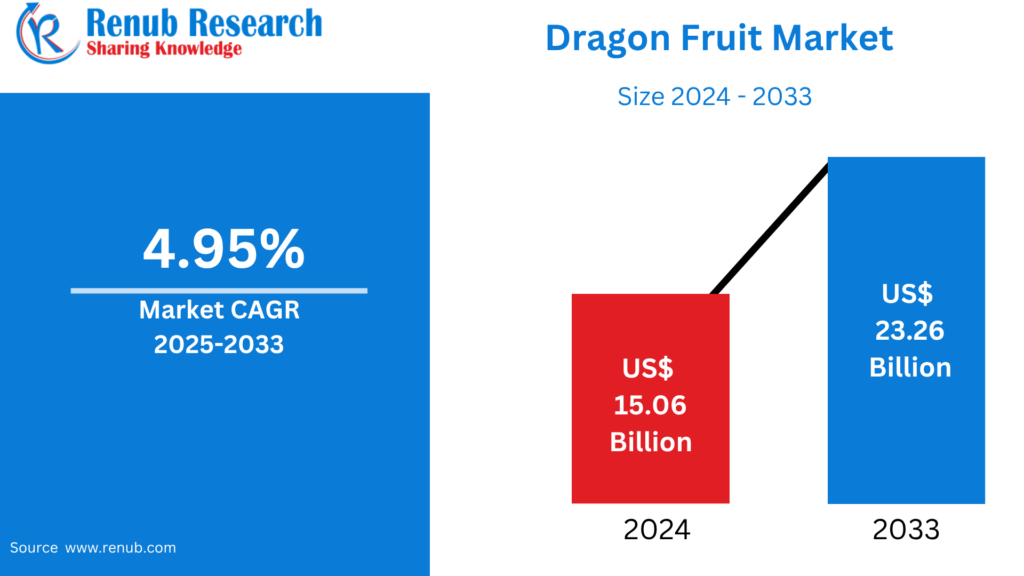
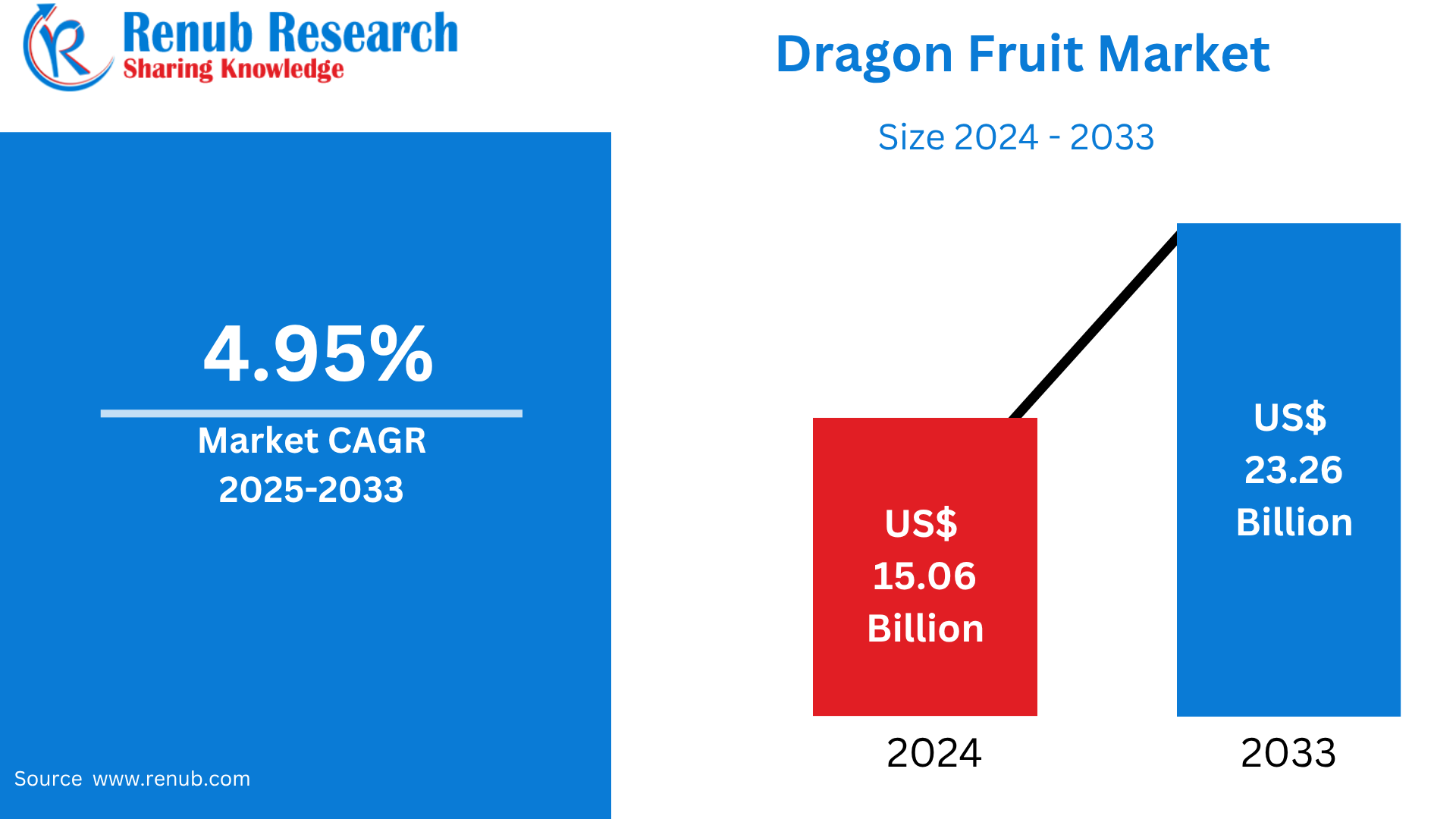
According To Renub Research global dragon fruit market is witnessing consistent expansion, supported by changing consumer preferences toward healthier diets, growing interest in exotic fruits, and increasing applications in food, beverages, and wellness products. Valued at USD 15.06 billion in 2024, the market is projected to reach USD 23.26 billion by 2033, growing at a compound annual growth rate of 4.95% during the forecast period. This growth is driven by rising health awareness, expanding international trade, and the increasing use of dragon fruit in functional foods, natural colorants, and nutraceuticals.
Dragon fruit has transitioned from a niche tropical product to a globally traded fruit, with rising demand across North America, Europe, and Asia Pacific. Improvements in agricultural practices, logistics, and cold-chain infrastructure have enabled wider distribution, while innovation in processing has unlocked new value-added product categories.
Download Free Sample Report:https://www.renub.com/request-sample-page.php?gturl=dragon-fruit-market-p.php
Global Dragon Fruit Market Outlook
Dragon fruit, also known as pitaya, is a tropical fruit derived from cactus species originally native to Central America and now widely cultivated across Southeast Asia and parts of Latin America. Its vibrant appearance, featuring pink or yellow skin with white or red flesh dotted with black seeds, makes it visually appealing and distinctive in global fruit markets. Beyond aesthetics, dragon fruit is valued for its nutritional profile, offering antioxidants, dietary fiber, vitamin C, and essential minerals.
The fruit’s mild sweetness and refreshing texture have made it popular in smoothies, desserts, salads, juices, and functional beverages. It is also increasingly used as a natural food coloring agent and cosmetic ingredient due to its pigment and anti-inflammatory properties. Global awareness of superfoods and social media-driven food trends have further boosted its popularity, particularly among younger and health-conscious consumers.
Key Growth Drivers in the Global Dragon Fruit Market
Rising Demand for Exotic and Super Fruits
Consumer demand for exotic and nutrient-rich fruits is one of the strongest drivers of the global dragon fruit market. As diets become more globalized, consumers are seeking visually appealing fruits that offer functional health benefits. Dragon fruit’s antioxidant content and digestive benefits make it attractive for wellness-focused consumers and premium food applications.
Increased exposure through global cuisines, foodservice innovation, and international travel has expanded dragon fruit consumption beyond traditional markets. This has stimulated global trade and encouraged growers to expand cultivation in export-oriented regions.
Healthy Lifestyle and Natural Food Trends
Dragon fruit aligns closely with clean-label, plant-based, and whole-food dietary trends. Naturally low in calories and high in fiber, it appeals to consumers reducing sugar intake and avoiding heavily processed foods. The fruit is increasingly incorporated into natural snacks, smoothie blends, dietary supplements, and functional drinks.
As consumers prioritize immune health, digestion, and weight management, dragon fruit’s nutritional profile supports its inclusion in everyday diets. Its versatility across sweet and savory applications further strengthens its market appeal.
Expansion of Cold Chain Logistics and Global Trade
Advancements in cold chain logistics and packaging technologies have significantly improved the shelf life and export potential of dragon fruit. Major producing countries in Southeast Asia and Latin America are gaining improved access to high-demand markets such as North America, Europe, and East Asia.
Enhanced storage, transportation, and handling practices reduce spoilage and maintain quality during long-distance shipping. These improvements have increased both export volumes and value, supporting steady growth in the global dragon fruit trade.
Challenges in the Global Dragon Fruit Market
High Perishability and Post-Harvest Losses
Despite growing demand, dragon fruit remains highly perishable due to its high moisture content and delicate skin. Improper handling, limited cold storage access, and extended transportation times can result in significant post-harvest losses. These challenges increase operational costs and restrict export potential, particularly in developing regions.
Addressing perishability requires investment in cold-chain infrastructure, farmer training, and improved harvesting practices. Without these measures, supply chain inefficiencies may limit market expansion.
Price Volatility and Limited Processing Infrastructure
Market prices for dragon fruit are subject to seasonal production cycles and climatic conditions. Oversupply during peak harvest periods can depress prices, leading to waste, while poor harvests can cause price spikes that reduce affordability.
Limited processing infrastructure further exacerbates this issue, as surplus fresh fruit cannot always be converted into shelf-stable products such as powder, puree, or dried fruit. This volatility discourages long-term investment and affects income stability for growers and exporters.
Global Dragon Fruit Powder Market
Dragon fruit powder represents a rapidly growing value-added segment within the global market. Produced using freeze-drying or spray-drying methods, the powder retains much of the fruit’s nutritional content and vibrant color. Its extended shelf life makes it suitable for global distribution and reduces logistical challenges associated with fresh fruit.
The powder is widely used in smoothies, energy bars, bakery products, dietary supplements, and cosmetics. Demand is particularly strong in the clean-label and nutraceutical sectors, where natural ingredients are preferred. Organic and sugar-free variants are gaining traction among premium consumer segments.
Global Organic Dragon Fruit Market
The organic dragon fruit segment is experiencing strong growth as consumers increasingly seek pesticide-free and sustainably produced foods. Certified organic dragon fruit commands premium pricing in retail and foodservice channels, particularly in developed markets.
Environmental awareness and ethical consumption trends support this segment’s expansion. However, certification costs, limited organic farming expertise, and compliance requirements present challenges for growers. Despite these barriers, long-term demand remains strong, driven by health-conscious and environmentally aware consumers.
Global Dragon Fruit Food and Beverage Market
The food and beverage sector is the largest end-user of dragon fruit globally. Its appealing color, mild flavor, and antioxidant content make it suitable for smoothies, juices, yogurts, desserts, plant-based snacks, and functional drinks. Food manufacturers also use dragon fruit as a natural coloring agent, supporting clean-label product development.
Innovation in wellness beverages and plant-based foods continues to drive demand for dragon fruit as a functional ingredient. As health-focused product launches increase, dragon fruit’s role in food and beverage research and development is expanding worldwide.
Global Dragon Fruit Foodservice Market
Foodservice represents a growing distribution channel for dragon fruit, particularly in premium restaurants, cafés, hotels, and resorts. Chefs use the fruit in smoothie bowls, desserts, cocktails, fruit platters, and innovative fusion dishes. Its exotic appearance and health benefits enhance menu appeal and customer experience.
Tourism-driven demand in Southeast Asia, the Middle East, and Latin America further supports this segment. As international travel and dining recover, foodservice operators are increasingly incorporating dragon fruit into health-oriented and visually distinctive menus.
Global Dragon Fruit Convenience Store Market
Convenience stores are emerging as an important distribution channel for dragon fruit, especially in urban areas. Ready-to-eat slices, packaged fruit cups, smoothie kits, and pre-blended beverages are gaining shelf space in refrigerated sections.
This format increases accessibility for on-the-go consumers seeking healthy snack options. The fruit’s nutritional value and vibrant appearance make it well-suited for impulse purchases, supporting growth in convenience retail environments across developed and emerging markets.
United States Dragon Fruit Market
The United States is one of the fastest-growing markets for dragon fruit, driven by health trends, multicultural cuisine, and expanding import networks. Dragon fruit is widely available in fresh, frozen, powdered, and beverage formats across mainstream and specialty retailers.
Demand is particularly strong in wellness, foodservice, and functional beverage segments. Limited domestic production in select regions complements imports, while increasing consumer awareness supports consistent market growth across urban and coastal areas.
Germany Dragon Fruit Market
Germany represents a mature and health-focused European market for dragon fruit. The fruit is increasingly available in supermarkets, organic stores, and vegan food outlets. Consumers value its exotic origin, clean nutritional profile, and suitability for smoothies and plant-based products.
Seasonal demand peaks during summer and festive periods, with retailers investing in education and promotion to increase awareness and trial among consumers.
China Dragon Fruit Market
China is both the largest producer and one of the largest consumers of dragon fruit globally. Domestic production supports widespread availability, while imports supplement supply. Cultural preferences for colorful and health-promoting fruits drive strong demand.
Dragon fruit is commonly consumed fresh, juiced, or incorporated into desserts and gift products. E-commerce platforms have significantly expanded market reach beyond major urban centers, supporting continued growth.
Saudi Arabia Dragon Fruit Market
In Saudi Arabia, dragon fruit is gaining popularity among health-conscious consumers and premium retail segments. The fruit is primarily imported and sold through high-end supermarkets, juice bars, and hospitality venues.
Growth is supported by rising health awareness, expanding tourism, and interest in unique dining experiences. While high import costs and limited local production constrain rapid expansion, long-term demand remains positive.
Global Dragon Fruit Market Segmentation
Segmentation by Form
The market includes powder, puree, and fresh forms. Powder and puree segments are growing rapidly due to extended shelf life and versatility in food and beverage applications.
Segmentation by Nature
Organic and conventional segments coexist, with organic dragon fruit gaining premium positioning due to sustainability and health considerations.
Segmentation by End User
Key end users include food and beverage manufacturers, foodservice providers, retail and household consumers, and other industrial users.
Segmentation by Distribution Channel
Distribution channels include hypermarkets and supermarkets, convenience stores, specialty stores, and online retail platforms, each contributing to market accessibility and growth.
Competitive Landscape of the Global Dragon Fruit Market
The competitive landscape consists of growers, exporters, processors, and branded product manufacturers operating across fresh and processed segments. Companies focus on quality, certification, logistics efficiency, and product diversification to strengthen market presence.
Innovation in processing, organic certification, and value-added products remains central to competitive differentiation. Strategic partnerships, export expansion, and investment in sustainable farming practices continue to shape the market’s competitive dynamics.