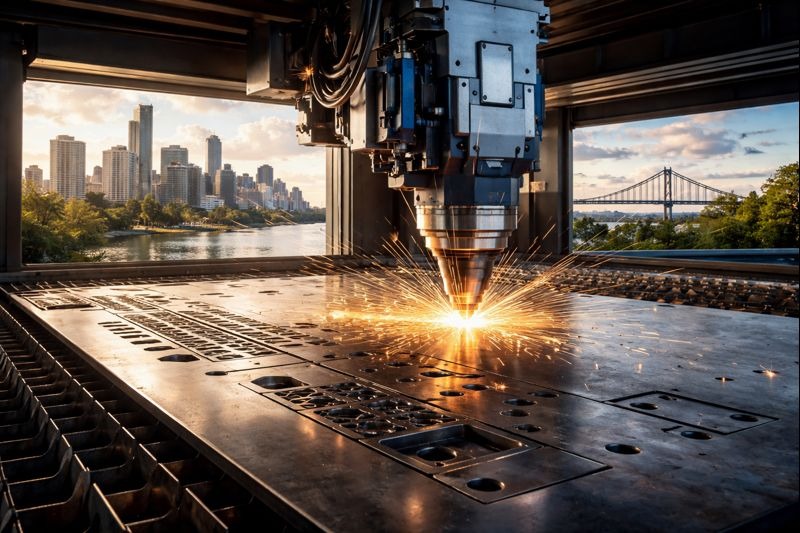
Laser cutting has become a critical capability for modern steel fabrication, particularly in cities with strong construction, manufacturing, and infrastructure sectors. In Brisbane, laser cut steel sheets are now widely used across commercial building projects, industrial manufacturing, architectural applications, and custom fabrication work where accuracy and consistency are essential.
This article explains how laser cut steel sheet solutions work from initial design through to delivery, why the process is preferred over traditional cutting methods, and how Brisbane-based providers support local industries with reliable, high-quality outcomes.
What Is a Laser Cut Steel Sheet?
A laser cut steel sheet is produced using a computer-controlled laser that directs concentrated thermal energy onto steel plate or sheet material. The laser follows a programmed cutting path, allowing complex shapes and fine details to be cut with high accuracy. Unlike mechanical cutting methods, the laser does not rely on physical contact, which significantly reduces distortion and tool wear.
This method is widely recognised in Australian manufacturing research as one of the most precise ways to process steel sheet material, particularly where tight tolerances and clean edges are required. Queensland manufacturing studies regularly highlight laser cutting as a key technology supporting advanced fabrication and value-added steel processing in the state.
Why Laser Cutting Is Preferred for Steel Sheet Fabrication
Laser cutting has become the preferred option for steel sheet fabrication because it consistently delivers quality outcomes across a wide range of applications.
Precision is one of the most significant advantages. Laser cutting systems can maintain tight dimensional tolerances, which is critical for parts that must fit accurately during assembly. Research conducted within Australian manufacturing and engineering sectors has shown that controlled laser parameters produce predictable cut quality and repeatable results, even in high-volume production.
Edge quality is another major benefit. Laser cut steel sheets typically require minimal secondary finishing because the cutting process produces smooth, well-defined edges. This reduces post-processing time and lowers overall fabrication costs.
Laser cutting also offers design flexibility. Engineers and designers can specify intricate profiles, internal cut-outs, and detailed patterns that would be impractical or cost-prohibitive using conventional cutting methods. This flexibility is particularly valuable in architectural and custom fabrication projects commonly seen across Brisbane’s commercial and residential developments.
Material efficiency further strengthens the case for laser cutting. The narrow kerf width allows parts to be nested closely together, reducing material waste. Queensland industry reports on sustainable manufacturing frequently cite laser cutting as a process that supports better material utilisation and lower scrap rates.
Steel Sheet Materials Commonly Laser Cut in Brisbane
Material selection plays a critical role in the performance and durability of laser cut components. In Brisbane, fabricators regularly work with several steel types depending on project requirements.
Mild steel remains one of the most commonly laser cut materials due to its affordability, strength, and versatility. It is widely used in structural components, brackets, frames, and general fabrication work.
Stainless steel is frequently chosen for applications requiring corrosion resistance, hygiene, or a high-quality finish. Brisbane’s architectural, food processing, and marine-related industries often specify stainless steel laser cut sheets for these reasons.
High-strength and specialty steels are also used in sectors such as mining, transport, and heavy engineering. These materials require careful control of cutting parameters to maintain structural properties, an area where experienced laser cutting providers add significant value.
For a practical overview of steel and other materials suitable for laser processing, this resource on laser cut steel sheet provides useful technical guidance on material behaviour and selection.
Design Considerations Before Laser Cutting Steel Sheets
Successful laser cutting starts well before the machine is switched on. Design preparation directly affects cut quality, cost, and turnaround time.
Accurate CAD files are essential. Designs should be complete, clearly dimensioned, and supplied in compatible vector formats to ensure seamless CNC programming. Incomplete or poorly prepared files often lead to delays or rework.
Thickness and tolerance planning must also be considered early. Queensland-based engineering studies emphasise the importance of matching material thickness and tolerances to the intended application, particularly for load-bearing or structural components.
Designers should also account for spacing between features, hole sizes, and edge distances. Proper planning helps maintain part integrity and ensures consistent results during cutting and fabrication.
The Laser Cutting Process From Start to Finish
The laser cutting workflow typically follows a structured process designed to maintain quality at every stage.
The process begins with design review and material confirmation. Experienced operators assess the design files and select appropriate cutting parameters based on material type and thickness.
Next, CNC programming converts the design into machine instructions. Laser power, cutting speed, and assist gas settings are calibrated to achieve clean cuts while minimising heat-affected zones. Australian manufacturing research has consistently shown that precise parameter control is critical to achieving consistent cut quality in steel.
The cutting stage follows, where the laser executes the programmed path with high accuracy. Quality checks are often performed during and after cutting to ensure dimensional compliance.
Finally, parts are inspected and prepared for delivery or further fabrication. Because laser cutting produces clean edges, additional finishing is often minimal.
Applications of Laser Cut Steel Sheets Across Brisbane Industries
Laser cut steel sheets are used extensively across Brisbane’s diverse industrial landscape.
In construction, precision-cut steel components support faster installation and improved structural alignment. In manufacturing and engineering, laser cut parts are used in machinery, enclosures, and production systems where accuracy is critical.
Architectural applications continue to grow, with laser cutting enabling decorative panels, screens, and custom building features that combine aesthetics with structural performance.
Mining, transport, and infrastructure projects also rely on laser cut steel sheets for durable components that must meet strict dimensional and performance requirements.
Quality Expectations and Industry Standards in Queensland
While project requirements vary, Brisbane fabricators operate within recognised Australian manufacturing and quality frameworks. Local industry and university-led studies in Queensland regularly examine factors such as cut accuracy, edge quality, and thermal impact, reinforcing best practices in laser cutting operations.
These research-backed insights help ensure laser cut steel sheets meet performance expectations across demanding applications.
Local Turnaround and Delivery Advantages
Choosing a Brisbane-based laser cutting provider offers practical benefits. Local production reduces transport times, allows faster communication, and supports flexible scheduling. For businesses operating on tight timelines, proximity can significantly improve project efficiency.
Choosing the Right Laser Cutting Provider in Brisbane
Selecting the right provider is essential for achieving consistent results. Buyers should consider equipment capability, experience with relevant steel grades, quality control processes, and local industry reputation.
Providers with proven experience in Brisbane’s construction and manufacturing sectors are better positioned to understand local requirements and deliver reliable outcomes.
Factors That Influence Laser Cut Steel Sheet Costs
Pricing is influenced by several factors, including material type, thickness, design complexity, and order volume. Additional services such as finishing or specialised handling may also affect cost. Clear communication with your provider helps align expectations and avoid surprises.
Conclusion
From initial design through to final delivery, laser cut steel sheet solutions play a vital role in Brisbane’s fabrication and manufacturing landscape. Precision, efficiency, and material flexibility make laser cutting the preferred method for steel sheet processing across a wide range of industries. By understanding the process and working with experienced local providers, businesses can achieve consistent, high-quality results that support long-term project success.