
Global Anime Market Forecast 2025–2033 | Renub Research
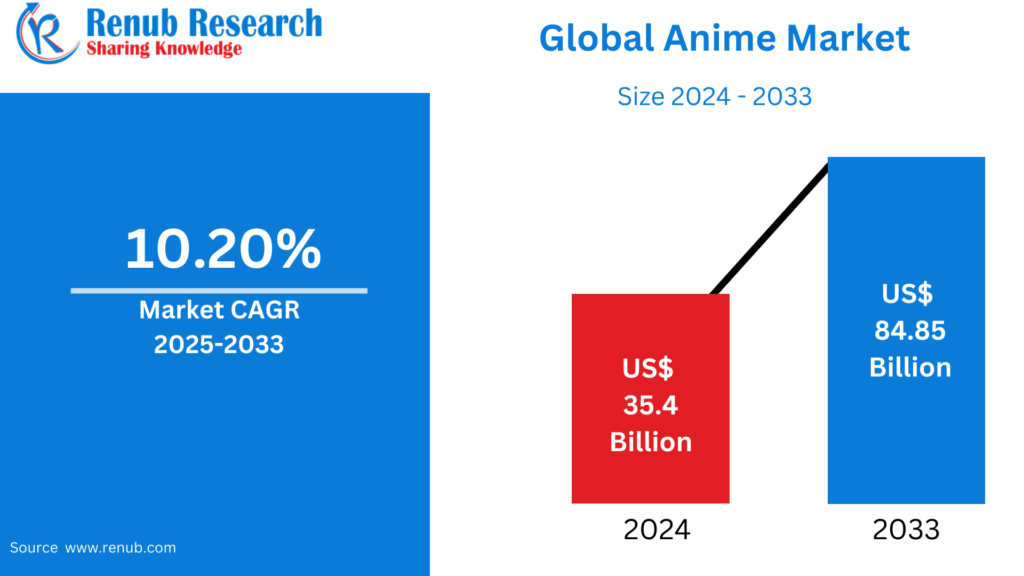
According to Renub Research global anime market has evolved into one of the fastest-growing segments within the global entertainment industry. Valued at US$ 35.4 billion in 2024, the market is projected to reach US$ 84.85 billion by 2033, expanding at a strong CAGR of 10.20% between 2025 and 2033. This rapid growth is driven by anime’s increasing global popularity, the rise of online streaming platforms, strong merchandise sales, international licensing deals, and anime’s growing influence across pop culture, gaming, fashion, and cross-media storytelling.
Once considered a niche form of Japanese entertainment, anime has now become a mainstream cultural phenomenon with widespread appeal across age groups and regions. Its ability to adapt into films, games, merchandise, live events, and digital content has positioned anime as a powerful global media franchise ecosystem.
Global Anime Market Outlooks
Anime is a distinctive form of animation that originated in Japan and is globally recognized for its unique artistic style, expressive characters, and emotionally engaging narratives. Unlike traditional Western animation, anime caters to both children and adults and often explores complex themes such as identity, morality, technology, and human relationships. Genres range widely, including action, romance, fantasy, science fiction, horror, and slice-of-life storytelling.
Beyond entertainment, anime plays a broader cultural and economic role. In Japan, it is widely used in education, advertising, tourism promotion, and public awareness campaigns. Internationally, anime influences music, fashion, gaming, and lifestyle trends. Fans frequently travel to Japan to visit real-world locations featured in anime series, contributing to tourism growth. Merchandise sales, cosplay culture, and global conventions further strengthen anime’s economic footprint. With global streaming access, anime has reached unprecedented audience diversity, establishing itself as a major cultural export and commercial force worldwide.
Request a free sample copy of the report:https://www.renub.com/request-sample-page.php?gturl=anime-market-p.php
Development of Streaming Platforms
The expansion of digital streaming platforms has fundamentally transformed anime distribution and consumption. Platforms such as Netflix, Crunchyroll, Hulu, and Amazon Prime Video have invested heavily in anime licensing, simulcasts, and original productions. These platforms offer multilingual subtitles and dubbing, removing language barriers and enabling anime to reach global audiences simultaneously.
On-demand viewing and algorithm-driven recommendations have accelerated binge-watching culture and global fandom growth. Increased competition for exclusive licensing rights has also resulted in higher investments flowing into anime studios, improving production scale and international visibility. In January 2025, Crunchyroll announced the launch of a new digital manga app at Sony Group Corporation’s CES press conference, further strengthening its ecosystem and deepening fan engagement across formats.
Cross-Media Integration and Merchandising
Anime has expanded far beyond television and cinema into a fully integrated cross-media ecosystem. Popular anime intellectual properties (IPs) are adapted into video games, mobile apps, novels, music, and extensive merchandise lines. Characters often become global cultural icons, driving demand for toys, apparel, collectibles, and collaborations with international brands.
Merchandising plays a central role in monetization, particularly in Japan, where anime-themed cafes, amusement parks, pop-up stores, and pachinko machines are common. Internationally, fans seek immersive brand experiences through conventions, limited-edition collectibles, and fashion collaborations. In August 2022, Toei Animation Co. Ltd. partnered with Epic Games to introduce Dragon Ball Z characters into Fortnite, showcasing how anime IPs successfully cross into global gaming ecosystems.
Growing Global Cultural Acceptance
Anime has transitioned from a niche subculture to a widely accepted and respected art form. International film festivals, academic institutions, and museums increasingly recognize anime for its artistic and narrative depth. Younger demographics, particularly Gen Z and Millennials, connect strongly with anime’s emotional storytelling, diverse characters, and mature themes.
Social media platforms such as TikTok, Instagram, and YouTube have amplified anime’s cultural presence through fan edits, cosplay videos, commentary, and community discussions. This visibility has encouraged broadcasters, advertisers, and mainstream brands to incorporate anime aesthetics into marketing strategies. In August 2024, Discotek Media announced 25 new anime and tokusatsu releases at Otakon, expanding content diversity and accessibility for North American audiences.
Challenges in the Global Anime Market
Overproduction and Quality Issues
Rising global demand has placed immense pressure on anime studios to increase output. This has led to overproduction, shorter timelines, and growing concerns about declining animation quality and creative burnout. Smaller studios often struggle with limited resources, while animators face demanding workloads and insufficient compensation.
Overcrowding of content also makes it harder for new titles to stand out, increasing the risk of market saturation. Maintaining production quality, improving labor conditions, and adopting sustainable workflows have become critical challenges that the industry must address to ensure long-term growth and audience trust.
Licensing and Regional Limitations
Despite global interest, licensing complexities continue to restrict anime’s availability in certain regions. Delayed international releases, exclusive platform agreements, and fragmented licensing structures can limit accessibility, encouraging piracy and unauthorized streaming. Additionally, cultural regulations and censorship laws in some countries affect content distribution and creative freedom.
To overcome these barriers, studios and distributors must streamline licensing processes, improve global release coordination, and adapt localization strategies while preserving artistic integrity.
Global Merchandising Anime Market
Merchandising is a cornerstone of the anime business model, encompassing figures, apparel, accessories, posters, and home décor. Major franchises such as Pokémon, One Piece, and Demon Slayer generate billions of dollars in merchandise revenue alone. The rise of global e-commerce platforms has made official anime products accessible to fans worldwide.
Limited-edition releases, fashion collaborations, and subscription boxes encourage repeat purchases and long-term brand loyalty. Conventions and pop-up events further enhance visibility and revenue, extending the commercial lifespan of anime IPs well beyond broadcast cycles.
Worldwide Pachinko Anime Market
Anime-themed pachinko machines represent a unique revenue stream within Japan’s entertainment sector. These machines integrate popular anime characters, music, and storylines into interactive gaming experiences. Licensing agreements provide studios with consistent income while attracting both anime fans and traditional pachinko players.
Although pachinko remains largely Japan-specific, its financial impact is significant, making it an important component of the broader anime monetization ecosystem.
Global Anime Video Market
The anime video market includes digital downloads, Blu-ray and DVD sales, and video-on-demand streaming. While physical media sales are declining globally, collector editions and limited releases remain popular among dedicated fans. Digital streaming now dominates consumption, supported by simulcasts, original series, and multilingual localization.
Streaming subscriptions have become the primary revenue channel, offering studios long-term global exposure and sustained fan engagement through binge-watching and serialized content.
Global Anime Sci-Fi Fantasy Market
Sci-fi and fantasy are among the most popular anime genres worldwide. Iconic titles such as Attack on Titan, Neon Genesis Evangelion, and Sword Art Online showcase complex world-building, philosophical depth, and visually striking animation. These genres attract global audiences due to their universal themes and high rewatch value.
Streaming platforms heavily promote fantasy and sci-fi anime, accelerating international adoption. Continuous adaptations from manga and light novels further strengthen this rapidly expanding segment.
World Sports Anime Market
Sports anime blends competitive action with themes of perseverance, teamwork, and personal growth. Series like Haikyuu!!, Kuroko no Basket, and Blue Lock appeal even to viewers outside traditional anime fandoms. Their emotional storytelling and dynamic animation resonate across cultures.
Sports anime also benefit from partnerships with real-world sports brands and events, enhancing visibility and merchandising opportunities. This genre continues to grow as audiences seek inspirational and character-driven narratives.
United States Anime Market
The United States is the largest overseas anime market, supported by extensive streaming access, a massive fan base, and strong cultural integration. Major conventions such as Anime Expo and Otakon drive community engagement and merchandise sales. U.S. production houses increasingly collaborate with Japanese studios, contributing to original content creation.
In July 2024, Bioworld Merchandising Inc. acquired Packed Party to expand lifestyle and accessory offerings, reinforcing anime’s commercial presence in the U.S. market.
Germany Anime Market
Germany is one of Europe’s leading anime markets, with strong television broadcasting, robust physical media sales, and highly attended conventions such as AnimagiC and DoKomi. Streaming platforms have further increased anime accessibility, while localized dubbing enhances viewer engagement.
German audiences show strong interest in fantasy, action, and romance genres, making the country a key contributor to Europe’s anime growth.
India Anime Market
India’s anime market is expanding rapidly due to rising internet penetration, smartphone usage, and a large Gen Z population. Streaming platforms such as Netflix, YouTube, and Crunchyroll have significantly improved access to anime content.
Growing demand for Hindi and regional-language dubbing is accelerating localization efforts. Anime conventions, cosplay communities, and fan clubs are emerging across major cities, positioning India as a high-growth market for global anime producers.
Saudi Arabia Anime Market
Anime popularity in Saudi Arabia has increased sharply, supported by a youthful population, high internet penetration, and government-backed entertainment initiatives under Vision 2030. Events such as Riyadh Season now feature anime zones, screenings, and concerts.
Streaming platforms offering Arabic subtitles and dubbing have improved accessibility, while merchandise and cosplay culture continue to grow. Anime has become an important element of cultural exchange and youth entertainment in the region.
Anime Market Segmentation
By Type
Merchandising, Internet Distribution, Pachinko, TV, Live Entertainment, Video, Movie, Music
By Genre
Action & Adventure, Sci-Fi Fantasy, Romance & Drama, Sports, Others
By Geography
North America, Europe, Asia Pacific, Latin America, Middle East & Africa
Key Players in the Global Anime Market
Major companies operating in the anime market include Pierrot Co. Ltd., Production I.G, Studio Ghibli, Toei Animation Co. Ltd., Bones Inc., Kyoto Animation, and MADHOUSE Inc.. These companies are evaluated across overview, leadership, recent developments, strategies, and revenue performance.
Conclusion
The global anime market is on a powerful growth trajectory through 2033, driven by streaming expansion, cross-media monetization, cultural mainstreaming, and international demand. While challenges such as overproduction and licensing complexity persist, ongoing investments, technological innovation, and global fan engagement continue to unlock new opportunities. As anime strengthens its role as both entertainment and cultural expression, it will remain a central pillar of the global media and entertainment industry.