Global Champagne Market Size and Outlook
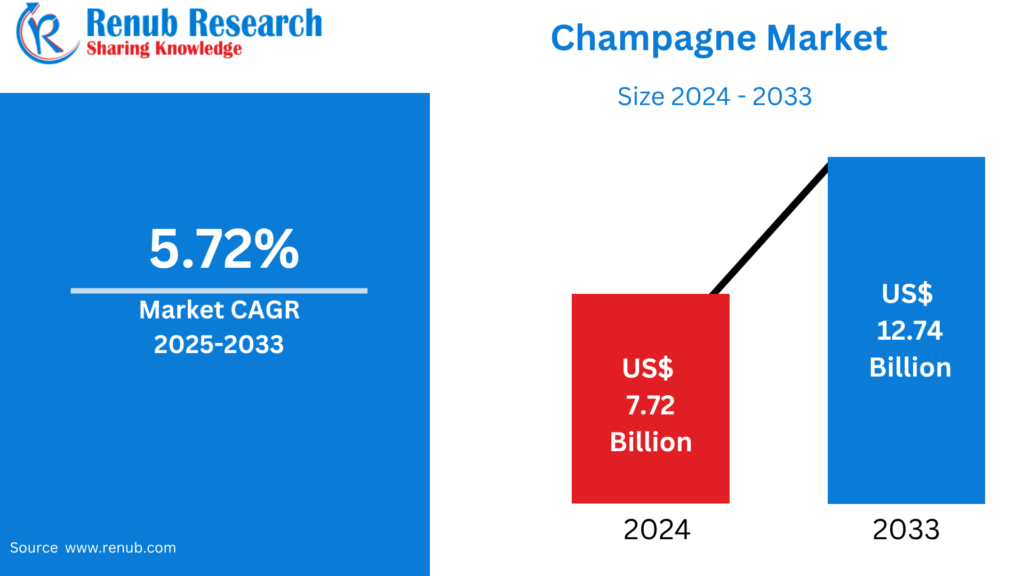
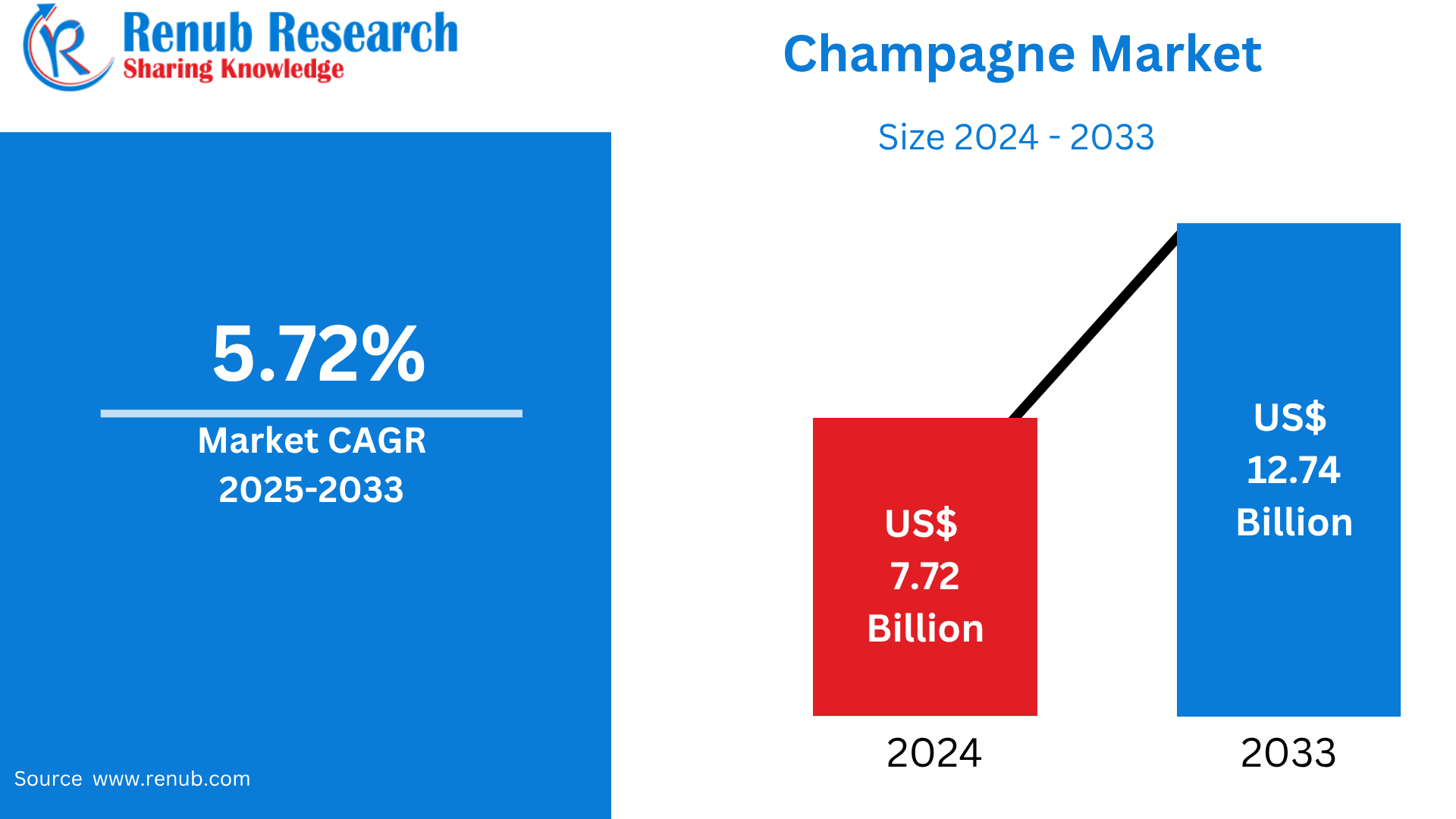
According to Renub Research global champagne market continues to demonstrate resilient growth, supported by rising luxury consumption, evolving lifestyle preferences, and expanding demand for premium alcoholic beverages across both mature and emerging economies. In 2024, the global champagne market was valued at USD 7.72 billion and is projected to reach approximately USD 12.74 billion by 2033, expanding at a CAGR of 5.72% during the forecast period. This steady growth reflects champagne’s enduring status as a symbol of celebration, sophistication, and prestige, alongside its growing penetration into new consumer segments and geographies.
Champagne demand is increasingly shaped by premium gift culture, higher disposable incomes, and the influence of aspirational lifestyles promoted through global travel, hospitality, and social media. While Europe and North America remain core consumption hubs, Asia-Pacific and selected Middle Eastern markets are emerging as high-growth regions, driven by urbanization, rising wealth, and greater exposure to Western dining and celebration customs.
Request a free sample copy of the report:https://www.renub.com/request-sample-page.php?gturl=champagne-market-p.php
Global Champagne Market Overview
Champagne is a sparkling wine produced exclusively in the Champagne region of France under strict Appellation d’Origine Contrôlée (AOC) regulations. It is crafted primarily from Chardonnay, Pinot Noir, and Pinot Meunier grapes using the traditional méthode champenoise, which ensures its distinctive effervescence, refined taste, and complex aroma profile. These stringent production standards differentiate champagne from other sparkling wines and support its premium positioning worldwide.
Traditionally associated with weddings, New Year celebrations, corporate events, and luxury hospitality, champagne has evolved into a lifestyle beverage used for gifting, fine dining, and curated social experiences. Product diversification through rosé, vintage, and prestige cuvée offerings has expanded its appeal among younger consumers, collectors, and wine enthusiasts. Although historically dominant in Europe and North America, demand is now growing rapidly in Asia-Pacific markets, supported by premiumization trends and increasing cultural acceptance of sparkling wines.
Growth Drivers in the Global Champagne Market
Rising Luxury Consumption and Gift Culture
One of the strongest drivers of the global champagne market is the growth in luxury consumption and premium gifting traditions. Champagne is widely perceived as a status symbol, making it a preferred choice for high-end gifts, corporate celebrations, and festive occasions. Expanding middle-class and affluent populations in countries such as China, India, and parts of the Middle East are contributing to higher discretionary spending on luxury products, including champagne.
As consumers seek meaningful and prestigious gifting options, champagne’s association with success, celebration, and refinement strengthens its demand. Premium packaging, limited editions, and branded gift sets further enhance its appeal in luxury gifting segments.
Expansion of Premium and Vintage Champagne Offerings
Champagne producers are increasingly focusing on premiumization through prestige cuvées, vintage releases, and limited-edition blends. These high-value products are aged longer, produced in limited quantities, and targeted at collectors and connoisseurs. Such offerings not only improve brand perception but also generate higher margins for producers.
Wine tourism, tasting events, gourmet food pairings, and storytelling around heritage and craftsmanship are supporting the growth of premium champagne categories. Rising consumer knowledge and appreciation for terroir and aging techniques further reinforce demand for vintage and prestige labels.
Globalization and Digital Accessibility
The globalization of wine trade and the growth of e-commerce have significantly expanded champagne’s global reach. Improved logistics, digital retail platforms, and online wine marketplaces allow consumers to access a wide variety of champagne brands beyond traditional markets. Digital marketing campaigns, influencer collaborations, and virtual tastings have increased brand awareness among younger and first-time buyers.
Online customization services and direct-to-consumer sales models are further enhancing engagement and convenience. As digital trust in wine purchasing continues to improve, e-commerce is becoming an increasingly important sales channel for champagne worldwide.
Challenges in the Global Champagne Market
Strict AOC Regulations and Supply Constraints
While AOC regulations ensure quality and authenticity, they also restrict production capacity by limiting vineyard expansion and grape yields. This creates supply constraints during periods of high demand, leading to price increases that may limit accessibility for price-sensitive consumers. Climate variability also poses risks to grape quality and consistency, adding further complexity to production under strict regulatory conditions.
Competition from Alternative Sparkling Wines
Champagne faces growing competition from more affordable sparkling wines such as Prosecco, Cava, and sparkling wines from the U.S., Australia, and England. These alternatives offer similar celebratory appeal at lower price points, attracting consumers seeking value luxury. To maintain competitiveness, champagne producers must continuously reinforce brand heritage, provenance, and perceived exclusivity.
Key Champagne Market Segments
Global Prestige Cuvée Champagne Market
Prestige cuvée champagnes represent the ultra-premium segment, crafted from the highest-quality grapes and aged extensively. These wines appeal to collectors, luxury consumers, and high-end gifting markets. Limited availability and strong brand heritage support premium pricing, making this segment one of the most profitable within the global champagne market.
Blanc de Noirs Champagne Market
Blanc de Noirs champagnes, made exclusively from Pinot Noir and Pinot Meunier grapes, offer richer and more structured flavor profiles. Their distinctive taste appeals to experienced wine drinkers and niche consumers seeking depth and complexity. Demand is particularly strong in Europe, North America, and Japan, where wine experimentation and appreciation are more advanced.
Economy and Entry-Level Champagne Market
Economy champagne consists primarily of non-vintage blends positioned for everyday celebrations and casual dining. These products serve as entry points for younger consumers and first-time buyers, supporting volume growth and long-term brand loyalty. Supermarkets and mass retail outlets play a crucial role in this segment’s expansion.
Luxury Champagne Market
Luxury champagne bridges premium quality with lifestyle branding. Products in this segment often feature special packaging, fashion collaborations, and celebrity endorsements. Consumption is driven by experiential luxury trends, particularly in China, Gulf countries, and Western high-income markets.
Distribution Channel Insights
Specialty Stores
Specialty wine stores provide curated champagne selections, expert guidance, and immersive tasting experiences. They cater to collectors and enthusiasts seeking vintage and niche offerings. These stores play an important role in brand discovery and education, reinforcing champagne’s premium image.
Online Stores
Online platforms have transformed champagne retail through convenience, global access, and personalized recommendations. Digital wine retailers enable consumers to compare prices, access rare vintages, and participate in virtual tastings. E-commerce continues to gain prominence as consumers increasingly adopt digital-first purchasing habits.
Regional Champagne Market Analysis
United States Champagne Market
The United States is one of the largest importers of champagne, driven by strong demand for premium alcoholic beverages and celebratory drinks. Champagne is widely consumed during holidays, weddings, and corporate events, with growing popularity in brunch culture and gifting. Younger demographics are increasingly experimenting with sparkling wines, supporting growth across price segments.
Germany Champagne Market
Germany has a strong sparkling wine culture, traditionally centered on sekt, but demand for imported champagne is steadily increasing. Wine-savvy consumers show interest in vintage and prestige cuvée offerings, while sustainability and organic certification are becoming influential purchasing factors.
China Champagne Market
China represents a high-growth opportunity for the global champagne market. Rising disposable incomes, Western lifestyle influence, and premium gifting culture are driving demand, particularly in tier-one cities. Champagne is closely associated with status and celebration, making it popular for business dining and upscale social events.
Saudi Arabia Champagne Market
Conventional champagne sales are restricted in Saudi Arabia; however, demand for non-alcoholic sparkling alternatives is increasing. Growth in luxury hospitality, weddings, and social events under Vision 2030 is creating niche opportunities for alcohol-free champagne substitutes.
Competitive Landscape and Key Players
The global champagne market is highly competitive, with established producers focusing on brand heritage, innovation, and global expansion. Companies are analyzed based on overview, leadership, recent developments, SWOT analysis, and revenue performance. Key players operating in the market include Diageo plc, La Marca USA, F. Korbel & Bros., Cook’s Champagne Cellars, Champagne Taittinger CCVC, Societe Jacques Bollinger SA, Laurent-Perrier Group, Champagne AYALA, and LVMH Moet Hennessy.
Conclusion
The global champagne market is set for sustained growth through 2033, driven by premiumization, evolving celebration culture, and expanding global accessibility. While supply constraints and competition from alternative sparkling wines remain challenges, strong brand equity, regulatory protection, and innovation continue to support long-term market stability. As champagne retains its timeless association with luxury and celebration, it will remain a cornerstone of the global premium beverage industry, offering significant opportunities for producers, distributors, and investors alike.