Global Electric Vehicle Aftermarket Overview
According To Renub Research global electric vehicle (EV) aftermarket is emerging as one of the fastest-growing segments within the automotive ecosystem, driven by accelerating EV adoption and rapid technological evolution. As electric vehicles become mainstream across passenger and commercial fleets, demand for specialized replacement parts, maintenance services, software upgrades, and charging solutions is expanding at an unprecedented pace. Unlike internal combustion engine vehicles, EVs rely heavily on advanced electronics, batteries, and software-driven systems, reshaping the traditional concept of automotive aftersales services.
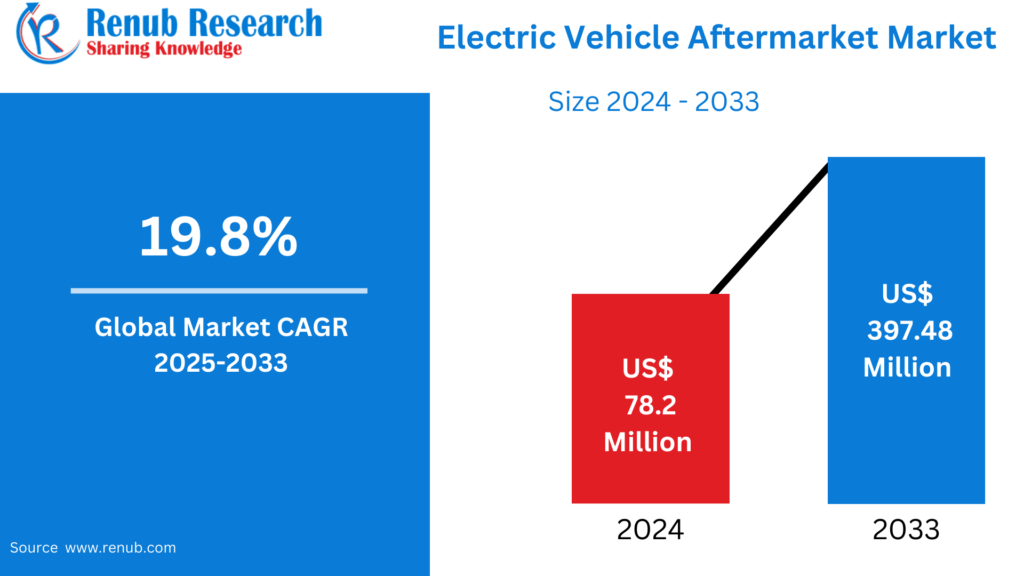
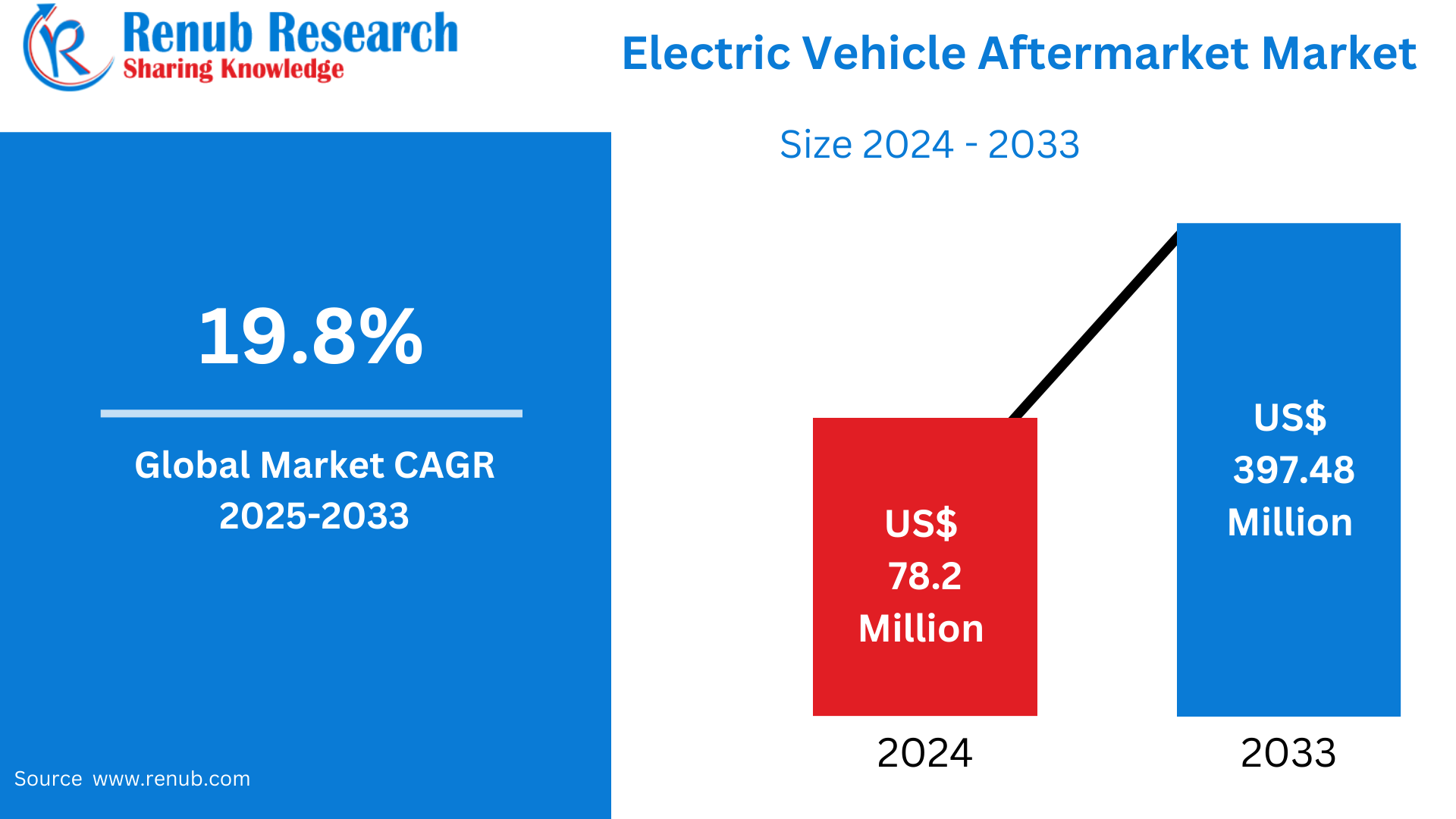
In 2024, the global electric vehicle aftermarket was valued at approximately US$ 78.2 million and is projected to reach US$ 397.48 million by 2033, growing at a robust compound annual growth rate of 19.8% from 2025 to 2033. This strong growth outlook is supported by rising EV sales, favorable government regulations, expanding charging infrastructure, and increasing consumer awareness regarding EV maintenance and customization options. The aftermarket is evolving into a critical pillar that supports long-term EV ownership, performance optimization, and sustainability goals.
Electric Vehicle Aftermarket Industry Outlook
The global transition toward clean mobility is fundamentally transforming the automotive value chain. Governments worldwide are implementing strict emission regulations, providing subsidies, and setting timelines to phase out internal combustion engine vehicles. As a result, EV penetration is rising steadily, increasing the installed base of electric vehicles that require ongoing maintenance, diagnostics, and part replacements.
The EV aftermarket differs significantly from its traditional counterpart. Instead of oil changes and engine overhauls, it focuses on battery systems, electric drivetrains, power electronics, thermal management, tires, brakes, and software-based services. Over-the-air updates, predictive maintenance through telematics, and digital diagnostics are becoming integral components of aftermarket offerings. These changes are creating new revenue streams for service providers, technology firms, and parts manufacturers while redefining customer expectations around convenience and efficiency.
Download Free Sample Report:https://www.renub.com/request-sample-page.php?gturl=electric-vehicle-aftermarket-market-p.php
Key Drivers of Growth in the Electric Vehicle Aftermarket
Expansion of Charging Solutions and Infrastructure
The rapid growth of EV adoption has intensified the demand for accessible and efficient charging solutions. Aftermarket companies are capitalizing on this opportunity by offering a wide range of charging products, including home chargers, portable charging units, fast chargers, and wireless charging systems. These solutions cater to diverse user needs, from residential charging to fleet operations and long-distance travel.
In addition to hardware, aftermarket providers are developing charging upgrades that improve charging speed, compatibility with multiple standards, and energy management capabilities. As governments and private investors expand public charging networks, aftermarket players complement these efforts with innovative products that enhance convenience and reliability. The growing focus on smart charging, load balancing, and energy optimization further strengthens the role of the aftermarket in supporting EV infrastructure development.
Rising Demand for Vehicle Customization and Comfort Enhancements
EV owners increasingly seek personalization options that reflect their lifestyles and preferences. Aftermarket companies address this demand by offering aesthetic upgrades such as custom body kits, wraps, lighting enhancements, wheels, and interior modifications. These offerings allow EV owners to differentiate their vehicles while maintaining functionality and efficiency.
Comfort-focused upgrades are also gaining popularity, including premium seating, advanced infotainment systems, enhanced sound systems, and climate control improvements. As EV designs often prioritize minimalism and efficiency, aftermarket solutions fill gaps by providing tailored enhancements that improve driving experience without compromising performance. This trend is particularly strong among younger, tech-savvy consumers who value individuality and digital integration.
Technological Advancements and Software-Driven Services
Technological innovation is a major catalyst for the growth of the EV aftermarket. As EV manufacturers introduce new models with advanced battery systems, power electronics, and connectivity features, aftermarket providers develop complementary products and services to enhance vehicle performance and longevity. Battery upgrades, thermal management improvements, and efficiency-boosting components are increasingly sought after by EV owners.
Software has become a defining element of the EV aftermarket. Over-the-air updates, diagnostic tools, and predictive maintenance platforms enable continuous vehicle optimization. Aftermarket companies leverage data analytics and artificial intelligence to offer personalized insights, identify potential issues before failures occur, and improve overall vehicle reliability. The expanding availability of next-generation battery technologies further fuels aftermarket demand, as owners seek solutions that extend driving range and battery lifespan.
Growth of Commercial and Fleet Electrification
Beyond individual consumers, commercial fleets are playing a significant role in driving the EV aftermarket. Logistics companies, municipal transport authorities, and corporate fleets are rapidly transitioning to electric vehicles to meet sustainability targets and reduce operating costs. These operators require reliable aftermarket services that prioritize vehicle uptime, cost efficiency, and scalability.
Aftermarket providers are increasingly targeting this segment with tailored maintenance contracts, predictive servicing solutions, and bulk replacement part supply agreements. Fleet-focused offerings often include advanced telematics, centralized diagnostics, and scheduled maintenance programs designed to minimize downtime. As fleet electrification accelerates, this segment is expected to become a major contributor to aftermarket revenue growth.
Challenges in the Electric Vehicle Aftermarket
Battery Disposal and Recycling Complexities
One of the most significant challenges facing the EV aftermarket is the disposal and recycling of end-of-life batteries. EV batteries contain valuable materials such as lithium, cobalt, and nickel, but improper disposal poses serious environmental risks. As the number of EVs on the road increases, the volume of spent batteries requiring recycling will rise substantially.
Establishing efficient recycling infrastructure is critical but remains complex and capital-intensive. Battery designs vary widely across manufacturers, complicating standardization and recycling processes. While advancements in second-life battery applications and recycling technologies are underway, managing battery lifecycle sustainability remains a key challenge for the aftermarket industry.
Competition from Established ICE Aftermarket Ecosystems
The traditional internal combustion engine aftermarket remains deeply entrenched, with extensive supply chains, service networks, and consumer familiarity. EV aftermarket players face competition from these established ecosystems, particularly as some service providers attempt to adapt existing infrastructure to serve electric vehicles.
Additionally, many EV components are proprietary or tightly controlled by original equipment manufacturers, limiting independent aftermarket access. Building a comprehensive EV-specific supply chain and skilled workforce requires time, investment, and regulatory clarity. This competitive pressure can slow market expansion, particularly in regions where ICE vehicles still dominate.
Regional Overview of the Electric Vehicle Aftermarket
North America Electric Vehicle Aftermarket
North America represents one of the most dynamic EV aftermarket regions, supported by strong EV adoption, favorable policies, and a mature automotive service ecosystem. The United States and Canada are witnessing increasing demand for EV replacement parts, charging solutions, and software-driven services. Digital platforms enabling remote diagnostics, predictive maintenance, and online component marketplaces are enhancing service accessibility.
Sustainability initiatives are encouraging the use of recycled and remanufactured EV parts, supporting a circular economy approach. Significant investments in domestic battery and charger manufacturing are strengthening the aftermarket supply chain and reducing dependency on imports.
Europe Electric Vehicle Aftermarket
Europe’s EV aftermarket is shaped by stringent emission regulations and ambitious climate targets. Countries across the region are investing heavily in charging infrastructure and digital mobility solutions. Aftermarket services in Europe emphasize software updates, charging optimization, and compliance with evolving safety and environmental standards.
Standardization challenges persist due to diverse vehicle platforms and regulatory frameworks, but continued collaboration between manufacturers, service providers, and policymakers is supporting steady growth.
Asia Pacific Electric Vehicle Aftermarket
Asia Pacific is a rapidly expanding EV aftermarket region, driven by high EV adoption in countries such as China, Japan, and South Korea. China, in particular, dominates EV production and deployment, creating strong demand for battery replacements, charging solutions, and digital services.
Original equipment manufacturers play a prominent role in shaping the aftermarket through vertically integrated service offerings. Independent service providers are also expanding, leveraging digital platforms and localized networks to serve a growing EV population.
Middle East and Emerging Markets
In regions such as the Middle East, EV aftermarket growth is supported by government sustainability initiatives and infrastructure investments. Countries like the United Arab Emirates are promoting EV adoption through incentives, charging network expansion, and green mobility strategies.
While awareness and service network maturity remain challenges, increasing policy support and private sector involvement are expected to accelerate aftermarket development over the coming years.
Electric Vehicle Aftermarket Segmentation
By Replacement Parts
The EV aftermarket includes a wide range of replacement parts such as batteries, tires, brake components, body parts, filters, wheels, and lighting and electronic components. Battery and electronic components represent the most critical segments due to their central role in EV functionality and safety. Tire and brake replacements also contribute significantly, driven by regular wear and tear.
By Vehicle Type
Passenger cars account for the largest share of the EV aftermarket, reflecting higher adoption rates among individual consumers. However, the commercial vehicle segment is growing rapidly as logistics, delivery, and public transport fleets transition to electric mobility. This segment demands high-reliability parts and service solutions tailored to intensive usage patterns.
By Distribution Channel
Authorized service centers operated by original equipment manufacturers dominate the EV aftermarket due to warranty considerations and proprietary technologies. Premium multi-brand service centers and digital aggregators are gaining traction by offering convenience, competitive pricing, and broader service options. Online platforms are increasingly important for parts procurement and service scheduling.
Competitive Landscape and Industry Structure
The global EV aftermarket is characterized by the presence of technology companies, automotive suppliers, charging solution providers, and service networks. Competition centers on innovation, service quality, digital integration, and sustainability. Strategic partnerships, acquisitions, and investments in training and infrastructure are common strategies to strengthen market position.
Future Outlook of the Electric Vehicle Aftermarket
The future of the electric vehicle aftermarket is highly promising, supported by strong EV adoption trends, technological advancements, and supportive policy frameworks. As electric vehicles become a permanent fixture in global transportation, the aftermarket will play a crucial role in ensuring performance, safety, and long-term value for EV owners.
Addressing challenges related to battery recycling, workforce training, and supply chain development will be essential for sustained growth. With continued innovation and collaboration across the automotive ecosystem, the EV aftermarket is set to become a vital enabler of the global transition to sustainable mobility through 2033 and beyond.