Probiotics Market Size, Trends and Forecast 2025–2033
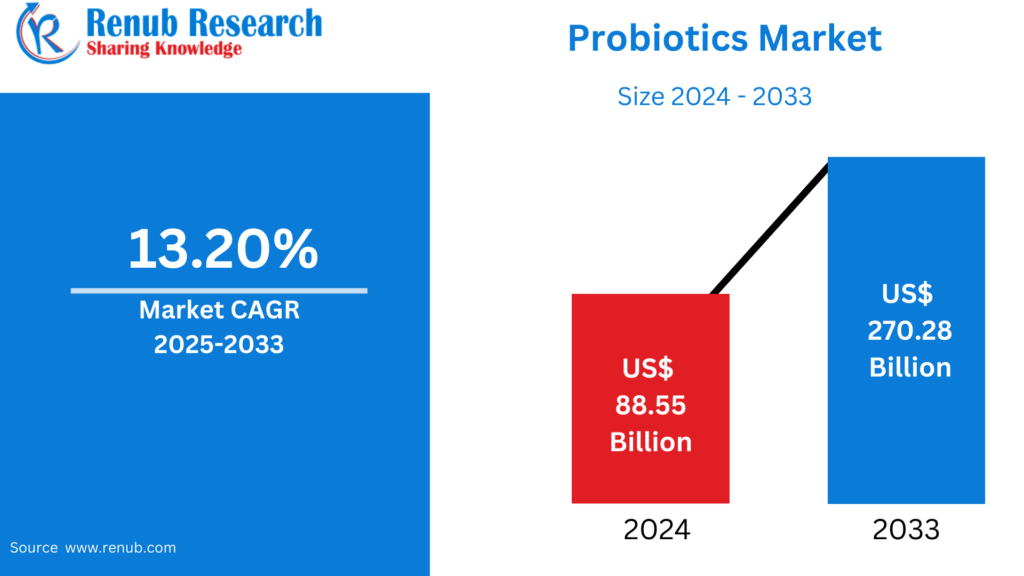
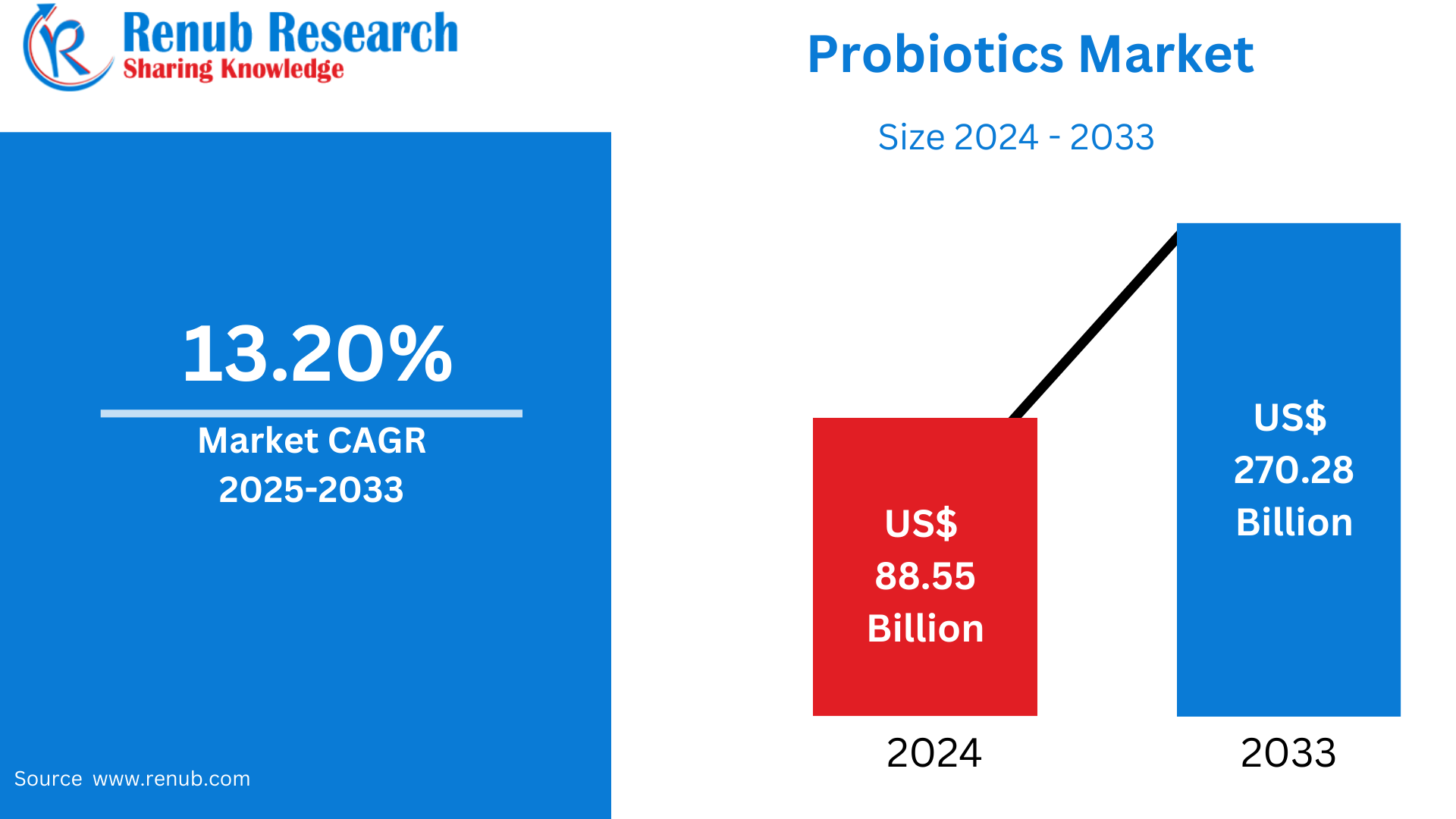
According To Renub Research global probiotics market is poised for exceptional growth over the forecast period from 2025 to 2033. The market is expected to expand from approximately US$ 88.55 billion in 2024 to nearly US$ 270.28 billion by 2033, registering a strong compound annual growth rate of about 13.20%. This rapid expansion reflects a major shift in consumer attitudes toward preventive healthcare, gut health awareness, and holistic wellness. Probiotics have evolved from niche dietary supplements into mainstream functional ingredients across food, beverage, and healthcare applications.
Rising healthcare costs, increased prevalence of lifestyle-related disorders, and growing scientific evidence supporting the role of gut microbiota in overall health are reshaping consumer purchasing behavior. As people increasingly seek natural, functional, and personalized nutrition solutions, probiotics are becoming central to global wellness strategies.
Download Free Sample Report:https://www.renub.com/request-sample-page.php?gturl=probiotics-market-p.php
Global Probiotics Industry Overview
Probiotics are live microorganisms, mainly beneficial bacteria and yeast, that deliver health benefits when consumed in adequate amounts. They help maintain and restore the natural balance of gut microflora, which is essential for proper digestion, immune function, and overall metabolic health. Probiotics are commonly found in fermented foods such as yogurt, kefir, kimchi, and sauerkraut, as well as in dietary supplements and fortified functional foods.
The health benefits associated with probiotics extend beyond digestion. Scientific research has linked probiotics to improved immune response, reduced inflammation, better nutrient absorption, and potential mental health benefits through the gut–brain axis. As a result, probiotics are now widely used in functional foods, dietary supplements, infant nutrition, animal feed, and clinical nutrition products. Their versatility and broad application scope make probiotics one of the fastest-growing segments within the global nutrition and wellness industry.
Growing Consumer Focus on Gut Health
One of the most important drivers of the probiotics market is rising consumer awareness of gut health and its connection to overall wellbeing. Increasing exposure to health education, digital media, and scientific research has helped consumers understand how digestive health influences immunity, energy levels, mental health, and chronic disease management.
As digestive disorders such as bloating, irritable bowel syndrome, and food intolerance become more common, consumers are actively seeking natural solutions. Probiotics are perceived as safe, preventive, and long-term options for maintaining digestive balance. This growing focus on gut health is accelerating demand for probiotic-enriched foods, beverages, and supplements across all age groups.
Expansion of Functional Foods and Beverages
The rapid growth of functional foods and beverages is a major catalyst for the probiotics market. Consumers are increasingly choosing foods that offer additional health benefits beyond basic nutrition. Probiotic yogurt, fermented dairy products, kombucha, functional juices, and fortified snacks have gained widespread acceptance due to their convenience and perceived health value.
Manufacturers are continuously innovating by introducing new flavors, formats, and non-dairy alternatives to appeal to diverse consumer preferences. Plant-based probiotic drinks, lactose-free options, and sugar-reduced formulations are expanding the consumer base. This integration of probiotics into everyday food and beverage consumption is significantly driving market expansion.
Rising Health Awareness and Preventive Healthcare Trends
The global shift toward preventive healthcare is strongly supporting probiotics market growth. Consumers are increasingly prioritizing long-term health maintenance rather than reactive treatment. Probiotics fit well into this preventive approach, as they help support immune function, digestive health, and metabolic balance.
Growing concerns about antibiotic overuse and its impact on gut microbiota have further increased interest in probiotics as a natural way to restore microbial balance. Additionally, aging populations and increased incidence of chronic diseases are encouraging consumers to adopt daily health supplements, including probiotics, as part of routine wellness practices.
Clean Label and Natural Ingredient Preference
The clean label movement is playing a critical role in shaping the probiotics market. Consumers are demanding transparency, minimal processing, and recognizable ingredients in the products they consume. Probiotics align naturally with clean label trends, as they are often marketed as naturally occurring beneficial microorganisms.
Manufacturers are reformulating products to eliminate artificial preservatives, colors, and additives while emphasizing natural fermentation processes. Clean label probiotic products appeal strongly to health-conscious consumers who prioritize authenticity, sustainability, and ingredient simplicity. This trend is reinforcing consumer trust and driving higher adoption rates.
Growth of Personalized Nutrition and Wellness
Personalized nutrition is emerging as a powerful trend within the probiotics market. Advances in microbiome research and diagnostic technologies now allow consumers to understand their individual gut composition. This has created demand for customized probiotic formulations tailored to specific health needs, lifestyles, and dietary patterns.
Personalized probiotics address specific concerns such as weight management, immunity, stress, and metabolic health. Subscription-based models and direct-to-consumer platforms are making personalized probiotic solutions more accessible. This shift toward precision nutrition is expected to significantly shape the future of the probiotics industry.
Regulatory Challenges in the Probiotics Market
Despite strong growth potential, regulatory complexity remains a key challenge for the probiotics market. Regulations governing probiotics vary significantly across countries, particularly concerning health claims, labeling requirements, and product approvals. In many regions, manufacturers must provide extensive scientific evidence to support claimed health benefits.
The lack of globally harmonized standards creates challenges for companies seeking to expand internationally. Regulatory delays can slow product launches and increase compliance costs. Navigating these regulatory frameworks requires significant investment, particularly for smaller companies and new market entrants.
Cost and Accessibility Constraints
Cost remains a barrier to widespread adoption of probiotics, especially in developing markets. High-quality probiotic products often require advanced manufacturing processes, strain-specific research, and controlled storage conditions to maintain viability. These factors increase production and distribution costs.
Cold chain requirements for certain probiotic products further add to logistical expenses. As a result, premium probiotic products may be less accessible to lower-income consumers. Improving affordability while maintaining product quality remains a key challenge for market participants.
Probiotic Food and Beverage Segment
Probiotic foods and beverages represent the largest segment of the probiotics market. Regular consumption through food products allows consumers to integrate probiotics seamlessly into daily diets. Dairy-based probiotics dominate this segment, although non-dairy alternatives are growing rapidly.
Fermented drinks and functional beverages are gaining popularity due to their convenience and refreshing appeal. Continuous innovation in flavors, textures, and packaging is helping manufacturers expand market reach and attract new consumers.
Probiotic Dietary Supplements Segment
Probiotic dietary supplements are experiencing strong growth due to their concentrated formulations and targeted health benefits. Capsules, tablets, powders, and gummies offer precise dosing and convenience. These supplements are widely used for digestive health, immunity, and therapeutic support.
The supplements segment benefits from increasing recommendations by healthcare professionals and rising consumer preference for preventive health solutions. Ongoing research and product differentiation are strengthening the credibility and demand for probiotic supplements globally.
Animal Feed Probiotics Market
Probiotics are increasingly used in animal feed to improve gut health, immunity, and overall productivity in livestock and pets. Rising concerns over antibiotic resistance are encouraging the use of probiotics as natural growth promoters and disease prevention tools.
The animal feed segment benefits from growing demand for sustainable farming practices and high-quality animal nutrition. Probiotics support healthier livestock, reduced mortality rates, and improved feed efficiency, driving adoption in agricultural and veterinary applications.
Ingredient Trends in the Probiotics Market
Bacterial probiotics dominate the market due to their extensive health benefits and wide application range. Common bacterial strains are widely used in food, supplements, and clinical nutrition products. Yeast-based probiotics also play an important role, particularly in digestive and immune health applications.
Ongoing research into novel strains and synergistic formulations is expanding ingredient innovation. Strain specificity and documented health benefits are becoming key differentiators in product development.
Distribution Channel Dynamics
Supermarkets and hypermarkets remain major distribution channels for probiotic foods and beverages due to high consumer footfall and product visibility. Pharmacies and health stores are critical for probiotic supplements, offering professional guidance and trusted sourcing.
Online retail is rapidly gaining prominence, driven by convenience, subscription models, and access to personalized products. Digital platforms are enabling brands to reach global audiences while providing education and customization options.
United States Probiotics Market
The United States is one of the largest probiotics markets globally, supported by high health awareness, strong purchasing power, and advanced retail infrastructure. Consumers actively seek functional foods and supplements that support digestive and immune health.
Innovation, brand competition, and growing interest in preventive healthcare continue to drive market growth. The U.S. market also leads in personalized probiotics and clinical research adoption.
India Probiotics Market
India represents one of the fastest-growing probiotics markets due to rising health consciousness, increasing disposable incomes, and a growing focus on preventive healthcare. Traditional fermented foods combined with modern probiotic supplements are driving demand.
Innovation in personalized nutrition, weight management probiotics, and gut health solutions is positioning India as a dynamic and emerging market within the global probiotics industry.
United Kingdom Probiotics Market
The probiotics market in the United Kingdom is growing steadily, driven by demand for natural wellness products and clean-label formulations. Consumers show strong interest in plant-based, vegan, and convenient probiotic formats.
Product innovation, sustainability concerns, and increasing awareness of digestive health continue to support long-term market growth in the UK.
United Arab Emirates Probiotics Market
The probiotics market in the United Arab Emirates is expanding due to rising health awareness, a diverse population, and increasing demand for functional foods. Probiotic dairy products and supplements are gaining popularity among health-conscious consumers.
While high product costs and limited awareness in some areas present challenges, growing interest in preventive healthcare and wellness is supporting positive market momentum.
Competitive Landscape and Market Outlook
The global probiotics market is highly competitive, characterized by continuous innovation, product diversification, and strategic partnerships. Leading companies focus on research-backed formulations, clean-label positioning, and personalized solutions to strengthen market presence.
Looking ahead to 2033, the probiotics market is expected to remain one of the fastest-growing segments within the global nutrition and wellness industry. Advances in microbiome science, increasing consumer trust, and expanding applications across food, healthcare, and animal nutrition will continue to drive sustained market growth.