Global Textile Market Overview and Future Growth Potential
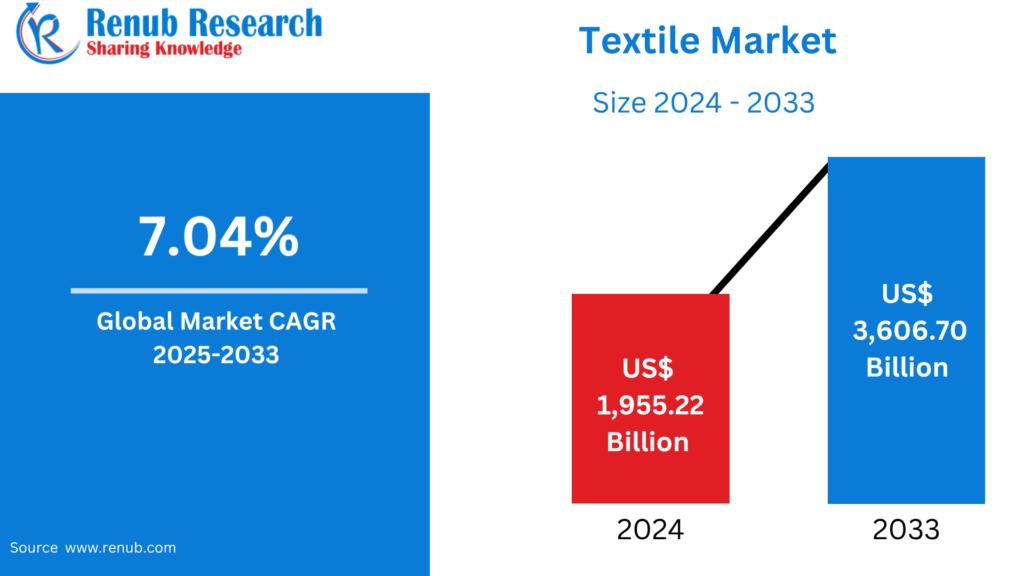
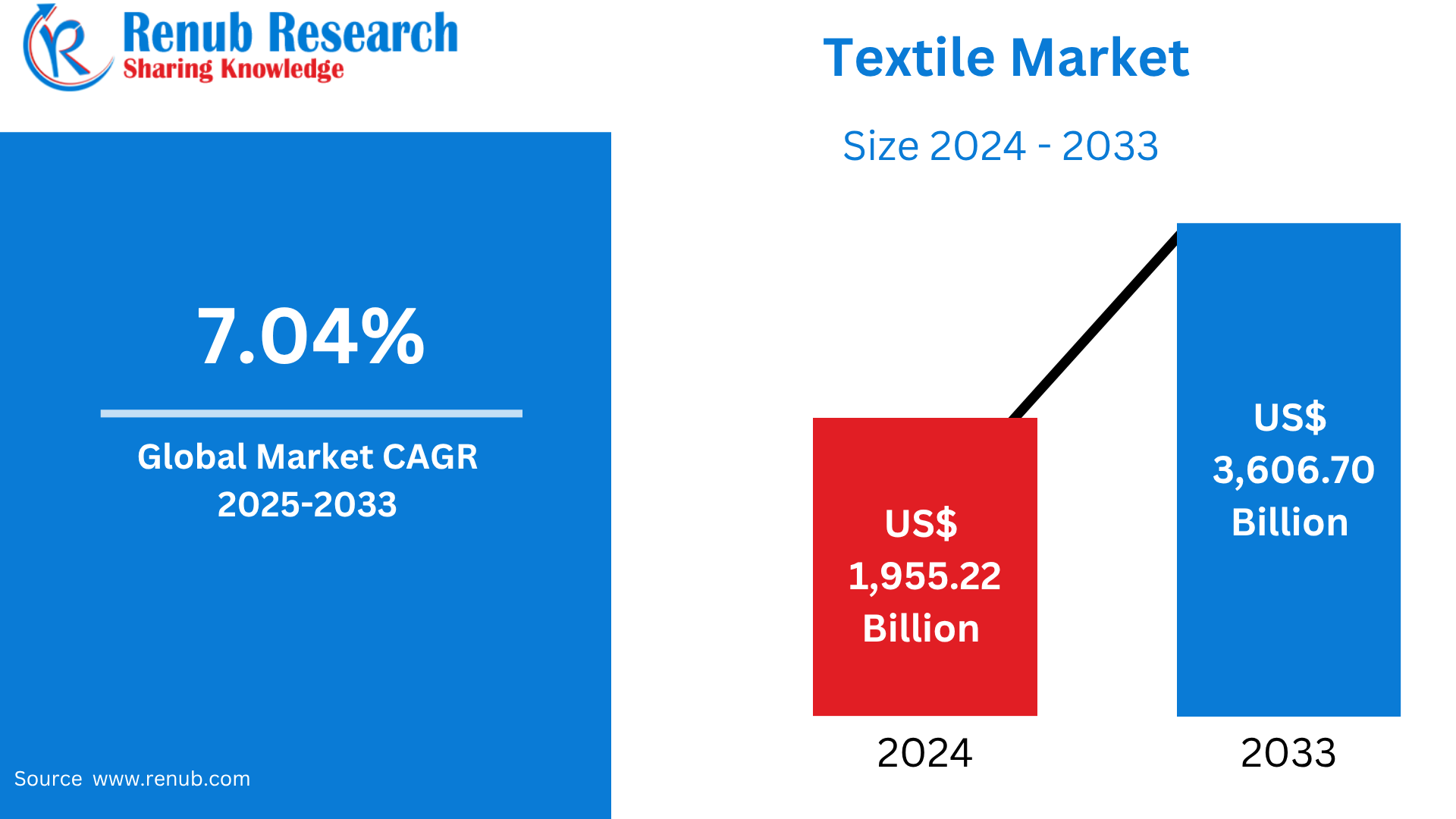
According to Renub Research Global Textile Market continues to expand as one of the world’s most dynamic and influential industries. The market is projected to increase from US$ 1,955.22 billion in 2024 to US$ 3,606.70 billion by 2033, growing at a CAGR of 7.04% between 2025 and 2033. Rising demand for apparel, home furnishings, and advanced technical textiles is fueling this growth, alongside evolving fashion trends, rapid urbanization, population expansion, and industrial applications of textiles across multiple sectors.
The global textile ecosystem is becoming more advanced with the integration of sustainable fibers, innovative manufacturing technologies, digital textile printing, automation, and smart fabric development. Emerging economies across Asia-Pacific, the Middle East, and Latin America are witnessing strong consumption and manufacturing capabilities, while North America and Europe remain leaders in innovation, sustainability initiatives, and luxury textile production. As lifestyle preferences evolve and sustainability becomes essential, the global textile market is set for continued diversification, modernization, and economic importance.
Download Free Sample Report:https://www.renub.com/request-sample-page.php?gturl=global-textile-market-p.php
Understanding the Textile Industry and Its Core Importance
Textiles are flexible materials created from interlacing fibers, yarns, or threads using methods such as weaving, knitting, braiding, or felting. These fibers can be natural such as cotton, silk, and wool, or synthetic including polyester, nylon, acrylic, and blended fabrics. Textiles are deeply rooted in human culture, economy, and daily life, ranging from fashion apparel and household use to industrial and technical functionality.
The largest share of textile consumption lies in the fashion and clothing industry, which caters to various cultural trends, climate requirements, lifestyles, and seasonal demands. Additionally, textiles play a vital role in home décor, including curtains, carpets, bedding, and upholstery. Beyond lifestyle, technical and functional textiles are widely used in sectors like healthcare (medical dressings and gowns), automotive (vehicle interiors), construction (geotextiles and insulation materials), aerospace, sportswear, defense, and agriculture.
Countries such as China, India, and Bangladesh dominate textile manufacturing due to low production costs, strong labor availability, and industrialization. Meanwhile, the United States and Europe remain the leaders in textile innovation, premium fashion, technical fabrics, and sustainable production initiatives.
Key Growth Drivers Strengthening the Global Textile Market
The global textile sector is expanding due to several transformative forces. The increasing global population enhances apparel demand, while rising incomes and fashion awareness create wider market opportunities. Urbanization has also led to higher consumption of home textiles, while industry modernization encourages growth in high-performance fabrics and technologically enhanced textile solutions.
Rising Demand from the Fashion and Apparel Industry
The fashion and apparel sector remains the most dominant growth driver for the textile market. Increasing consumer spending, rapidly evolving fashion cycles, and the widespread influence of social media and e-commerce are accelerating textile demand worldwide. Fast fashion trends, celebrity endorsements, online fashion platforms, and multicultural influences compel manufacturers to produce diverse textile styles, materials, and designs. Young consumers globally seek frequent wardrobe updates, supporting large-scale production of both natural and synthetic fibers.
Additionally, luxury fashion houses are also expanding textile innovation, introducing smart fabrics, premium blends, and eco-friendly materials. Fashion digitalization and online retail platforms make global apparel more accessible, strengthening textile usage in both developed and emerging economies.
Expansion of Technical and Industrial Textiles
Beyond fashion, technical textiles are transforming the global textile landscape. These include geotextiles, automotive fabrics, healthcare textiles, fire-resistant fabrics, filtration fabrics, aerospace materials, and high-performance industrial fabrics. They are known for durability, innovation, safety, and functional performance.
Rapid growth in infrastructure, medical advancements, automotive manufacturing, defense modernization, and construction particularly in Asia-Pacific, is increasing demand for industrial textiles. Investment in research, engineering, and fiber technology continues to improve strength, flexibility, resistance, and intelligent functionality in textiles. Governments worldwide are supporting industrial textile development due to its industrial significance and economic contribution.
Shift Toward Sustainable and Eco-Friendly Textiles
Sustainability is shaping the future of the textile industry. Growing environmental awareness, regulatory obligations, and conscious consumer behavior are pushing brands toward environmentally responsible textile production. Demand is increasing for organic cotton, biodegradable fibers, recycled polyester, low-impact dyes, water-efficient production, and circular fashion models.
Manufacturers are investing in eco-friendly materials, renewable production methods, waste recycling, and ethical labor systems. As governments introduce stricter policies on emissions, pollution, and waste management, sustainable textiles are no longer just an option but a necessity for global textile brands. This transition is opening vast long-term growth opportunities and stronger consumer trust.
Major Challenges Affecting the Global Textile Market
Despite enormous growth opportunities, the textile sector faces critical challenges. Environmental concerns remain prominent, as textile manufacturing consumes vast amounts of water, chemicals, energy, and raw materials. Fast fashion production often leads to pollution, waste accumulation, and ethical labor issues in manufacturing countries. Brands risk reputational and regulatory consequences unless sustainable reforms are implemented.
Raw material price fluctuations pose another challenge. Cotton, wool, polyester, dyes, and chemicals are sensitive to climate conditions, geopolitical tensions, trade restrictions, economic fluctuations, and supply chain disruptions. The COVID-19 pandemic exposed vulnerabilities in global logistics, leading to delays, price hikes, labor shortages, and production bottlenecks. Strengthening supply chain resilience, improving storage capacity, and diversifying sourcing strategies are now essential priorities for textile manufacturers.
Segment Analysis of the Global Textile Market
The textile market is segmented by raw materials, product type, and application. Cotton remains the most widely used textile fiber because of its softness, breathability, and biodegradability, dominating apparel, home textiles, and medical applications. Growing preference for organic cotton and sustainable farming is boosting this segment.
Wool textiles maintain strong demand due to their warmth, flexibility, and premium feel, especially for winter wear and luxury fashion. Natural fibers such as cotton, silk, jute, and hemp are experiencing a revival due to environmental benefits and increasing consumer preference for eco-friendly materials.
Polyester textiles remain the most dominant synthetic fiber category because of their affordability, strength, and versatility, widely used in sportswear, fashion, upholstery, and industrial use. Recycled polyester (rPET) is gaining rapid market acceptance due to environmental sustainability efforts.
From an application perspective, fashion and clothing hold the largest market share, followed by home textiles and technical textiles. The rise of digital fashion marketplaces, luxury branding, and fast fashion culture continues to elevate the importance of clothing textiles globally.
Regional Market Insights Across Leading Textile Economies
The United States textile market thrives on technological innovation, smart textiles, and strong consumer demand. Sustainability, reshoring initiatives, and high-value production are key trends supporting growth.
France remains a global hub for luxury fashion textiles, craftsmanship, and premium materials. The country is also investing heavily in sustainable textile development and green manufacturing practices.
India ranks among the world’s largest textile producers, driven by strong cotton production, abundant labor, large domestic consumption, export strength, and government programs like “Make in India.” Sustainable textiles and export growth significantly enhance India’s textile leadership.
Brazil benefits from a strong domestic textile market, robust cotton production, and rising fashion demand. Despite economic fluctuations, regional supply chains keep the textile sector resilient.
The UAE is evolving as a fashion distribution hub for the Middle East, supporting luxury apparel, technical textiles, and re-export activities. Dubai’s role as a global trade center strengthens textile trade networks.
Future Outlook of the Global Textile Market
The future of the global textile market is exceptionally promising. Increasing population, rising incomes, evolving lifestyles, and growing industrial applications will continue to drive market expansion. Innovation in smart fabrics, wearable technology, eco-friendly materials, automation, and advanced manufacturing systems will redefine industry standards.
Sustainability, technology integration, and diversified production strategies will remain at the core of textile industry transformation. As companies prioritize green production, enhanced durability, and consumer-centric innovation, the global textile market is expected to maintain strong growth momentum through 2033 and beyond.