Global Tilapia Market Size and Forecast 2025–2033
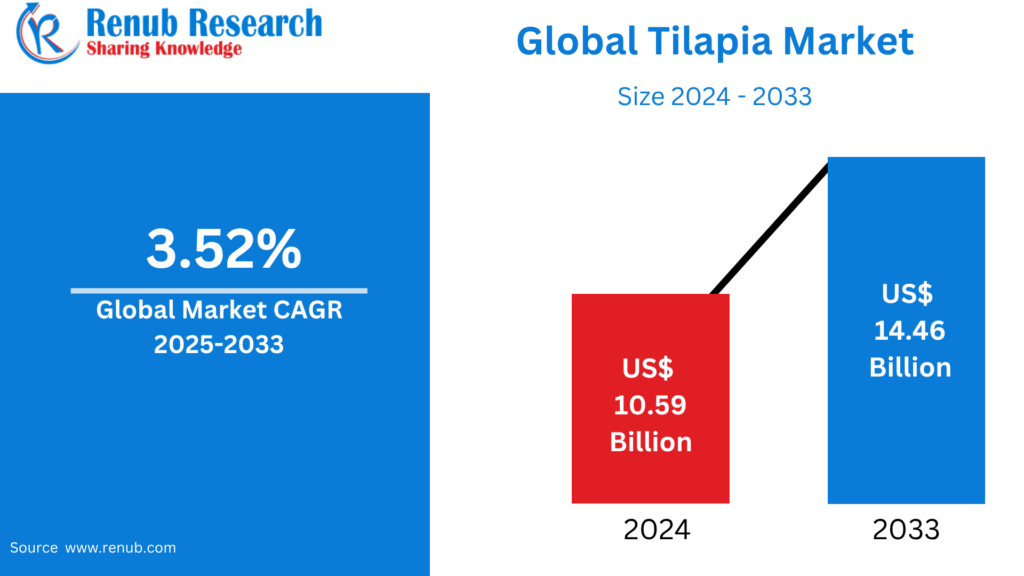
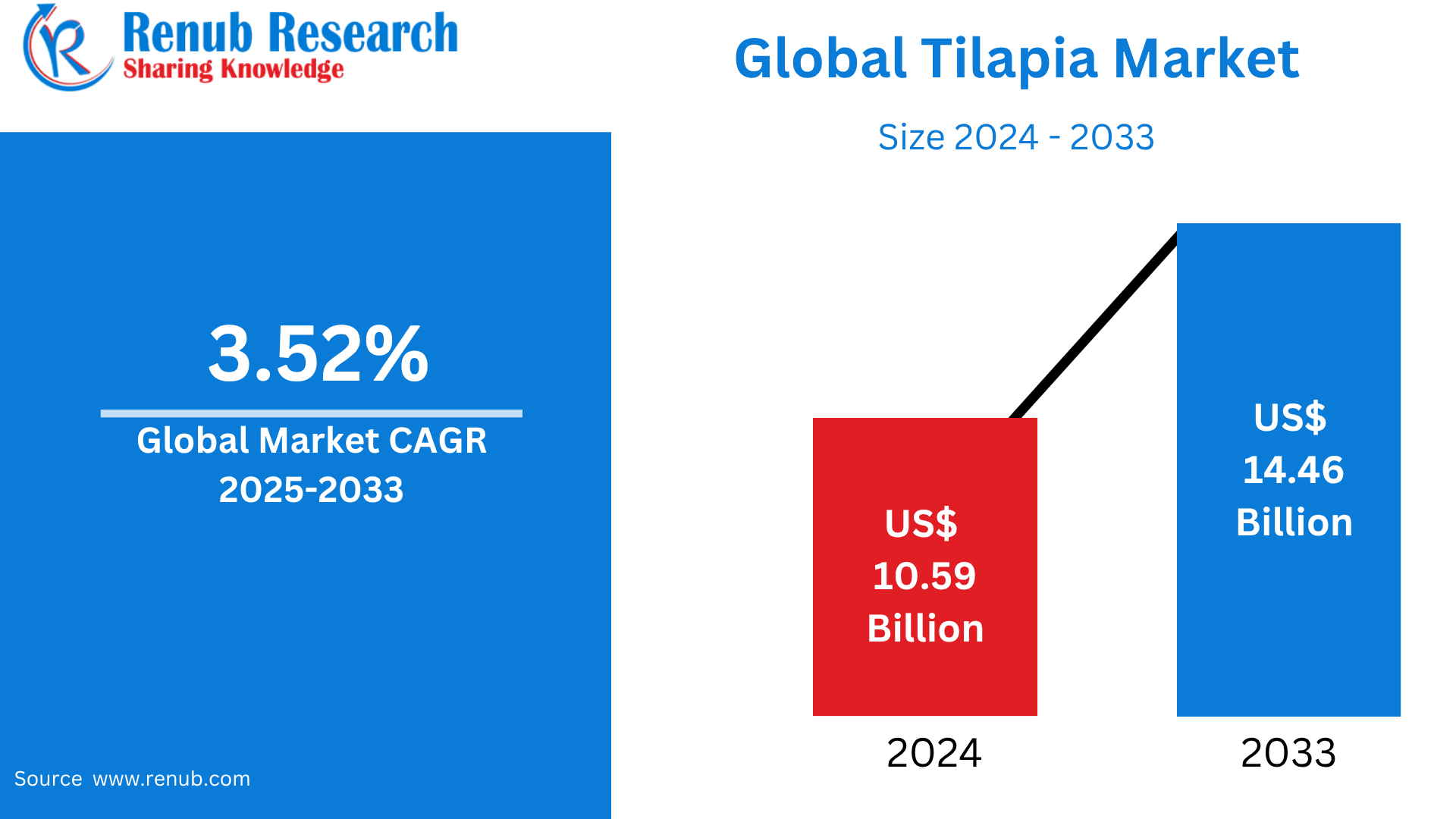
According to Renub Research global tilapia market is poised for steady and sustainable expansion in the coming years. The market value is projected to reach US$ 14.46 billion by 2033, rising from US$ 10.59 billion in 2024, and is expected to grow at a CAGR of 3.52% from 2025 to 2033. This growth is strongly supported by rising consumer demand for affordable protein sources, rapid aquaculture expansion, and increasing awareness about the nutritional benefits of tilapia. The fish’s adaptability, fast growth rate, and cost efficiency make it one of the most preferred farmed fish globally, especially in developing and emerging markets.
Global Tilapia Market Outlook and Growth Factors
Tilapia, a freshwater fish species originally native to Africa, has become one of the most widely farmed fish varieties across Asia, Latin America, and other parts of the world. Its mild taste, versatility in cooking, affordability, and nutritional value make it a staple in many diets. Consumers easily incorporate tilapia into grilled, fried, steamed, or baked recipes, while restaurants and food chains increasingly include it due to its high demand. Nutritionally, tilapia is rich in lean protein, vitamin B12, niacin, selenium, and low in fat, appealing to health-conscious individuals. Alongside its culinary demand, tilapia aquaculture strengthens food security, supports livelihoods, and contributes to sustainable economic growth in many regions.
Key Challenges Impacting the Global Tilapia Market
Despite its promising growth potential, the tilapia industry faces several challenges that require strategic attention. The first major challenge involves disease outbreaks, such as Streptococcus infections, which cause high mortality rates and financial losses for fish farmers. Inadequate biosecurity practices and overcrowded farming conditions increase disease transmission risks, particularly in low-regulation regions. Limited access to veterinary care and lack of standardized health protocols further intensify these risks. Continued investment in vaccination, research, and biosecure farming systems is essential for sustaining production and protecting profitability across the tilapia value chain.
Download Free Sample Report:https://www.renub.com/request-sample-page.php?gturl=global-tilapia-market-p.php
Environmental and Sustainability Concerns in Tilapia Aquaculture
Environmental impact remains another critical challenge in the market. Improper farming practices may lead to water contamination, nutrient buildup, and habitat disruption. Intensive aquaculture systems often struggle with waste management and feed efficiency, which may contribute to ecological degradation if not controlled effectively. Overuse of antibiotics also raises public health concerns and affects export compliance in strict regulatory markets. To overcome these issues, the global industry is shifting toward sustainable aquaculture practices, eco-friendly feed alternatives, stricter farming regulations, and advanced water-recirculation systems. These initiatives are essential for securing long-term environmental sustainability and maintaining consumer trust.
Germany Tilapia Market Analysis
Germany represents a niche yet steadily expanding segment of the global tilapia market. With increasing consumer emphasis on healthy, sustainable, and ethically sourced seafood, tilapia has gained stronger recognition. However, Germany largely depends on imports due to limited domestic aquaculture capacity. Major imports originate from nations such as China, Vietnam, and Indonesia, often carrying internationally recognized certifications like ASC to ensure quality and sustainability. The fish enjoys strong acceptance across retail chains and the foodservice sector because of its mild taste and preparation convenience. However, competition from other premium seafood varieties and preference for local fish can slightly restrain growth.
China Tilapia Market Overview
China stands as the largest producer and leading exporter of tilapia globally, significantly contributing to the international market supply. Benefiting from favorable climatic conditions, extensive aquaculture infrastructure, and strong governmental support, China manufactures and exports massive volumes of tilapia annually to major destinations such as the United States, Europe, and African countries. Domestically, the fish enjoys growing popularity due to its affordability and culinary versatility. However, the Chinese tilapia market also faces pressures from rising production costs, environmental compliance requirements, and competition from alternative seafood species. Continuous improvement in sustainability standards, farming technologies, and product quality will keep China at the forefront of global tilapia production.
Brazil Tilapia Market Growth Dynamics
Brazil has emerged as a dominant tilapia producer in Latin America and one of the fastest-growing markets globally. Supported by a favorable tropical climate, vast freshwater resources, and government initiatives promoting aquaculture, Brazil has rapidly expanded both domestic consumption and export output. Tilapia is highly valued locally for its affordability, nutritional richness, and adaptability in Brazilian cuisine. Brazil is also enhancing its international export footprint, particularly targeting Europe and North America. Challenges such as infrastructure gaps and environmental monitoring still exist; however, Brazil continues to invest in technological innovation, efficient feed solutions, and sustainable farming practices. Notably, the introduction of premium lines such as GenoMar in 2024 highlights the industry’s modernization efforts.
Saudi Arabia Tilapia Market Development
Saudi Arabia is witnessing significant growth in its tilapia market as the nation prioritizes food security and reduced import reliance under Vision 2030. Heavy investment in modern aquaculture systems, including Recirculating Aquaculture Systems (RAS), has strengthened local production capabilities. Tilapia fits well into Saudi dietary preferences thanks to its affordability, nutritional value, and culinary adaptability. Despite water scarcity challenges and higher production costs, Saudi Arabia continues to expand domestic farming initiatives, supporting self-sufficiency and developing a robust, sustainable tilapia industry.
Market Segmentation by Producing Countries
Major producing countries shaping the global tilapia supply include China, Indonesia, Brazil, Malaysia, Philippines, Vietnam, Thailand, Peru, Bangladesh, Colombia, Mexico, Costa Rica, and the United States. These regions dominate production due to favorable climatic conditions, government support, strong export infrastructures, and growing domestic seafood markets. Their collective contribution ensures stable supply, price balance, and consistent availability of tilapia across global markets.
Segmentation by Species and Product Types
The industry is segmented primarily into Nile Tilapia, Tilapias nei, and other species, with Nile Tilapia leading the global market because of its resilience, adaptability, and superior meat quality. In terms of product segmentation, the market is divided into Frozen Whole Tilapia, Fresh Fillet Tilapia, and Frozen Fillet Tilapia. Frozen tilapia products remain dominant in international trade due to longer shelf life and logistical convenience, while fresh fillets are especially popular in retail and restaurant sectors.
Regional Market Breakdown
The global tilapia industry spans multiple key markets across North America, Europe, Asia-Pacific, Latin America, the Middle East & Africa, and the Rest of the World. Major consuming countries include the United States, Canada, Germany, United Kingdom, France, Italy, Spain, Switzerland, Japan, China, India, South Korea, Indonesia, Australia, Mexico, Brazil, Argentina, Saudi Arabia, UAE, and South Africa. Each region demonstrates unique consumption trends influenced by dietary habits, pricing dynamics, trade regulations, and sustainability considerations.
Competitive Landscape of the Global Tilapia Market
The competitive environment of the tilapia industry involves leading seafood corporations and aquaculture giants focusing on innovation, sustainability, and supply chain strengthening. Major companies such as High Liner Foods Inc., Surapon Foods, Thai Union Group, Grieg Seafood, and Charoen Pokphand Foods remain central to industry transformation. These companies emphasize strategic expansions, product diversification, quality assurance, eco-friendly practices, and technological advancements to maintain competitive advantage and meet evolving global consumer expectations.
Future Outlook of the Global Tilapia Market
Looking ahead to 2033, the global tilapia market is expected to continue experiencing consistent growth driven by strong consumer demand, improved aquaculture technologies, sustainability initiatives, and expanding international trade. Increasing health awareness, affordability, and robust government support programs further enhance market stability. Regions such as Asia-Pacific, Latin America, and the Middle East will play critical roles in supply expansion. Meanwhile, stricter environmental regulations and improved farming standards will shape a more resilient, responsible, and profitable tilapia industry worldwide. The combination of economic opportunity, nutritional value, and sustainability ensures tilapia will remain a key contributor to the global seafood sector over the next decade.