Introduction
Gujarat Metro Satta is one of the many local matka markets that players follow closely for daily outcomes. For enthusiasts and curious readers alike, understanding Gujarat Metro Satta means more than glancing at a result — it means knowing how Day and Night results differ, how the market chart and jodi work, and how to read charts without getting lost in jargon. This post breaks down those components clearly and responsibly so you can confidently follow the market chart.
What is Gujarat Metro Satta?
Gujarat Metro Satta refers to Metro-style matka results tracked and published for players in Gujarat and surrounding regions. Like other matka markets, Gujarat Metro runs scheduled draws (often split into day and night timings) and publishes:
- Single-number results (commonly known as “panel” or “single”)
- Jodi (pair) results — two-digit pairs derived from the single numbers
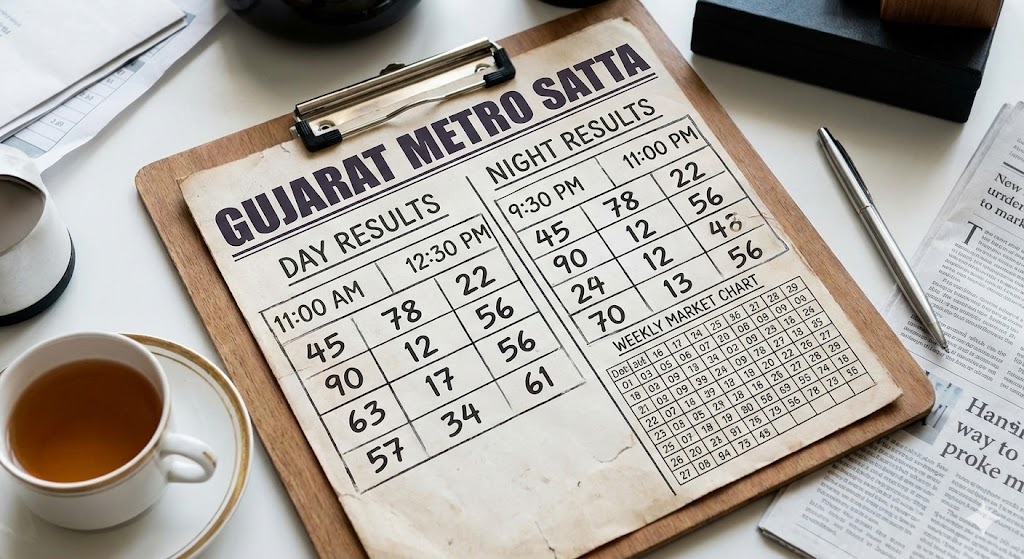
- Market charts — historical records showing past outcomes by date and time
While the tradition and terminology can vary by locality, the core idea remains: players monitor results and charts to track patterns and make choices.
Day vs Night Results — What’s the Difference?
Many metro matka markets run multiple draws per day. Gujarat Metro commonly has a Day draw and a Night draw. Key differences:
- Timing: Day draws happen earlier (often midday or afternoon); Night draws are scheduled later. Exact times depend on the local market schedule.
- Market Behaviour: Some players believe day and night results follow different rhythms; while not scientifically proven, communities track both separately.
- Charts & Records: Day and Night results are logged independently in the market chart so that you can review historical performance by session.
Knowing whether a result is a Day or Night draw is crucial when reading charts — mixing them can distort pattern observations.
Understanding the Market Chart
The market chart is the backbone of Gujarat Metro Satta tracking. It’s a dated list (or table) of previous results that usually includes:
- Date (exact day of the draw)
- Session (Day or Night)
- Result (single panel number or jodi)
- Panel chart entries (older charts may show additional columns like “open/close” or sequence numbers)
How to use the market chart:
- Locate the date & session you’re interested in (don’t mix day and night).
- Read the result format — some charts display a single number (e.g., 7) while others show a jodi (e.g., 23).
- Scan for repeats — charts show if numbers reappear frequently on particular sessions.
- Track streaks — consecutive appearances or long gaps are easy to spot on a chart.
Charts vary in style: some are simple text lists, others are visual panels with rows and columns. The important part is consistency — pick one format and use it regularly for comparison.
Jodi, Panel Chart & Terms Explained
- Jodi: A pair of digits treated as one outcome (for example, 23, 07). Jodi is commonly used in betting types where pairs are the winning unit.
- Panel Chart: A more detailed chart where each drawing’s components are broken into columns — useful for deeper pattern tracking.
- Open/Close or Day/Night Labels: Many charts include open/close fields or explicitly label day/night to prevent confusion.
Standard terms you might encounter: result, jodi, panel, chart, session, and old records. Understanding these helps when you inspect historical pages or community postings.
How to Read Gujarat Metro Market Charts — Step-by-Step
- Filter by session: Always separate Day and Night charts first.
- Note the date format: Charts may use different formats—ensure you match your local format (e.g., DD/MM/YYYY).
- Identify result type: Is it a single-digit panel or a two-digit jodi? Convert formats mentally when needed.
- Mark repeating numbers: Use a simple tick system (or spreadsheet) to mark numbers that reappear within a set timeframe.
- Compare a sample window: Analyse the last 30–50 draws to see short-term behaviour rather than one-off coincidences.
A spreadsheet or simple notebook helps — column headers like Date | Session | Result | Jodi | Notes make quick comparisons easy.
Responsible Note & Legal Reminder
Satta Matka, including local variants like Gujarat Metro Satta, involves gambling activities that may be illegal or restricted in some jurisdictions. This post is informational and aims to explain how results and charts are presented — it is not an encouragement to participate.
If you choose to engage:
- Know the legal status in your area.
- Set strict personal limits and avoid chasing losses.
- Treat historical charts as records — not guarantees.
- Seek help if gambling impacts your finances or wellbeing.
Where to Find Reliable Charts & Results
Official or community sources publish Gujarat Metro results and market charts. While formats differ, look for:
- Clear date/time labels (Day/Night)
- A consistent archive of past results (the more history, the better)
- Transparent display (no ambiguous shorthand)
If unsure, prefer sources with clear archives and consistent formatting so your tracking remains accurate.
Conclusion
Gujarat Metro Satta’s Day and Night results and market charts form the essential toolkit for anyone monitoring this regional matka market. By separating sessions, understanding jodi and panel charts, and using a consistent reading method, you can navigate historical records without getting lost in jargon. Remember: charts are tools for observation — they do not guarantee outcomes. Stay informed, stay legal, and play responsibly.