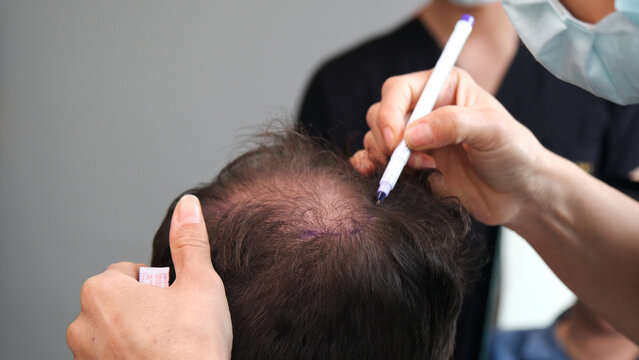
Hair loss affects millions of people worldwide and can have a significant impact on confidence and self-image. While hair thinning and baldness are common, the pattern, cause, and progression of hair loss are different for every individual. This is why modern hair transplant surgery focuses on personalized treatment plans rather than a one-size-fits-all approach.
Understanding Hair Loss
Hair loss can occur for many reasons, including:
-
Genetic factors (male or female pattern hair loss)
-
Hormonal changes
-
Medical conditions
-
Stress or lifestyle factors
-
Scalp trauma or scarring
Before considering a hair transplant, a thorough medical assessment is essential to identify the cause and determine whether surgery is the most suitable option.
What Is a Hair Transplant?
A hair transplant is a medical procedure in which healthy hair follicles are taken from a donor area (usually the back or sides of the scalp) and transplanted into areas experiencing thinning or baldness. The goal is to restore hair growth in a way that looks natural, balanced, and long-lasting.
Personalized Treatment Planning
Every successful hair transplant begins with customization. A tailored approach considers:
-
Your hair loss pattern and stage
-
Hair density and texture
-
Donor hair availability
-
Face shape and natural hairline
-
Age and future hair loss progression
By analyzing these factors, the surgeon designs a treatment plan that delivers natural results while preserving donor hair for the future.
Hair Transplant Techniques
Two of the most commonly used techniques include:
FUE (Follicular Unit Extraction)
-
Individual follicles are extracted and implanted
-
Minimal scarring
-
Faster recovery time
-
Suitable for many hair loss patterns
FUT (Follicular Unit Transplantation)
-
A strip of scalp is removed from the donor area
-
Allows transplantation of a larger number of grafts in one session
-
Typically chosen in specific cases
The choice of technique depends on individual needs and medical evaluation.
The Procedure and Recovery
Hair transplant surgery is usually performed under local anesthesia. Most patients return home the same day. Mild swelling or redness may occur, but these effects typically resolve within a few days.
New hair growth usually begins after 3–4 months, with noticeable improvement over time. Full results are commonly seen within 9–12 months.
Natural-Looking Results
When performed by an experienced medical professional, a hair transplant blends seamlessly with existing hair. Careful placement, correct angle, and proper density are key to achieving a natural appearance.
Is a Hair Transplant Right for You?
Hair transplant surgery is not suitable for everyone. A consultation with a qualified medical professional helps determine:
-
If you are a good candidate
-
Expected outcomes
-
Alternative or supportive treatments
Conclusion
Hair transplant surgery is an effective solution for many people experiencing hair loss, but the best results come from a personalized approach. By tailoring the procedure to your unique hair loss pattern and goals, modern hair restoration techniques can deliver natural, long-lasting outcomes while prioritizing safety and satisfaction.