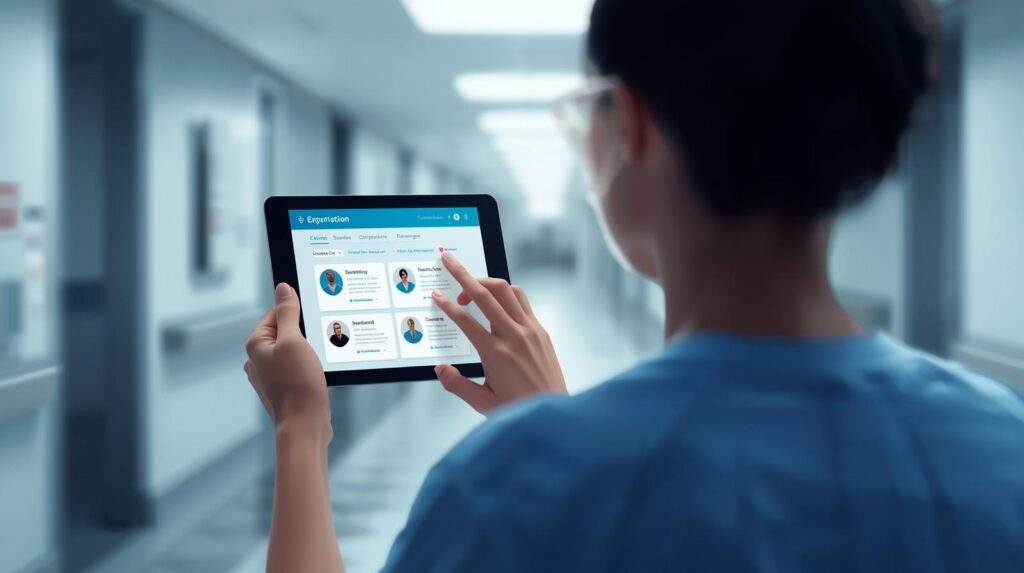
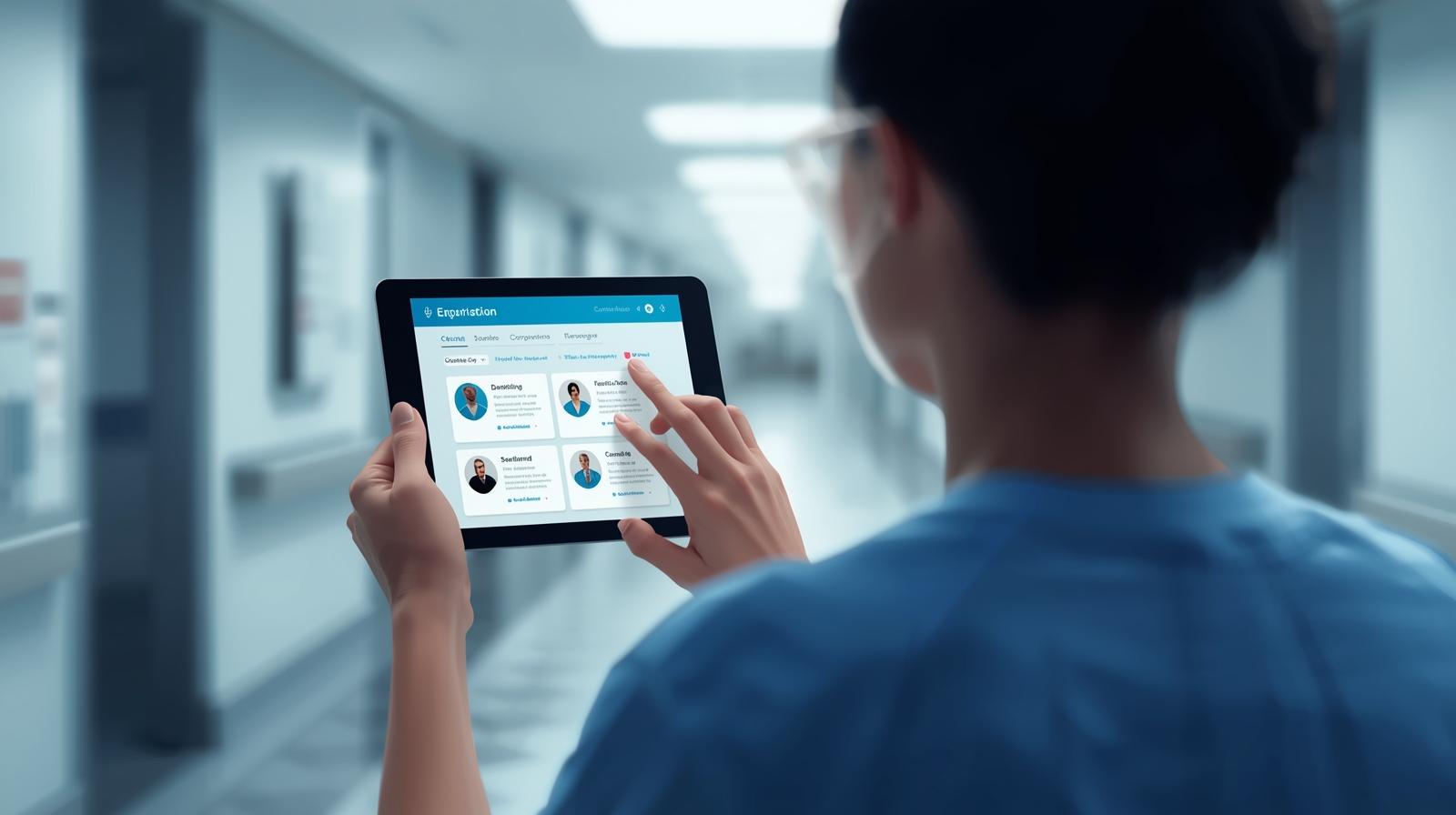
Introduction to Hospital Information Management System Mobile Apps
The current Hospital Information Management System is a crucial component in improving the performance and service delivery in hospitals. HMIS Software with mobile applications enables employees to retrieve and update information on patients, organize work, and track hospital operations outside the office. Through the adoption of AI in Hospital Information Management Systems, hospitals are able to make correct, secure and real-time operations. Role-based access in advanced Hospital Management Information Systems in Healthcare is to prevent sensitive data by providing the protection of sensitive data as well as to provide staff with only authorized access to the data, which enhances the efficiency of work, accountability, and patient safety across the department.
Role and Access Management in HIMS Mobile Apps for Hospitals
Role and Access Management is a critical feature of any Hospital Information Management System. In mobile apps, it provides that each hospital staff can only access modules and other information that is required to their job. With the HMIS Software and AI being incorporated in the Hospital Information Management Systems, hospitals are able to operate safely, trustingly, and in compliance. This practice will empower the Hospital Management Information System in Healthcare, which will guarantee the security of patient information and efficient operations.
Mobile Apps Access Control
A Hospital Information Management System is an app that includes mobile apps, which can be assigned permission, track usage, and impose compliance. Employees are able to access only the modules they need in their work, which minimizes the chances of making mistakes and acting out.
Artificial Intelligence Security Solutions
The use of AI in Hospital Information Management Systems ensures that the access control is dynamic. It identifies any suspicious activity, identifies unauthorized attempts, and tracks audit trails, which makes sure that the sensitive hospital data is in safe hands and the operations are trustworthy.
The Main Advantages of Role-Based Access Management
- Protects vulnerable patient and hospital information.
- Allows administrators to create role-based access.
- Eliminates unauthorized changes or access.
- Offers compliance and monitoring audit trails.
Diet Management in Hospital Information Management System via Mobile Apps
Diet management is an essential part of patient care, as it guarantees that patients get the right nutrition depending on the information about their medical conditions. A Hospital Information Management System with mobile applications gives the hospital the capability to manage diets effectively, remotely and safely. HMIS Software and AI in Hospital Information Management Systems will enable hospitals to organize the process of meal planning, monitor patient dietary preferences, and keep the records accurate and protect sensitive information by using role-based access.
Remote Control of Diets of Patients
A Hospital Information Management System mobile apps enable nutritionists and other nursing personnel to track patient diets wherever they are. With HMIS Software, hospitals are able to plan meals, modify real-time dietary plans, and monitor medical nutrition compliance. This will guarantee proper and timely dietary interventions to the patients.
Artificial Intelligence-based Dietary Optimization
AI in Hospital Information Management Systems improves the diet management process, processing patient health information and creating the most ideal meal plans. It alerts any discrepancies, advises changes and assists Hospital Management Information Systems in Healthcare to ensure that dietary records are accurate. This minimizes mistakes, enhances patient outcomes, and guarantees operational efficiency.
Role-Based Access of Dietitians and Nurses
Role-based access will also guarantee that only qualified personnel, i.e., dietitians and nurses, can access and alter diet plans in the Hospital Information Management System. This access control reduces the number of errors, avoids unauthorized modifications, and enhances accountability throughout the hospital workflow.
Email, WhatsApp, and SMS in Hospital Information Management System
One of the hospital operations is communication. A Hospital Information Management System can use mobile apps that combine SMS, WhatsApp, and Email to provide instant notifications and coordination. HMIS Software enables employees to send appointment notices, medication processes, and administrative messages to patients and coworkers.
Hospital Information Management Systems with AI improves these features by automating the message dispatching, the message delivery monitoring, and the response patterns analysis to deliver timely communication. In the context of Hospital Management Information Systems in Healthcare, this integration eliminates any form of delays, miscommunication, and enhances interaction with patients.
Benefits of Role-Based Messaging
- Sends sensitive data to authorized individuals.
- Sends notifications on updates and important occurrences in real time.
- Supports compliance with hospital communication protocols.
- Strengthens health management information system workflows.
Hospitals using HMIS in India increasingly adopt messaging features from HMIS software companies in India to enhance operational efficiency and ensure secure communication.
ABDM Integration with Hospital Information Management System Mobile Apps
ABDM has transformed digital healthcare management in India. A Hospital Information Management System integrated with ABDM ensures standardization, interoperability, and accurate patient identification. HMIS Software supports ABDM by enabling data exchange across hospitals while maintaining security and compliance.
In Hospital Information Management Systems with AI, the ABDM modules are automatically validated and make sure the patient records are correct and consistent. Role-based access will provide security to the sensitive information as staff has access to only pertinent ABDM data based on their roles.
Advantages of ABDM Integration
- Enhances cross-hospital patient record synchronization
- Prevents unauthorized access to national health data
- Strengthens Hospital Management Information Systems in Healthcare workflows
- Supports hospitals in meeting compliance standards
Leading HMIS software companies in India develop ABDM-ready solutions, and hospitals adopting the best HMIS software in India benefit from secure, scalable, and integrated digital health management.
Mobile Apps in HMIS Software for Hospital Staff
Mobile applications are extensions of a Hospital Information Management System, which enable employees to conduct major tasks regardless of their location. By using HMIS Software, clinicians, nurses, and administrators are able to analyze patient information, update records, accept packages, and even regulate daily operations.
Hospital Information Management Systems use AI to improve mobile applications by identifying suspicious activities, automatically granting approvals, and providing intelligent decision support. Role-based access also means that the staff can only have access to the modules and data they need regarding their duties, which can help minimize mistakes and enhance the safety of patients.
Hospitals using the best HMIS software in India rely on mobile apps from top HMIS software companies in India to improve efficiency, reduce delays, and maintain secure health management information system operations.
Blood Bank Management in Hospital Information Management System via Mobile Apps
Blood Bank management is a critical function requiring precision, traceability, and strict compliance. A Hospital Information Management System with mobile apps enables real-time monitoring of donor records, blood inventory, compatibility checks, and release processes.
HMIS Software ensures that inventory and donor data are updated automatically, while AI in Hospital Information Management Systems predicts demand, manages stock levels, and flags potential mismatches. Role-based access allows only authorized staff to approve blood releases or update inventory, ensuring patient safety and compliance with regulations.
Within Hospital Management Information Systems in Healthcare, mobile apps improve efficiency, reduce errors, and enable secure health management information system management for blood bank operations. Hospitals using HMIS in India increasingly rely on solutions provided by HMIS software companies in India to automate and optimize blood bank workflows.
Role and Access Management Highlights (Bullet Points)
- Secures mobile access across all HIMS modules
- Patient or operational information is changed by the nurses who are authorized only
- Gives complete audit trail on regulatory compliance
- Enhances accountability across Hospital Management Information Systems in Healthcare
- Supports operational efficiency while safeguarding sensitive information
Conclusion
A Hospital Information Management System is an essential tool for enhancing the workflow, the care provided to patients, and the security of operations with the help of mobile apps. The use of AI in Hospital Information Management Systems and role-based access using HMIS Software allows hospitals to make sure that every staff member can execute their responsible duties safely and efficiently. From diet management to messaging, ABDM, and blood bank operations, mobile apps strengthen Hospital Management Information Systems in Healthcare, making hospitals more secure, efficient, and capable of delivering high-quality patient care. Hospitals using the best HMIS software in India benefit from reliable, scalable, and secure mobile-enabled systems.