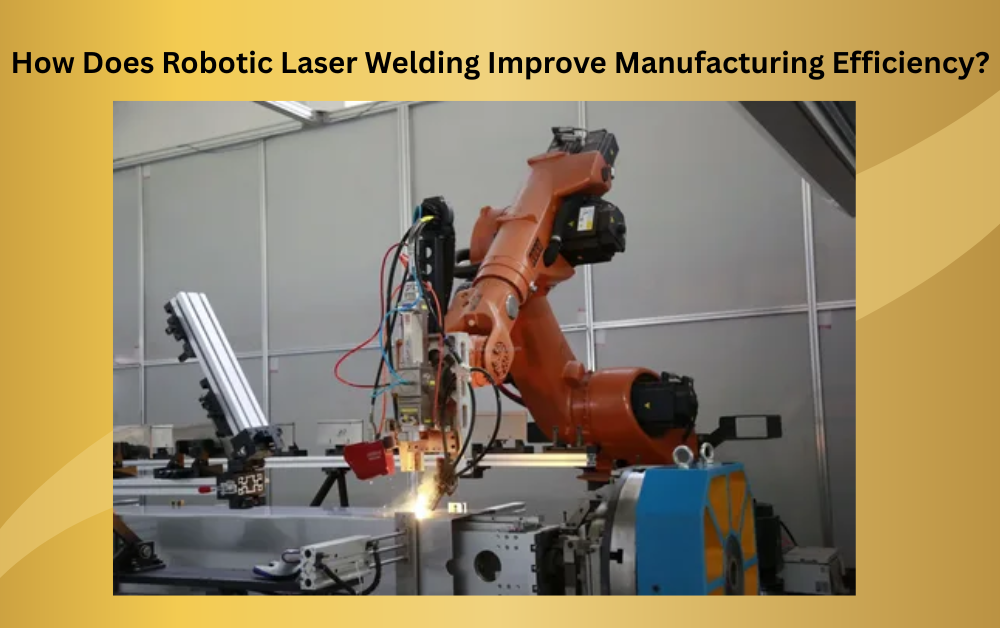
In today’s fast-moving manufacturing world, efficiency and precision are more important than ever. Companies are looking for ways to produce more, reduce errors, and save time. One technology that is making a huge difference is robotic laser welding. This advanced welding process combines the power of lasers with robots to create stronger, faster, and more accurate welds. In this article, we will explore how robotic laser welding improves manufacturing efficiency and why it is becoming a top choice for modern factories.
What is Robotic Laser Welding?
Robotic laser welding is a type of welding where robots use high-powered lasers to join materials together. Unlike traditional welding, which relies on manual skills and often takes longer, robotic laser welding uses precise machines to make accurate and fast welds. The process can work on many types of metals and materials, including steel, aluminum, and even special alloys.
The robot follows a programmed path, ensuring every weld is exactly the same. The laser creates a concentrated heat source, which melts the metal and fuses it together. This precision reduces mistakes and improves the quality of the finished product.
The Key Advantages of Robotic Laser Welding
Robotic laser welding offers several benefits that directly improve manufacturing efficiency. Let’s break them down:
1. Faster Production Speeds
One of the biggest advantages of robotic laser welding is speed. Robots can work continuously without breaks and can weld materials much faster than humans. Traditional welding may take more time due to the need for setup, adjustments, and manual operation.
With robotic laser welding, the robot can complete long and complex welds in minutes. This means more products can be made in the same amount of time, increasing overall productivity.
2. Improved Accuracy and Consistency
Human welders may sometimes make mistakes, especially on long or complicated projects. Even small errors can affect the quality and strength of the product. Robots, however, follow precise programming, which ensures every weld is exactly the same.
This consistency reduces the risk of weak spots, defects, or failures in the final product. When a factory uses robotic laser welding, they can maintain high-quality standards across every item they produce.
3. Reduced Material Waste
In manufacturing, wasting materials is costly. Traditional welding methods may cause excess melting, sparks, or uneven joins that ruin the material. Robotic laser welding uses a focused laser beam that melts only the necessary area, which reduces material waste.
Less waste means lower production costs and a more efficient use of resources. This is good for both the factory and the environment.
4. Lower Labor Costs
Robotic laser welding reduces the need for manual labor in welding processes. While skilled operators are still required to program and maintain the robots, the actual welding work can be automated.
This reduces labor costs and allows workers to focus on more complex or creative tasks instead of repetitive welding. By combining human skills with robotic efficiency, companies can operate more smoothly and cost-effectively.
5. Safer Working Conditions
Welding can be dangerous. It involves high heat, sparks, fumes, and sometimes harmful radiation. Robotic laser welding keeps workers away from the direct welding area, reducing the risk of accidents or health hazards.
Safer working conditions mean fewer workplace injuries, less downtime, and a more productive workforce. Safety improvements also help companies follow regulations and maintain a positive work environment.
Applications of Robotic Laser Welding in Manufacturing
Robotic laser welding is used in many industries because it is versatile and reliable. Here are some common applications:
Automotive Industry
Car manufacturers use robotic laser welding to produce car frames, exhaust systems, and other parts. The precision and speed of robots allow them to meet high production demands while maintaining strong and safe welds.
Aerospace Industry
In aerospace, safety and precision are critical. Robotic laser welding helps produce aircraft components that are strong, lightweight, and reliable. Even small errors can be dangerous in this industry, so automation is essential.
Electronics and Electrical Components
Small and delicate parts, like circuits and batteries, require exact welding. Robotic laser welding provides the accuracy needed without damaging sensitive components.
Construction and Heavy Equipment
Robotic laser welding is also used to produce heavy machinery and construction equipment. Robots can weld thick metals and complex structures quickly, improving efficiency in these large-scale projects.
How Robotic Laser Welding Boosts Efficiency Step by Step
To understand its impact fully, let’s see how robotic laser welding improves efficiency step by step:
Step 1: Fast Setup and Programming
Robots are programmed with exact welding paths and instructions. This reduces the time spent on setup and trial-and-error adjustments that are common in manual welding.
Step 2: Consistent Weld Quality
Once programmed, the robot performs every weld with the same precision. There is no fatigue or variation, which ensures uniform quality and reduces rework.
Step 3: Minimal Material Waste
The laser only targets the necessary area, which saves material. Fewer mistakes mean less scrap and fewer replacements.
Step 4: Continuous Operation
Robots can operate 24/7 with minimal supervision. This continuous operation increases production volume without compromising quality.
Step 5: Reduced Human Intervention
Fewer manual tasks mean workers can focus on other important processes, like inspection, assembly, or maintenance. This multitasking improves overall factory efficiency.
Challenges and Considerations
While robotic laser welding offers many advantages, there are some challenges to consider:
-
High Initial Investment: Setting up robotic laser welding requires expensive machines and training. However, the long-term savings and efficiency gains often outweigh the initial costs.
-
Programming Complexity: Robots need precise programming, which may require skilled technicians.
-
Maintenance: Machines require regular maintenance to ensure smooth operation and prevent downtime.
Despite these challenges, many manufacturers find that the benefits of robotic laser welding far outweigh the drawbacks.
Conclusion
Robotic laser welding is transforming modern manufacturing by combining speed, precision, and safety. It helps companies produce high-quality products faster, with less waste and lower labor costs. From cars to airplanes and electronics, robotic laser welding is proving to be an essential tool for industries that want to stay competitive.
By adopting this technology, manufacturers can increase efficiency, reduce errors, and maintain consistent quality. As industries continue to evolve, robotic laser welding will play an even bigger role in shaping the future of production.
In simple terms, robotic laser welding is not just about joining metals—it’s about making manufacturing faster, safer, and more efficient. Companies that invest in this technology can enjoy higher productivity, lower costs, and stronger, more reliable products.
For more insightful articles related to this topic, feel free to visit: newsglo.com