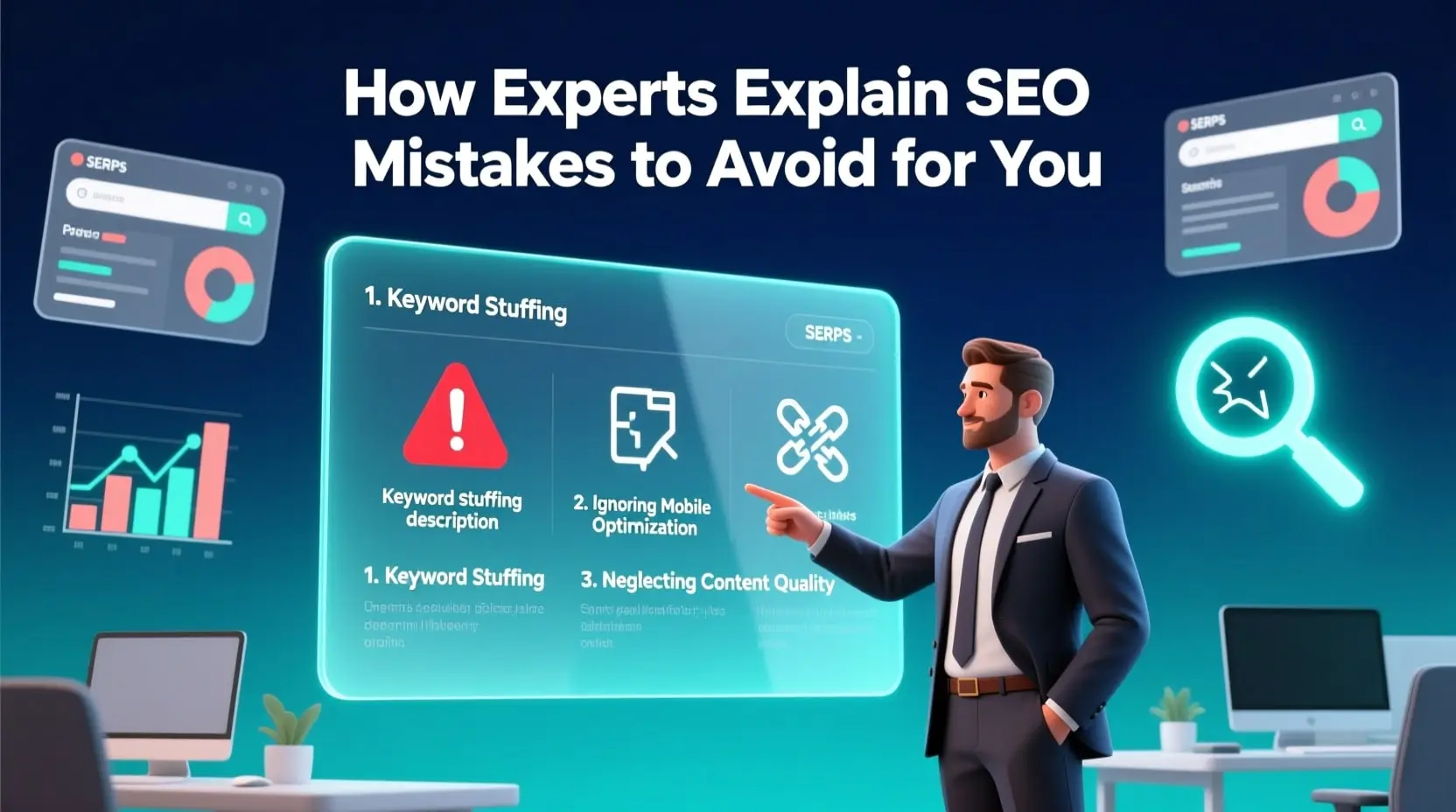
Search engine optimization remains one of the most powerful digital marketing strategies available today. However, many website owners and marketers continue to struggle with achieving desired results because they unknowingly commit errors that damage their rankings. Understanding SEO mistakes to avoid is crucial for anyone serious about building a strong online presence and driving organic traffic to their website.
The digital landscape constantly evolves, and what worked yesterday might not work today. Industry professionals have spent years analyzing patterns, testing strategies, and learning from failures. Their collective wisdom provides invaluable insights that can save you time, money, and frustration while helping you achieve sustainable search engine success.
Common SEO Mistakes to Avoid According to Industry Professionals
Experts consistently point out several recurring errors that plague websites across all industries. One of the most damaging mistakes involves neglecting proper keyword research before creating content. Many website owners simply guess what their audience searches for instead of using data-driven tools to identify actual search queries.
Another critical error involves targeting keywords that are either too competitive or completely irrelevant to your business goals. Professionals recommend finding a balance between search volume and competition while ensuring alignment with user intent. This approach maximizes your chances of ranking while attracting visitors who genuinely need your products or services.
Ignoring Technical Website Issues
Behind every successful website lies a solid technical foundation. Many site owners focus exclusively on content creation while completely ignoring technical aspects that search engines consider essential for ranking. Page speed, mobile responsiveness, and proper indexing represent fundamental elements that cannot be overlooked.
Slow-loading pages frustrate visitors and signal to search engines that your site provides a poor user experience. Experts recommend regularly auditing your website using tools like Google PageSpeed Insights and addressing any issues promptly. Similarly, with mobile devices accounting for the majority of internet traffic, having a mobile-friendly design is no longer optional but mandatory.
Broken links, crawl errors, and duplicate content issues also fall into this category. These problems prevent search engine bots from properly understanding and indexing your content, directly impacting your visibility in search results.
Creating Thin or Low-Quality Content
Content remains king in the digital world, but not all content delivers equal value. Publishing thin, poorly researched, or duplicated content represents one of the fastest ways to lose credibility with both users and search engines. Experts emphasize that quality always trumps quantity when building a content strategy.
Each piece of content you publish should provide genuine value to readers. This means thoroughly researching topics, offering unique perspectives, and addressing questions your audience actually has. Search engines have become incredibly sophisticated at evaluating content quality, making it impossible to succeed with shallow or keyword-stuffed articles.
Professional content creators recommend focusing on comprehensive guides, in-depth analyses, and genuinely helpful resources that establish your authority within your niche. This approach naturally attracts backlinks and social shares, further boosting your search engine performance.
Overlooking User Experience Signals
Modern search algorithms heavily weight user experience factors when determining rankings. Websites that frustrate visitors through poor navigation, intrusive advertisements, or confusing layouts inevitably suffer in search results. Experts stress the importance of designing websites primarily for human users rather than search engine bots.
Bounce rate, time on page, and pages per session all provide signals about how users interact with your content. If visitors immediately leave after arriving, search engines interpret this as a sign that your page failed to satisfy their query. Improving user experience involves creating intuitive navigation, using readable fonts, incorporating visual elements appropriately, and ensuring fast load times.
Additionally, accessibility considerations matter more than ever. Websites that accommodate users with disabilities not only serve a wider audience but also tend to perform better in search rankings due to their improved overall usability.
Neglecting Link Building Strategies
Backlinks continue to serve as one of the strongest ranking factors in search algorithms. However, many website owners either completely ignore link building or approach it incorrectly. Some resort to purchasing links or participating in link schemes, which can result in severe penalties from search engines.
Experts recommend earning links through creating genuinely valuable content that others naturally want to reference and share. Guest posting on reputable websites, building relationships with industry influencers, and creating shareable resources like infographics or research studies represent legitimate strategies that yield long-term results.
Internal linking also deserves attention. Properly connecting related content within your own website helps search engines understand your site structure while guiding visitors to additional relevant information.
Failing to Track and Analyze Results
Flying blind represents one of the most frustrating mistakes website owners make. Without proper tracking and analytics, you cannot determine which strategies work and which waste resources. Experts unanimously agree that data-driven decision-making separates successful websites from struggling ones.
Setting up Google Analytics and Google Search Console provides essential insights into traffic patterns, keyword performance, and technical issues affecting your site. Regular monitoring allows you to identify trends, spot problems early, and adjust strategies based on actual performance data rather than assumptions.
Beyond basic metrics, professionals recommend tracking conversions and user behavior to understand the complete picture of how search traffic impacts your business goals.
Moving Forward with Confidence
Learning from expert guidance accelerates your journey toward search engine success. By understanding and actively avoiding these common pitfalls, you position your website for sustainable growth and improved visibility. Remember that SEO represents a long-term investment rather than a quick fix.
Implementing the strategies outlined above while steering clear of SEO mistakes to avoid will help you build a solid foundation for organic traffic growth. Stay committed to continuous learning, remain patient with results, and always prioritize providing genuine value to your audience. With dedication and the right approach, achieving your search engine optimization goals becomes an attainable reality that transforms your online presence and drives meaningful business results.