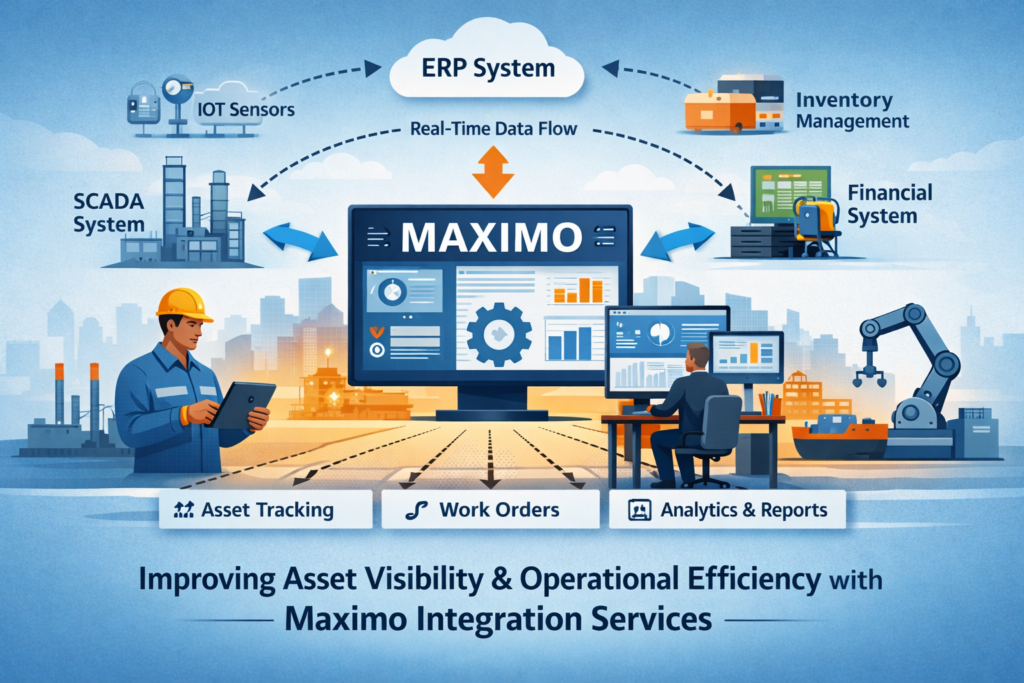
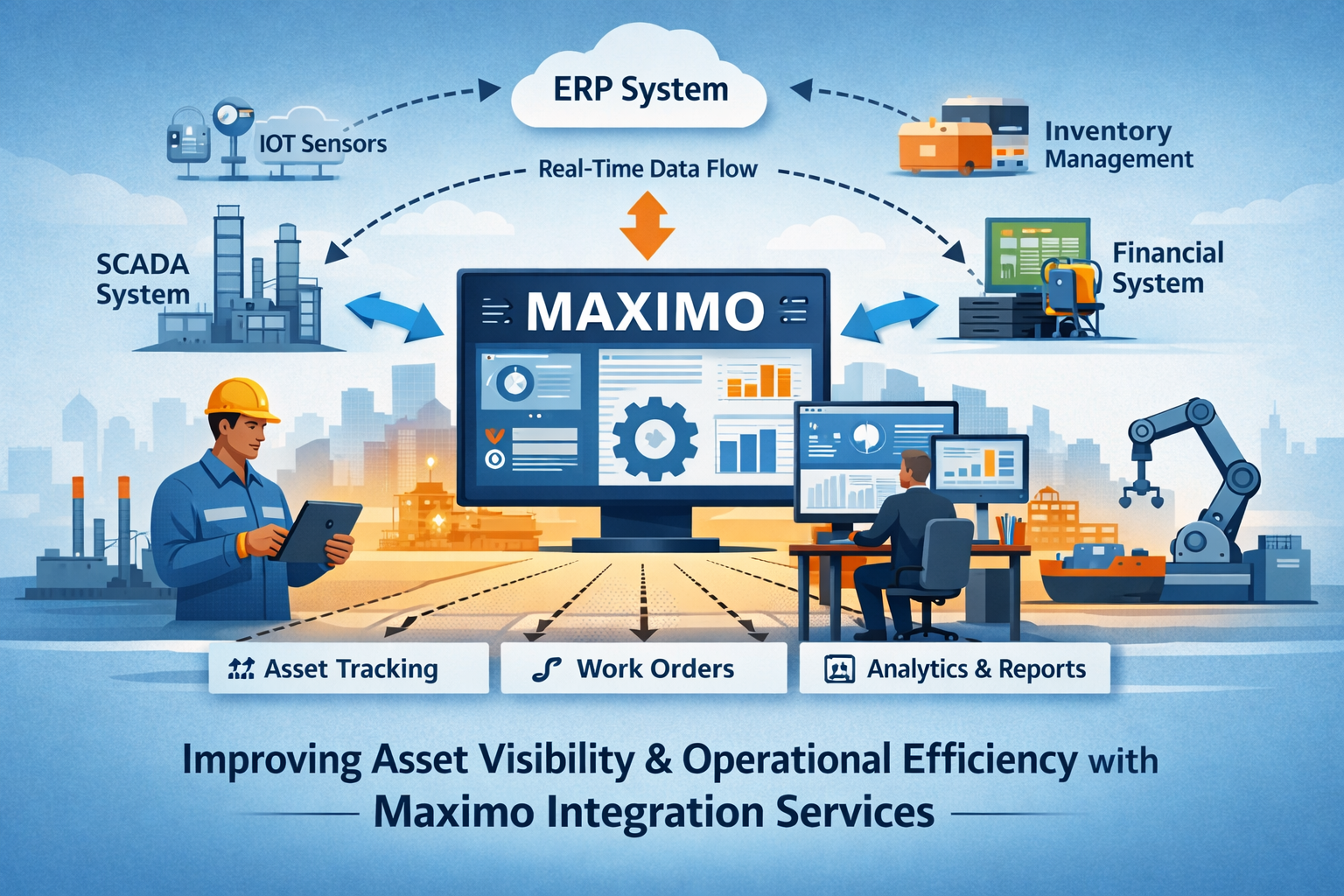
In today’s asset-intensive industries, enterprises operate within complex ecosystems of systems, data sources, and operational tools. While IBM Maximo remains the backbone of enterprise asset management, its true value is unlocked only when it works seamlessly with other business systems. This is where Maximo Integration Services play a critical role.
By enabling real-time data exchange and system connectivity, Maximo Integration Services significantly enhance asset visibility and operational efficiency across the enterprise.
The Challenge of Fragmented Asset Data
Many organizations struggle with siloed systems such as ERP platforms, inventory tools, condition monitoring systems, and third-party applications. When asset data is scattered across disconnected platforms, teams face:
- Limited real-time visibility into asset health
- Delayed maintenance decisions
- Inaccurate reporting and planning
- Increased downtime and operational risk
Without integration, Maximo functions as a standalone system rather than a centralized asset intelligence platform.
What Are Maximo Integration Services
Maximo Integration Services enable seamless communication between IBM Maximo and other enterprise systems using APIs, middleware, and Maximo Integration Framework (MIF). These services ensure that asset data flows consistently and securely across platforms, providing a unified view of asset performance and lifecycle status.
Through effective integration, Maximo becomes a single source of truth for asset-related decision-making.
Improving Asset Visibility Through Integration
Real-Time Asset Data Synchronization
Integrated systems ensure that asset status, work orders, inventory levels, and performance metrics are updated in real time. Operations and maintenance teams gain instant access to accurate data, eliminating manual updates and data discrepancies.
Unified Asset Lifecycle View
Maximo Integration Services connect data from design, procurement, operations, and maintenance systems. This creates a complete asset lifecycle view, allowing enterprises to track asset history, performance trends, and cost impact from acquisition to retirement.
Enhanced Reporting and Analytics
With integrated data streams, Maximo can deliver more accurate dashboards and performance insights. Leaders can make informed decisions based on reliable, consolidated data rather than fragmented reports.
Driving Operational Efficiency with Maximo Integration Services
Faster Maintenance Response
Integration between Maximo, monitoring tools, and IoT platforms enables condition-based and predictive maintenance. Alerts and asset readings automatically trigger work orders, reducing response time and unplanned downtime.
Optimized Resource Utilization
When Maximo is integrated with ERP and inventory systems, maintenance teams can plan work more effectively. Technicians have visibility into spare parts availability, labor schedules, and asset priorities, resulting in improved productivity.
Reduced Manual Effort and Errors
Automated data exchange eliminates repetitive manual tasks such as data entry and reconciliation. This reduces human error and allows teams to focus on higher-value operational activities.
Role of IBM Maximo Technical Support in Integration Success
While Maximo Integration Services define the architecture and connectivity, IBM Maximo Technical Support plays a vital role in ensuring long-term stability and performance. Technical support helps organizations:
- Troubleshoot integration failures and performance issues
- Maintain secure and compliant data exchanges
- Optimize APIs and MIF configurations
- Support upgrades and system changes without disruption
Strong technical support ensures that integrations continue to function reliably as business requirements evolve.
Integration as a Strategic Advantage
Enterprises that invest in robust Maximo Integration Services move beyond basic asset management. They gain real-time operational intelligence, improved collaboration across departments, and the agility to adapt to changing business demands.
As digital transformation accelerates, integration is no longer optional. It is a strategic enabler of asset visibility, operational efficiency, and enterprise resilience.
Conclusion
Maximo Integration Services empower organizations to unlock the full potential of IBM Maximo by connecting systems, unifying data, and enabling smarter decisions. When supported by reliable IBM Maximo Technical Support, these integrations deliver sustainable improvements in asset visibility and operational efficiency.
For asset-intensive enterprises, integration is not just a technical initiative—it is a foundation for long-term operational excellence.