Water damage can happen in minutes, but the consequences can last for months. A burst pipe, heavy rain, or an overflowing appliance may seem manageable at first glance. However, delays in action can quickly turn a small issue into a costly repair. The timing of your response directly affects structural integrity, indoor air quality, and long-term repair expenses.
–
Introduction
The first few hours after water exposure are critical. Many property owners underestimate how fast moisture spreads beneath flooring, behind walls, and into insulation. Effective water damage restoration depends heavily on how quickly excess moisture is removed and surfaces are dried. Acting immediately not only reduces structural damage but also plays a major role in preventing mold growth, which can begin much sooner than most people realize.
Why Immediate Action Is Critical After Water Damage
Time is the most important factor when dealing with indoor flooding or leaks. Water damage restoration becomes more complex the longer moisture remains inside a building. Within minutes, water begins soaking porous materials like drywall, wood, and carpeting. Within hours, paint can blister, furniture can swell, and odors may start developing. Acting quickly limits how deeply water penetrates surfaces and reduces the scale of necessary repairs.
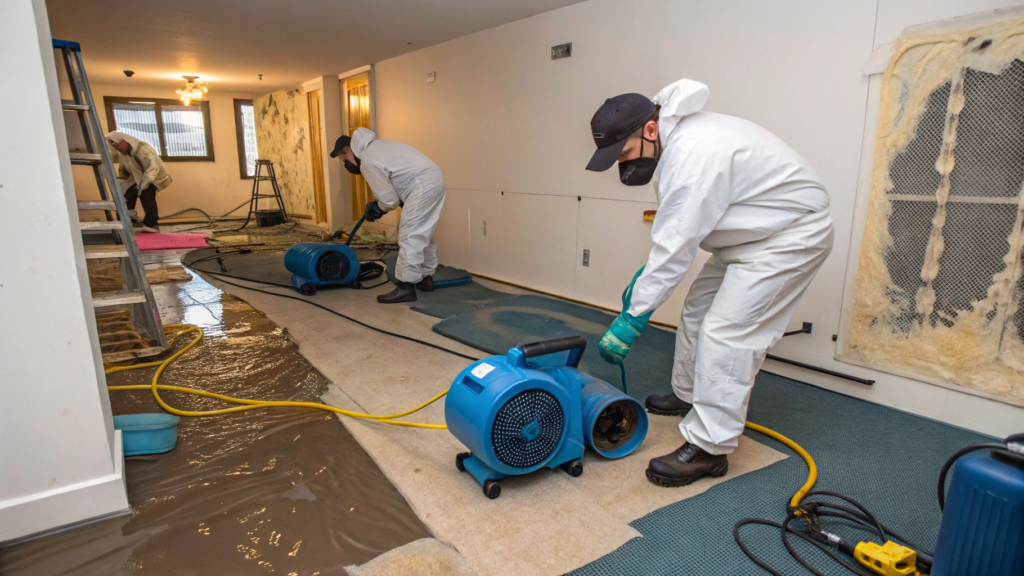
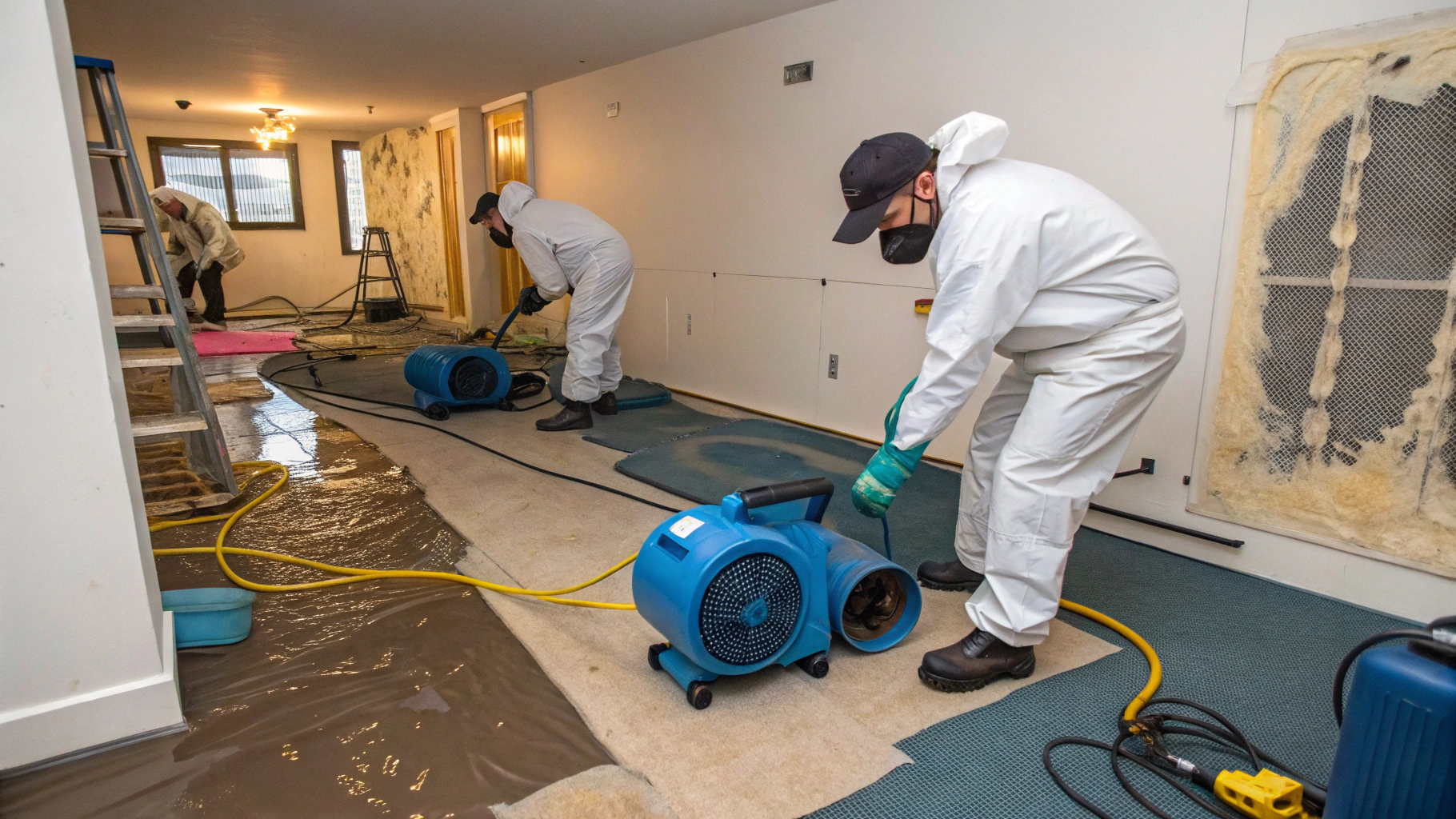
The first 24 hours are especially important. Quick removal of standing water and immediate drying measures help prevent permanent warping and staining. Professional restoration teams use industrial pumps, air movers, and dehumidifiers to accelerate drying. The faster this process begins, the higher the chance of salvaging materials instead of replacing them.
What Happens in the First 24 Hours?
During the initial stage, water spreads horizontally and vertically. It seeps into cracks, under baseboards, and through subflooring. Electrical systems may also be at risk if water reaches outlets or wiring. Immediate extraction reduces saturation levels and slows structural weakening.
In addition, bacteria present in water, especially in cases involving sewage backups, can begin multiplying rapidly. Early intervention minimizes contamination and reduces health risks.
What Happens After 48 Hours?
If moisture remains after two days, conditions become ideal for mold growth. Damp drywall and insulation provide an excellent environment for spores to develop. Once mold forms, remediation becomes more complicated and expensive. Materials that could have been dried may now require full removal and replacement.
How Fast Does Mold Really Grow?
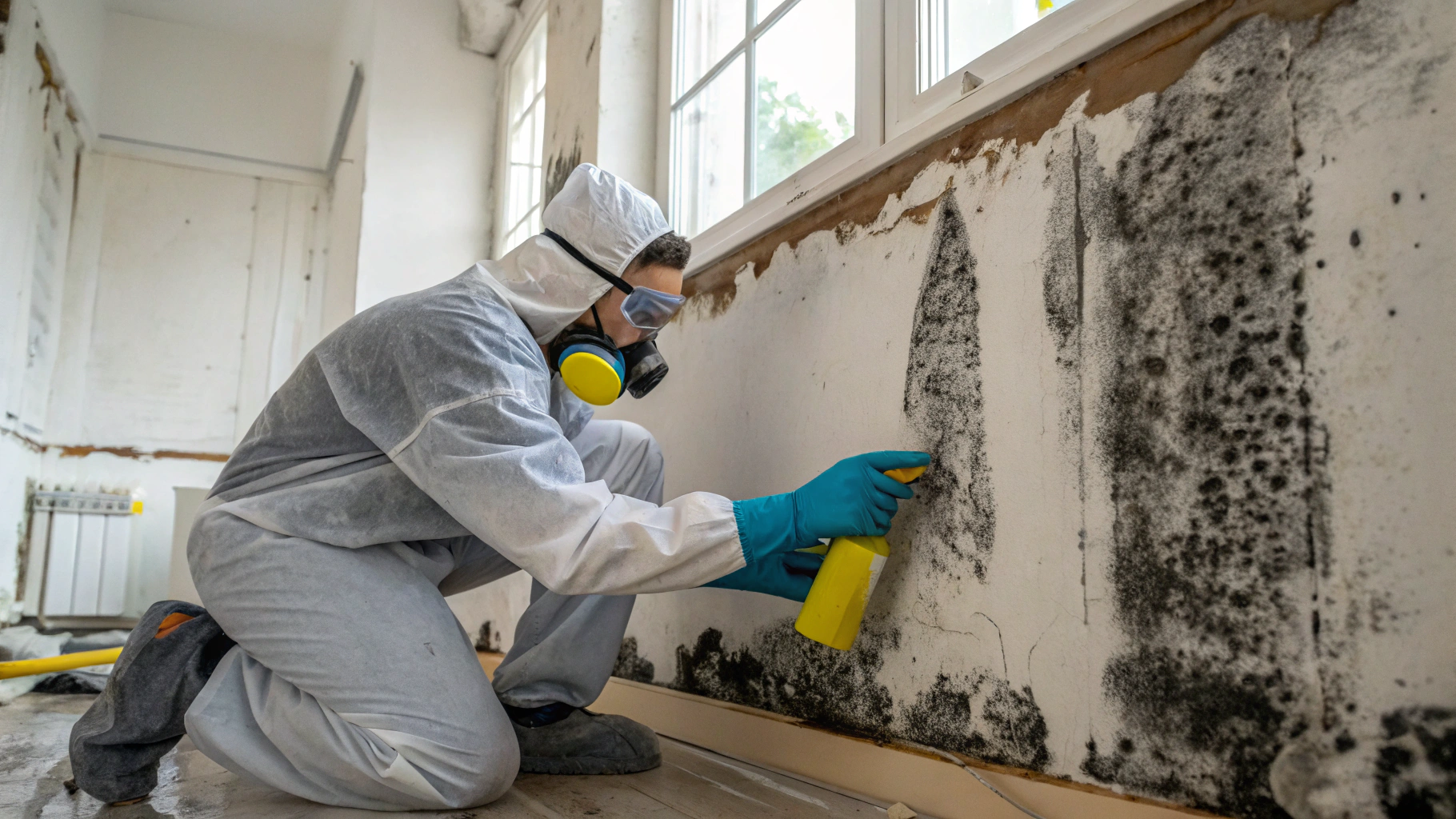
Mold growth can begin within 24 to 48 hours of water exposure. Spores are always present in the air and only need moisture and organic material to grow, which is why wet wood, carpet backing, and ceiling tiles quickly become breeding grounds. The EPA’s guide on mold and moisture explains that controlling indoor dampness is key to preventing rapid growth.
Humidity above 60 percent increases the risk significantly. Even if surfaces look dry, hidden moisture inside walls or under flooring can continue feeding mold. Professional moisture detection tools help ensure no damp areas remain.
Once mold spreads, it can cause musty odors, discoloration, and respiratory irritation. Immediate action is the most effective way to prevent this secondary issue.
The Ideal Timeline for Water Cleanup
The best practice is to begin water cleanup within the first few hours after discovery. Immediate actions include shutting off the water source, stopping electrical hazards, and removing standing water. The longer water sits, the more extensive the restoration process becomes.
First 0–6 Hours
This is the emergency response window. Remove excess water using pumps, wet vacuums, or professional extraction equipment. Move furniture to prevent staining and begin ventilation if safe to do so.
6–24 Hours
Drying efforts should intensify during this stage. Industrial air movers and dehumidifiers help draw moisture out of structural materials. Monitoring humidity levels ensures that drying progresses effectively.
24–72 Hours
By this stage, thorough inspections are essential. Any remaining damp materials must be addressed immediately to prevent mold formation. Prompt water cleanup during this window often determines whether restoration remains manageable or becomes extensive.
When Should Professionals Be Called?
While minor spills may be handled independently, significant leaks, flooding, or hidden moisture require professional assessment. Restoration experts understand how to evaluate water categories, contamination levels, and structural impact. They also document damage for insurance claims, which can simplify the recovery process.
Professionals follow a structured approach: inspection, water extraction, drying, sanitizing, and restoration. Their specialized equipment speeds up drying time and ensures that moisture levels return to normal. Delaying professional help may increase repair costs and extend downtime.
Signs You Should Not Wait
Persistent damp smells, visible staining on ceilings, warped flooring, or bubbling paint are warning signs. If multiple rooms are affected or water has entered the walls, professional intervention should begin immediately.
Conclusion
Quick response is the foundation of successful property recovery after indoor flooding or leaks. Acting within the first few hours significantly reduces structural damage, lowers repair costs, and minimizes the risk of mold growth. Every hour counts when moisture spreads through porous materials. Beginning water cleanup promptly ensures that drying efforts start before hidden damage escalates. Property owners who respond early and involve experienced professionals improve the overall outcome of water damage restoration and reduce long-term complications.